


Every New York trip starts with the same big question: where should you stay. For most visitors, the choice quickly narrows to two classic options: Lower Manhattan, the historic tip of the island, or Midtown, the bright, vertical heart of modern New York. Both offer excellent subway access and iconic skyline views, but they feel very different once you check in and step outside your hotel door. Choosing the right base can shape everything from your daily budget to the crowds you battle and the kind of nights you have out on the town.
Get the latest updates straight to your inbox!
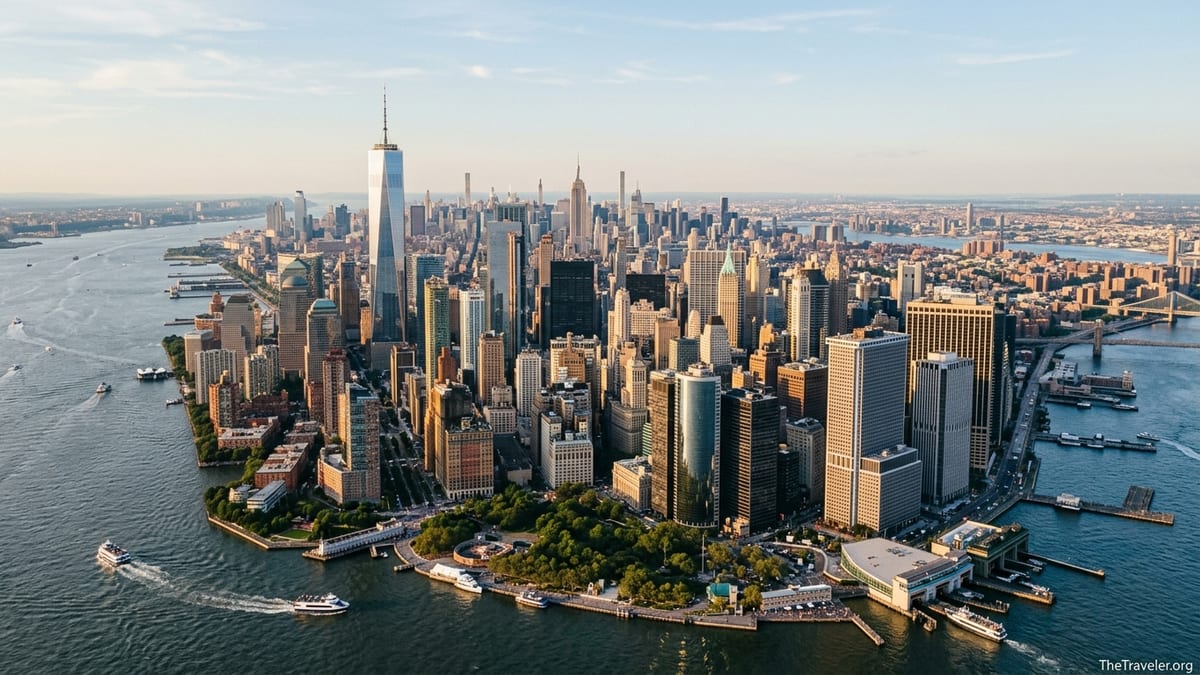
Lower Manhattan vs Midtown at a Glance
Lower Manhattan and Midtown sit just a quick subway ride apart, but they deliver very different versions of New York. Midtown is the city of postcards: Times Square’s billboards, the Empire State Building, Bryant Park, Grand Central Terminal, and blocks of flagship stores along Fifth Avenue. You are in the thick of the city’s energy from early morning commuters to late-night theater crowds.
Lower Manhattan is where the city began. Around Wall Street, the streets narrow and twist, lined with stone churches, centuries-old taverns, and the towers of the Financial District. Walk a few minutes and you hit the 9/11 Memorial, One World Observatory, Battery Park, and the ferries to the Statue of Liberty and Ellis Island. You feel closer to the harbor and New York’s immigrant and trading history, with glimpses of Brooklyn just across the water.
In practical terms, Midtown tends to be better for first-timers focused on a checklist of classic attractions spread through central Manhattan. Lower Manhattan often suits travelers who care about history, skyline views from the water, and staying in a quieter area at night while still having easy subway access to the rest of the city.
Price-wise, both districts are expensive by global standards, but they fluctuate differently. Industry reports show hotel occupancy in both Midtown and Lower Manhattan running around the high 80 percent range in busy months, which keeps nightly rates high. Budget-minded travelers often find that Lower Manhattan, especially the Financial District, can be more affordable on Friday and Saturday nights, when business travel drops and some hotels reduce rates.
Who Should Choose Lower Manhattan
Lower Manhattan works especially well if you are drawn to New York’s history and waterfront, or if you are planning a short trip anchored around the Statue of Liberty, Ellis Island, and the 9/11 Memorial & Museum. For example, a traveler arriving on a Friday night for a long weekend might stay at a mid-range chain hotel near Wall Street or the World Trade Center. On Saturday morning, they can walk 10 to 15 minutes through Battery Park to catch the first ferry to Liberty Island, avoiding some of the midday crowds.
This part of Manhattan is compact enough that you can link several major sights in one loop on foot. A common route is to start in Battery Park, ride the ferry to the Statue of Liberty and Ellis Island, return to Manhattan by early afternoon, then walk north via Broadway or Greenwich Street toward the 9/11 Memorial. From there, it is only a short walk to One World Observatory for sunset views over the harbor and the Brooklyn and Manhattan Bridges.
Lower Manhattan also suits travelers who prefer quieter evenings. After office workers head home, many streets in the Financial District are calm compared with Midtown. You will still find bars and restaurants in Tribeca, the Seaport, and Stone Street, but you will not be pushed along by a tide of theater-goers and tour groups. This can be a relief for families with young children or anyone sensitive to noise, especially if your hotel faces a side street instead of a major avenue.
Finally, Lower Manhattan is a smart choice if you expect to spend time in Brooklyn. The pedestrian entrance to the Brooklyn Bridge, the ferries from Pier 11 or Battery Park to Brooklyn neighborhoods such as DUMBO and Williamsburg, and multiple subway lines all make crossing the river straightforward. A traveler with dinner reservations in Brooklyn Heights or a rooftop bar visit in Williamsburg can leave a Lower Manhattan hotel and arrive across the river in 10 to 20 minutes on most evenings.
Who Should Stay in Midtown
Midtown is built for first-time visitors who want to see as many classic sights as possible in a short stay. From a hotel around Times Square, Bryant Park, or Herald Square, you can walk to the Empire State Building, Rockefeller Center, many Broadway theaters, Radio City Music Hall, and major shopping areas within 10 to 20 minutes. That cuts down on subway changes and makes it easy to pop back to your room between activities.
Consider a typical three-night first visit: you might arrive and walk directly to Times Square, then head a few blocks to a Broadway matinee. The next day, you could start at the Museum of Modern Art in Midtown, stroll across to Central Park’s southern edge in the afternoon, and end at the Top of the Rock observation deck after dark. All of that is within a compact zone that feels busy but efficient, especially if you are still learning New York’s grid.
Midtown also delivers the widest range of hotel categories in Manhattan. Budget hotels in side-street locations might start around the low-to-mid 200 dollar range per night in slower periods, while mid-range chains such as Hilton Garden Inn, Hyatt Place, or Courtyard by Marriott often cluster between roughly 250 and 350 dollars. Luxury addresses along Fifth Avenue or near Central Park can run far higher, especially around peak holidays and major events.
This concentration of hotels means that even when average daily room rates rise across Manhattan, you may still find last-minute deals in Midtown if you are flexible on exact location and room size. For example, a weekday night in January might yield a discounted standard room near Grand Central that is significantly cheaper than the same brand’s property in late May when graduation season and conventions push demand higher.
Cost and Value: What You Get for Your Money
In recent years, analysts tracking hotel performance in Manhattan have reported strong average daily room rates across both Midtown and Lower Manhattan, supported by high occupancy levels that often approach or exceed 80 percent over the course of a busy season. In practical terms, that means you should expect to pay a premium if you want a mid-range or better hotel in either area, and especially if your trip overlaps with major trade shows, holiday periods, or big events like the United Nations General Assembly.
That said, the way prices move during the week can favor certain travelers. In Lower Manhattan’s Financial District, many hotels primarily serve business guests from Monday to Thursday. On weekends, when corporate demand dips, those properties sometimes drop prices to attract leisure travelers. It is not unusual to see a modern business hotel near Wall Street that sells weeknights at corporate rates offer noticeably lower prices on Friday and Saturday nights. For a weekend city-break traveler, this can make Lower Manhattan a relative value compared with Midtown.
Midtown’s pricing tends to be driven more by tourism and events. A mid-range property near Times Square may keep rates high on weekends when theaters are busy but lower them midweek in quieter travel months. Because there are so many hotels in Midtown East, Midtown West, and Midtown South, price competition can be intense, especially for compact rooms on side streets. Travelers willing to accept a smaller room, limited views, or an older property can sometimes secure surprisingly competitive rates within walking distance of major attractions.
When comparing value, look beyond the nightly rate. Lower Manhattan hotels may include convenient access to waterfront parks, ferries, and free public memorials like the 9/11 Memorial plaza, which has no admission fee for its outdoor reflecting pools. Midtown hotels may put you steps from free experiences such as exploring the public spaces of Grand Central Terminal, enjoying seasonal programming at Bryant Park, or window-shopping along Fifth Avenue without spending anything beyond your metro card.
Atmosphere, Nightlife, and Daily Rhythm
The daily rhythm of Lower Manhattan and Midtown can feel like two different cities. In Lower Manhattan, weekday mornings bring a rush of office workers into the Financial District. By evening, especially on side streets south of Fulton Street, the crowds thin as commuters head home to other boroughs and New Jersey. The area feels more residential around neighboring neighborhoods such as Tribeca and the Seaport District, where you find loft buildings, converted warehouses, and clusters of restaurants and wine bars.
Nightlife in Lower Manhattan is more about local spots than neon spectacle. You might spend an evening on Stone Street, a short cobblestone block lined with historic buildings that host pubs and casual restaurants with outdoor seating in warmer months. Alternatively, you can walk north to Tribeca for more upscale dining rooms, cocktail bars, and a quieter, neighborhood feel. The Seaport, with its restored warehouses and harbor views, offers seasonal outdoor events, waterfront bars, and restaurants that attract both locals and visitors.
Midtown’s energy is louder and more constant. Around Times Square and the Theater District, LED billboards, street performers, and tour buses keep the streets buzzing late into the night. After a Broadway show lets out, crowds spill onto the sidewalks looking for dessert or a late dinner. Around major transit hubs such as Penn Station and Grand Central, you will feel steady movement from early morning commuters to late-night train passengers.
For nightlife, Midtown offers a mix of sports bars showing games late into the evening, hotel rooftop lounges with views of the Empire State Building or Hudson Yards, and casual chain restaurants that stay open late. However, many New Yorkers tend to go downtown or to outer-borough neighborhoods for a more local bar and restaurant scene. If your idea of a perfect evening is a quiet glass of wine on a side street rather than Times Square crowds, you may prefer staying farther from the busiest blocks, even if you choose Midtown as your base.
Access to Sights, Transit, and Day Trips
Both Lower Manhattan and Midtown are exceptionally well connected by subway, buses, and ferries, so your choice is less about what you can reach and more about how it will feel to get there each day. Lower Manhattan is a major hub for lines such as the 1, 2, 3, 4, 5, R, and A, C, which makes it easy to ride uptown, transfer to lines heading to the Upper East Side or Upper West Side, or cross under the East River into Brooklyn. You can get from the World Trade Center area to Midtown in around 15 to 20 minutes on many trains when service is running smoothly.
Staying near Battery Park, the World Trade Center, or Wall Street also gives you easy access to ferries. From the southern tip of Manhattan, you can board the boats to the Statue of Liberty and Ellis Island, or take the Staten Island Ferry for a free ride with sweeping views of the skyline and the harbor. East River ferries connecting to Brooklyn and Queens leave from piers just a short walk from many Lower Manhattan hotels. For travelers who want a day trip to Liberty State Park in New Jersey or to explore Brooklyn waterfront neighborhoods like DUMBO, this location is especially convenient.
Midtown’s strength lies in its centrality. From a hotel near Times Square, you may be within a 5 to 10 minute walk of multiple subway lines, including the N, Q, R, 1, 2, 3, A, C, and E, depending on which blocks you choose. Grand Central Terminal connects you to the 4, 5, 6 and the 7 train, plus regional rail if you plan a day trip north of the city. For day trips by intercity train or bus, staying within walking distance of Penn Station or Port Authority can simplify early departures and late-night returns.
When you map your wish list, certain patterns emerge. Travelers focused on museums such as the Museum of Modern Art, the American Museum of Natural History, or the Metropolitan Museum of Art, along with Central Park and Broadway shows, often find Midtown more efficient. Visitors prioritizing the Statue of Liberty, Ellis Island, the 9/11 Memorial & Museum, the Brooklyn Bridge, and waterfront walks tend to benefit from a Lower Manhattan base. In either case, the subway can keep travel times between most central sights under 30 minutes in typical conditions.
Sample Itineraries: Lower Manhattan vs Midtown Stays
To understand how your choice of base plays out in real life, it helps to visualize a typical day. Imagine a couple staying near the World Trade Center for three nights in spring. On their first morning, they take a short walk to the 9/11 Memorial plaza just after opening, when the site is quieter. After spending time in the museum, they have lunch at a nearby food hall, then walk south through Battery Park to catch an afternoon ferry to the Statue of Liberty and Ellis Island. In the evening, they stroll through the Seaport District for dinner with harbor views, then return to their hotel by foot in under 20 minutes.
The next day, they focus on Midtown. They ride the subway from Fulton Street to 42nd Street, emerging at Bryant Park. From there, they explore the New York Public Library, walk up Fifth Avenue toward Rockefeller Center, and visit an observation deck for late-afternoon views of Central Park. After an early dinner, they see a Broadway show, then take the subway two stops back to Lower Manhattan, trading bright billboards for a quieter street when they return to their hotel.
Now picture a family with two children staying in Midtown near Bryant Park. On their first full day, they walk to the Empire State Building early, then head up to Times Square to experience the spectacle. After lunch, they ride the subway to Central Park for playground time and boating on the lake in warm weather. Because their hotel is centrally located, they can return for an afternoon break and then go back out for a Broadway show without worrying about long commutes.
On their second day, the family dedicates time to Lower Manhattan. They take the subway from Times Square to South Ferry or Bowling Green, board the morning Statue of Liberty ferry, and return by midafternoon. From there, they walk to the 9/11 Memorial plaza, grab an early dinner nearby, and return uptown on the subway. In this scenario, the kids benefit from shorter walks between Midtown attractions on most days, and the parents trade one longer transit day to cover the harbor-focused sights downtown.
The Takeaway
Both Lower Manhattan and Midtown are strong bases for exploring New York, and for many visitors, the right answer depends more on personality and priorities than on a clear winner. Midtown places you in the center of the action, close to Broadway, the Empire State Building, Rockefeller Center, and the southern edge of Central Park. It is lively, sometimes chaotic, and especially efficient for first-time visitors who want to tick off marquee attractions with minimal navigation.
Lower Manhattan offers a more historic, often calmer environment outside business hours, anchored by the harbor, the 9/11 Memorial & Museum, and the ferries to the Statue of Liberty and Ellis Island. It can also offer better weekend hotel value in some business-oriented properties and easier access to Brooklyn and the city’s waterfront. The trade-off is that you will ride the subway more often to reach Midtown’s museums and theaters, though typical travel times are short.
If you are struggling to decide, consider splitting your stay: two nights in Midtown to focus on Central Park, Broadway, and classic skyscrapers, followed by two nights in Lower Manhattan to explore the harbor, history, and Brooklyn. Whatever you choose, being within a short walk of a major subway line matters more than any single view from your window, ensuring that all of New York, not just one neighborhood, fits your travel style.
FAQ
Q1. Is Lower Manhattan or Midtown better for a first-time visitor to New York.
For most first-time visitors, Midtown is usually more convenient because many classic attractions are clustered there, including Times Square, Broadway theaters, Rockefeller Center, and the Empire State Building. You will spend less time on the subway and can walk between many sights. Lower Manhattan still works well, especially if your priority is the Statue of Liberty, Ellis Island, and the 9/11 Memorial, but you will commute uptown more often.
Q2. Which area is generally cheaper for hotels, Lower Manhattan or Midtown.
Prices shift with demand, but Lower Manhattan, particularly the Financial District, often offers better value on weekends, when business travel slows and some hotels lower rates. Midtown has a wider range of options overall, from budget-friendly side-street hotels to high-end properties near Central Park, so careful comparison is essential. Checking dates across both areas can reveal which one is cheaper for your specific stay.
Q3. Where should I stay if I want to visit the Statue of Liberty and Ellis Island.
If the Statue of Liberty and Ellis Island are top priorities, staying in Lower Manhattan near Battery Park, the World Trade Center, or Wall Street is very convenient. You can walk to the ferry departure area in 10 to 20 minutes from many hotels and catch early boats, which helps you avoid the largest crowds and midday heat during warmer months.
Q4. Is Midtown too crowded and noisy to stay in.
Areas immediately around Times Square and some stretches of Seventh Avenue are very bright and busy late into the night, which can feel overwhelming. However, Midtown is large, and hotels on quieter side streets near Bryant Park, Grand Central, or in Midtown East often feel calmer while still being central. If you are sensitive to noise, look for rooms facing inner courtyards or higher floors and consider bringing earplugs or a white-noise app.
Q5. Does Lower Manhattan feel empty at night.
Some blocks in the Financial District can feel quiet after office workers leave, especially on weeknights, but the area is not deserted. Nearby neighborhoods like Tribeca, the Seaport, and parts of the World Trade Center complex have restaurants, bars, and waterfront walks that stay active into the evening. If you want more nightlife, you can easily ride the subway to SoHo, the Lower East Side, or Midtown and return later without difficulty.
Q6. Which area has better access to Broadway shows.
Midtown wins for Broadway access, as most theaters are located around Times Square and the Theater District. Staying nearby means you can walk to a performance in under 15 minutes from many hotels and avoid traveling long distances late at night. From Lower Manhattan, you can still reach Broadway easily by subway, but you will need to factor in extra travel time before and after shows.
Q7. Where should families with children stay, Lower Manhattan or Midtown.
Families often appreciate Midtown for its short walks between attractions like Times Square, the Empire State Building, and Central Park, reducing the need for multiple daily subway rides with kids. However, Lower Manhattan can be appealing if your children are excited about boats and history, thanks to the ferries, the harbor views, and the 9/11 Memorial plaza. The best choice depends on your itinerary and how comfortable your family is with public transit.
Q8. Is it easy to get from Lower Manhattan to Central Park and the major museums.
Yes. Several subway lines run directly from Lower Manhattan to Midtown and the Upper East and Upper West Sides, where many major museums and Central Park entrances are located. In typical conditions, you can reach Central Park South or museum areas in about 20 to 30 minutes. The main difference from staying in Midtown is that you will rely more on the subway each day rather than walking between most stops.
Q9. Which area is better for nightlife and dining.
Both areas offer plenty of options, but their character differs. Midtown has many casual restaurants, rooftop bars, and hotel lounges that cater to theater-goers and visitors. Lower Manhattan’s dining and nightlife are more concentrated in neighborhoods like Tribeca, the Seaport, and nearby downtown districts, with a mix of upscale spots and local bars. Travelers who prefer a neighborhood feel often lean toward downtown, while those who want quick, late-night options after shows may prefer Midtown.
Q10. If I only have three nights in New York, should I split my stay between Lower Manhattan and Midtown.
With just three nights, switching hotels can eat into your time, but it can make sense if you have very different priorities on different days. One approach is to spend all three nights in Midtown and dedicate a full day to Lower Manhattan by subway. Another is to spend the first two nights in Midtown for Broadway and central attractions, then move to Lower Manhattan for one night focused on the harbor and the 9/11 Memorial. The best choice depends on how comfortable you are packing up and checking in again during a short visit.