


More news on this day
Coordinated strike action at Lufthansa’s German hubs has left hundreds of Nigerian travellers stranded in Frankfurt and Munich, disrupting key spring travel links between Europe and West Africa and renewing scrutiny of how airlines handle mass cancellations.
Get the latest news straight to your inbox!
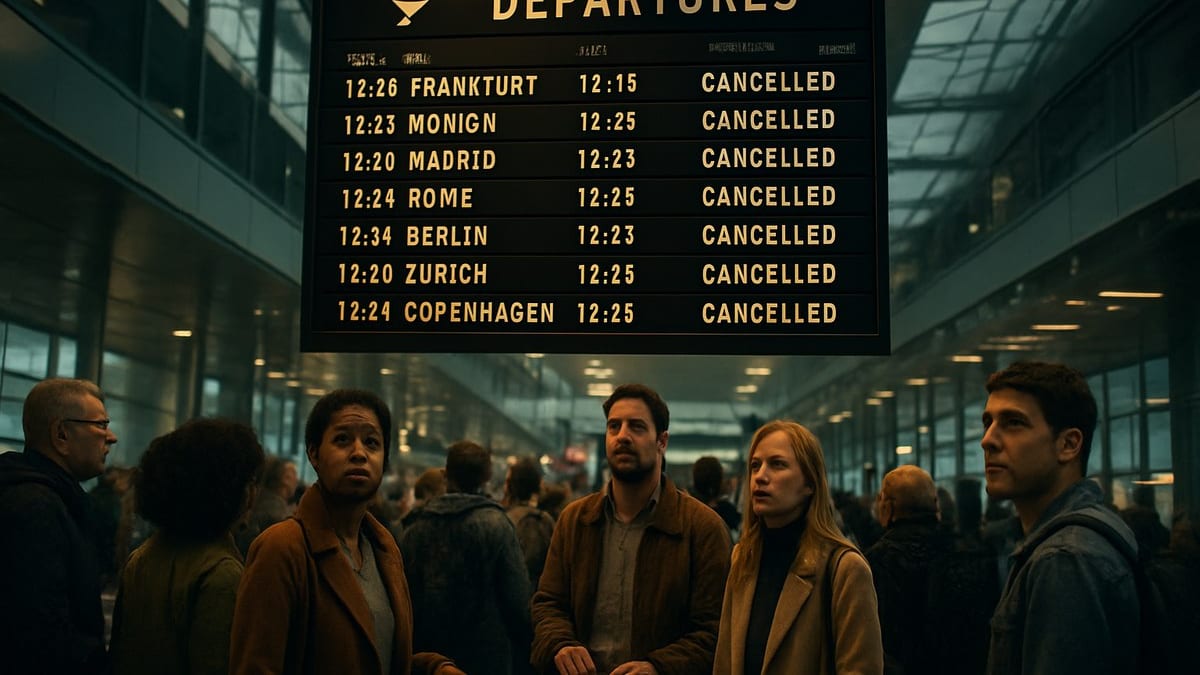
Walkouts ripple through Lufthansa’s German hubs
A wave of industrial action by Lufthansa pilots and cabin crew in mid-April 2026 has severely curtailed operations at the carrier’s main hubs in Frankfurt and Munich. Publicly available strike schedules and airline advisories indicate that multiple walkouts over several days led to the cancellation of a large majority of departures from both airports.
Industry trackers and aviation briefings report that on peak strike days up to 80 to 90 per cent of Lufthansa flights were grounded, turning the carrier’s hubs into bottlenecks for connecting traffic. Frankfurt and Munich function as primary transfer points for passengers travelling between Europe and Africa, so the disruption quickly cascaded beyond Germany’s borders.
Travel waiver notices from partner airlines and independent flight-disruption reports show that the effects of the stoppages extended beyond the official strike windows, as aircraft and crews were left out of position. This produced rolling cancellations and delays that continued to affect itineraries even after limited services resumed.
For Nigerian travellers, the timing was particularly damaging. The April walkouts coincided with a period of elevated demand around school holidays and business travel, magnifying the impact of every cancelled long-haul departure from Germany to West Africa.
Nigerian passengers stranded on Lagos and Abuja routes
Nigeria is one of Lufthansa’s most important African markets, with scheduled non-stop services linking Frankfurt to Lagos and Abuja. Route data and airline schedules show that these flights operate several times per week and are heavily used by both business and leisure travellers connecting from across Europe and North America.
According to published coverage focused on African routes, these Germany to Nigeria services were among those most heavily affected by the April strike waves. Reports describe Nigerian passengers arriving in Frankfurt and Munich from other European cities, only to find their onward flights to Lagos or Abuja cancelled with little advance warning.
Local Nigerian media and travel-law publications recount scenes of stranded travellers trying to rebook at crowded service desks or through call centres, often facing long waits and limited alternative options. With many long-haul departures removed from the schedule at short notice, seats on remaining flights via other European hubs quickly filled or became significantly more expensive.
For passengers whose journeys originated in cities such as London, Paris, Amsterdam or Milan, the disruption often occurred mid-itinerary. These travellers had already completed the first legs of multi-segment trips, leaving them dependent on rebooking from Germany and with few straightforward alternatives back to their point of origin.
Overnight stays on terminal floors highlight care gaps
Images and first-hand accounts collected by Nigerian outlets and travel-rights blogs show groups of passengers, including families with children, sleeping on terminal floors and using their luggage as makeshift pillows at Frankfurt and Munich airports. These scenes have become emblematic of the latest round of operational turmoil.
Reports indicate that hotel capacity near the hubs was quickly exhausted, particularly on the first nights of the strike when cancellations peaked. Some travellers were reportedly given accommodation or meal vouchers, while others described being told to wait in the terminal for updates on potential rebooking, with limited guidance on timings or entitlements.
Commentary from passenger-rights advocates suggests that inconsistent communication contributed to the distress. Travellers reported receiving late notifications of cancellations, or only discovering the disruption upon attempting to check in or print boarding passes. In several cases described in public forums, passengers learned of the strike from media reports before receiving formal itinerary updates.
The images of Nigerians sleeping in concourses have circulated widely on social media and in regional news, fuelling criticism of both the airline’s contingency planning and the broader resilience of Europe to West Africa air links during labour disputes.
Passenger rights, EU rules and compensation questions
The disruption has also renewed attention on the protections available to air travellers whose flights are cancelled due to labour disputes. Travel advisories and legal explainers point to European Union Regulation 261, which sets out compensation and assistance obligations for carriers operating from EU airports.
Specialist travel-law analyses note that strikes by an airline’s own staff are generally considered within the carrier’s control for the purposes of compensation, unlike certain external events such as severe weather or air traffic control stoppages. In practice, this can entitle affected passengers to fixed-sum payments in addition to rerouting or refunds, depending on flight distance and delay length.
However, Nigerian passengers transiting German hubs often face an added layer of complexity when itineraries involve multiple operating carriers or tickets issued via partner airlines outside the European Union. Publicly available guidance urges such travellers to keep detailed records of boarding passes, cancellation notices and receipts for meals or accommodation in order to support later claims.
Consumer-rights groups and online travel communities are advising Nigerian passengers caught up in the April strikes to file formal complaints with the operating airline and, where relevant, escalate cases to national enforcement bodies or alternative dispute resolution schemes if responses are delayed or unsatisfactory.
Knock-on effects for Nigeria–Europe air connectivity
The standstill at Lufthansa’s hubs comes at a sensitive moment for Nigeria’s international aviation market, which has been grappling with volatile airfares and capacity shortages. Recent business press coverage from Lagos notes that economy return tickets on some Europe routes have more than doubled in price over the past year as foreign airlines adjust capacity, currency risks and fuel costs.
With Lufthansa carrying a significant share of traffic between Nigeria and continental Europe, the strike-related cancellations have tightened an already constrained market. Travel agencies in Lagos and Abuja report that seats on alternative routings via other European hubs, the Middle East and North Africa sold out quickly as stranded passengers scrambled for last-minute options.
Aviation analysts quoted in public reports suggest that repeated disruption at major European hubs could accelerate a gradual shift toward more non-stop services operated by African and Middle Eastern carriers. Nigerian travellers affected by the latest strikes are already turning to alternatives via Istanbul, Doha, Addis Ababa and other hubs in search of more predictable connectivity.
For now, attention is focused on how quickly Lufthansa can restore its full Nigeria schedule from Frankfurt and Munich and work through the backlog of disrupted trips. The experience of Nigerian passengers stranded in Germany in April has added new urgency to ongoing debates about labour relations in European aviation and the robustness of vital air corridors linking West Africa with the rest of the world.