


More news on this day
A Ryanair flight from Milan to Manchester has become the latest service caught up in Europe’s new border control regime, with reports indicating that long passport queues left numerous ticketed passengers stranded in the terminal as the aircraft departed.
Get the latest news straight to your inbox!
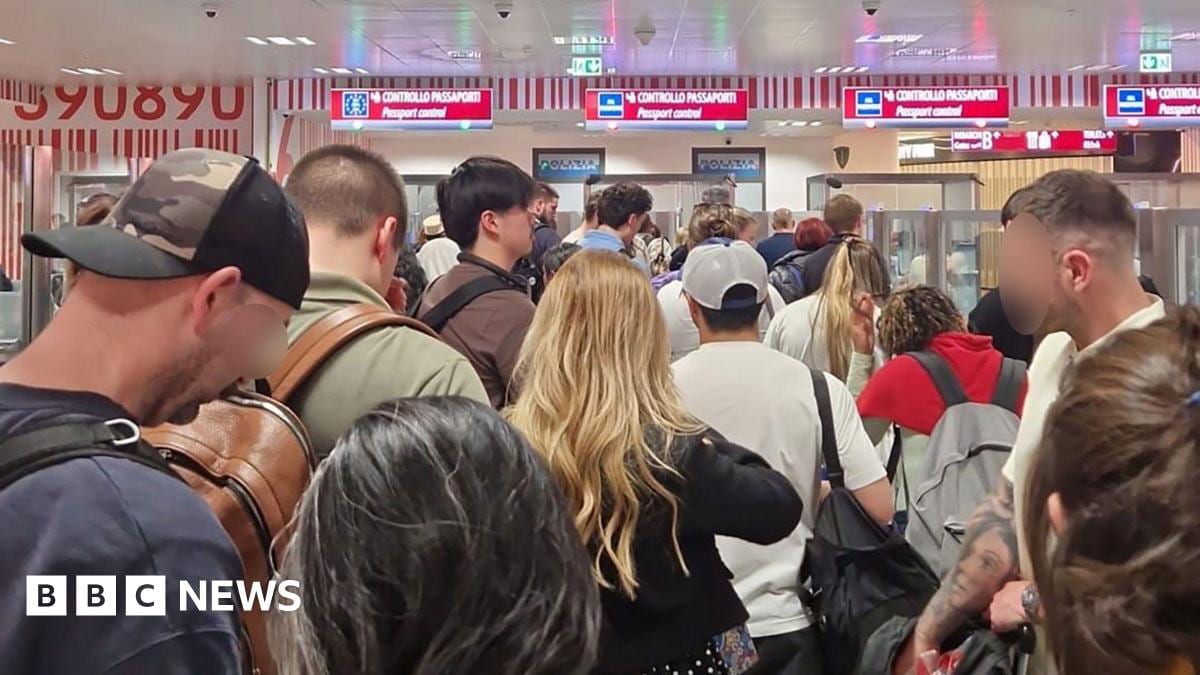
Border bottlenecks spread beyond easyJet case in Milan
The Ryanair incident follows a widely reported disruption involving an easyJet flight from Milan Linate to Manchester in mid‑April, when more than 100 UK‑bound travellers missed their departure after hours‑long lines at passport control. Published coverage indicates that only around three dozen passengers were able to board that service, leaving the majority to seek alternative arrangements at short notice.
In both cases, reports describe a similar pattern. Passengers arrived at the airport several hours before departure, cleared check‑in and security, and then became stuck in queues at the non‑Schengen border as they attempted to leave Italy for the United Kingdom. By the time many reached the gate, boarding had closed and their aircraft were already preparing to depart with empty seats.
Commentary shared by travellers on public forums suggests that these issues are not limited to any single carrier, with easyJet, Ryanair and other airlines all affected when bottlenecks form at Italian border posts. However, the Milan–Manchester route has become a particular flashpoint as British leisure and business travellers attempt to return home at the end of weekend breaks.
New EU Entry/Exit System at the heart of delays
The disruption appears closely linked to the rollout of the European Union’s new Entry/Exit System, a biometric border scheme that began operation in parts of the Schengen area in April 2026. Publicly available information shows that the system requires non‑EU short‑stay travellers to provide fingerprints and facial images the first time they enter, a process that can significantly lengthen processing times at busy checkpoints.
Reports from Milan describe queues at passport control stretching to as long as three hours as staff work through the additional steps for UK and other third‑country nationals. Travel industry analysis indicates that in some cases airport staffing and infrastructure have not kept pace with the increased workload, leaving departure halls overwhelmed during peak periods.
Observers note that the border delays can snowball quickly. Once queues build, passengers for multiple flights become intermingled, making it difficult for airport staff to prioritise those with imminent departures. Travellers recount instances in which they repeatedly alerted officials to approaching boarding times but were still unable to reach the front of the line before their gate closed.
Operational pressures limit airlines’ flexibility
While many of the affected passengers have expressed frustration with airlines, industry reporting suggests carriers such as Ryanair face constraints when delays stem from government‑operated border posts rather than airline operations. Aircraft must generally depart within strict time slots allocated by air traffic control, and extended waits at the gate can create knock‑on disruption across the network.
In the earlier easyJet case on the Milan–Manchester route, coverage indicates that the flight left close to its scheduled time despite dozens of missing passengers, in part to avoid losing its departure slot. Similar dynamics are likely to apply to Ryanair services, where quick turnarounds are central to the airline’s low‑cost model and delays can ripple across multiple rotations in a single day.
Public guidance from airline and airport sources typically stresses that passengers are responsible for allowing sufficient time to clear border controls, even when new procedures are in place. However, the reports from Milan show that some travellers who arrived more than three hours before departure still missed their flights, raising questions about how much buffer time is realistically required during the Entry/Exit System’s early phases.
Passenger rights and shifting responsibility
The Milan incidents have also reignited debate over who should bear the financial burden when government‑managed border controls cause passengers to miss flights that depart on time. Travel rights organisations note that under European and UK compensation frameworks, airlines are often not liable for payouts when delays are attributed to extraordinary circumstances outside their control.
In the easyJet disruption at Milan Linate, guidance from consumer advocates suggested that standard cash compensation was unlikely, although travellers were encouraged to request assistance such as rebooking or hotel accommodation. Early accounts from the Ryanair Milan–Manchester episode indicate that many affected passengers had to arrange their own onward travel, sometimes at significant additional cost.
Legal specialists point out that modern air passenger regulations were drafted at a time when border processing was usually a minor part of the journey, and did not anticipate large‑scale biometric data collection at departure points. The Milan queues are therefore seen by some commentators as a test case for how responsibility is shared between airlines, airports and border authorities when systemic changes disrupt travel at scale.
Calls for clearer communication and contingency planning
As reports of missed flights accumulate, there are growing calls within the travel sector for clearer communication and better coordination between all parties involved. Commentators argue that airlines, airports and border agencies need to provide more precise guidance on recommended arrival times for non‑EU travellers departing busy hubs like Milan, particularly on routes to the United Kingdom.
Some travel experts suggest that airports should consider temporary crowd‑management measures, such as dedicated lanes for passengers with imminent departures or real‑time queue monitoring that can trigger targeted announcements. Others propose contingency plans that would allow greater flexibility in holding aircraft at the gate when a significant proportion of checked‑in passengers is known to be trapped in border queues.
For now, consumer advice circulating in the wake of the Ryanair and easyJet cases strongly encourages UK‑bound passengers to factor in substantial additional time for border checks when departing from Italian airports. Until the new Entry/Exit System beds in and processing times stabilise, travellers on routes like Milan to Manchester may continue to face an elevated risk of being left behind, even when they believe they have arrived in good time.