


More news on this day
Emerging aviation platform MACH OE has added its first seed aircraft through an arrangement with United Airlines, a move that observers say underscores both companies’ interest in testing new operating models and extracting more value from existing fleets.
Get the latest news straight to your inbox!
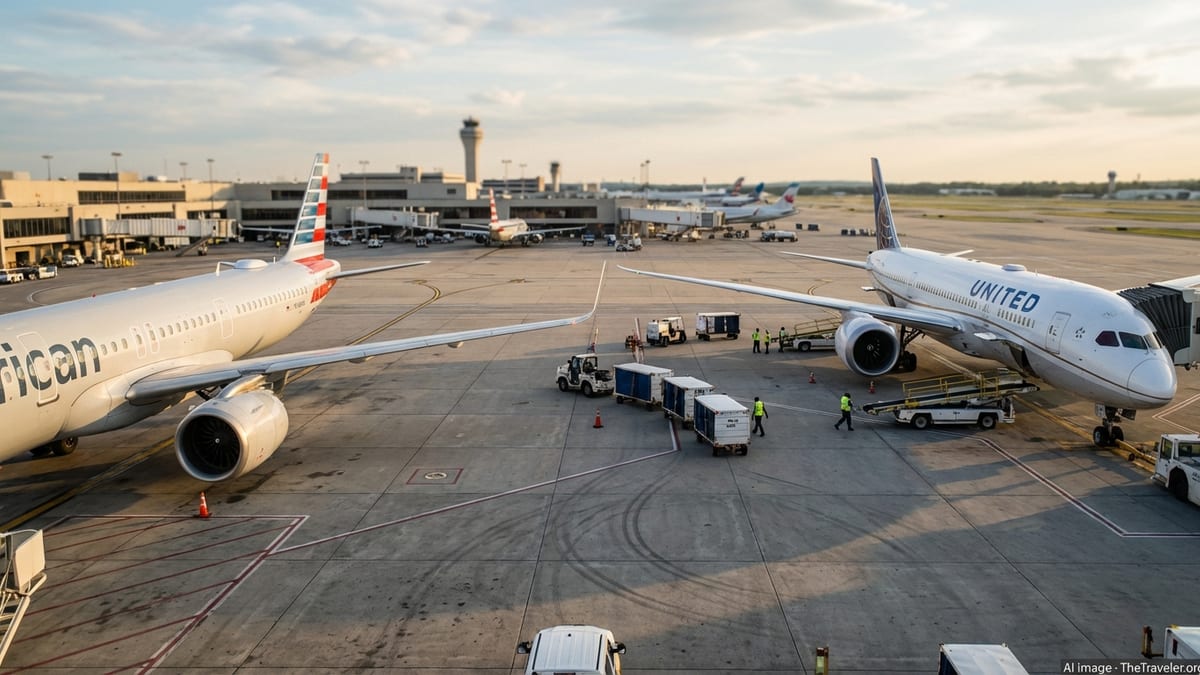
New Seed Aircraft Marks Milestone for MACH OE
The agreement centers on MACH OE securing an initial seed aircraft from United Airlines, creating a launch asset for the young platform’s business model. Publicly available information indicates that the deal gives MACH OE access to a mainline narrowbody aircraft that had previously flown in United service, providing an immediate test bed for operational concepts without the lead times associated with new-build jets.
Industry reports suggest that the aircraft will remain configured closely to United’s high-density layout, allowing MACH OE to evaluate economics in a realistic mainline environment. The arrangement is being viewed as a bridge between traditional lessor-to-airline transactions and the more flexible, platform-based approaches that technology-focused firms are bringing into aircraft ownership and management.
While financial terms have not been disclosed, analysts following United’s fleet strategy note that using an in-service aircraft as a seed asset allows MACH OE to begin generating utilization data quickly. That data could, in turn, help validate assumptions on maintenance, reliability and revenue performance that will underpin any future capital raising or portfolio expansion.
Positioning Within United’s Broader Fleet Strategy
The seed-aircraft move comes as United continues to reshape its fleet with large orders for next-generation narrowbodies, regional jets and potential future high-speed aircraft. Over the past several years, publicly available filings and press materials show the carrier committing to hundreds of Boeing 737 MAX and Airbus A321neo aircraft, while also retiring older regional and mainline types to simplify operations and improve fuel burn.
By moving one aircraft into the MACH OE structure, United appears to be testing how alternative ownership and operating frameworks could fit alongside its traditional purchase and lease arrangements. Observers say this type of transaction may allow the airline to fine-tune capacity on the margins, offloading specific frames for specialized use while maintaining access through commercial agreements or codeshare-style arrangements if desired.
The deal also aligns with United’s ongoing interest in innovative aircraft programs. In recent years, the airline has publicly backed electric and short-haul concepts and signaled support for future supersonic travel through a conditional order for Boom Supersonic’s proposed Overture jet. Against that backdrop, the MACH OE partnership is being interpreted as further evidence that the carrier is comfortable experimenting with nontraditional platforms around the edges of its core fleet plan.
Implications for Asset Managers and Lessors
For the aircraft finance community, MACH OE’s first seed aircraft with a major global carrier is drawing attention as a potential template for future transactions. Rather than relying solely on large, diversified leasing companies, airlines and investors are increasingly exploring niche platforms that specialize in particular aircraft types, cabin concepts or route profiles.
Analysts say that MACH OE’s ability to place an aircraft sourced directly from United could signal new opportunities for asset managers seeking tighter integration with airline network needs. Instead of purchasing anonymous aircraft on the secondary market, platforms may look to build curated portfolios closely aligned with specific carriers’ scheduling, maintenance and retrofit cycles.
At the same time, the move raises questions about residual value management and risk-sharing. If MACH OE succeeds in demonstrating stronger earnings potential or more efficient utilization on its seed aircraft, other investors could be encouraged to back similar ventures. Conversely, weaker-than-expected performance would underscore the challenges of extracting incremental value from older airframes at a time when many carriers are focused on upgauging and simplification.
Operational Testing Ground for New Models
Beyond finance, the seed aircraft is expected to serve as a laboratory for new operational and customer-facing concepts. Reports indicate that MACH OE plans to use the aircraft to trial adjustments to cabin product, turnaround processes and digital services that might not fit immediately into a large airline’s standardized playbook.
Because the aircraft originates from United’s fleet, it comes with an established maintenance and configuration history, offering a clean baseline from which to measure the impact of any modifications. Observers note that this may be particularly valuable for experiments involving interior densification, alternative seating layouts or updated inflight connectivity, where comparative data against a known standard is essential.
If those experiments yield favorable performance, MACH OE and future partners could look to replicate successful elements at scale, potentially feeding lessons back into United’s own fleet. In that sense, the seed aircraft could act as a low-risk sandbox that sits adjacent to, but not fully inside, the airline’s everyday operation.
What the Move Signals About Market Conditions
The timing of MACH OE’s first seed aircraft also reflects broader conditions in the aircraft market. After several years of supply chain pressures and delivery delays, many airlines are reassessing how to meet demand growth while managing capital commitments and operational resilience. Transactions that make better use of existing assets have become more attractive in this environment.
By sourcing a seed aircraft from United rather than a manufacturer’s fresh production slot, MACH OE is aligning itself with a trend toward pragmatic, data-driven experimentation. Market watchers say this suggests that, for now, the most immediate gains may be found not in entirely new airframe designs, but in rethinking how current fleets are owned, managed and utilized.
As MACH OE begins operations with its first aircraft and United continues to execute its multi-year fleet strategy, industry attention will focus on whether this type of platform partnership can scale. If it does, similar arrangements linking airlines and specialized asset platforms could become a more common feature of the global aviation landscape.