


More news on this day
Madeira’s main ports have been formally included in a new European Union derogation from maritime fuel rules, a move that will ease compliance costs on routes linking the archipelago with the Azores and other outermost regions while the islands continue their transition to cleaner shipping.
Get the latest news straight to your inbox!
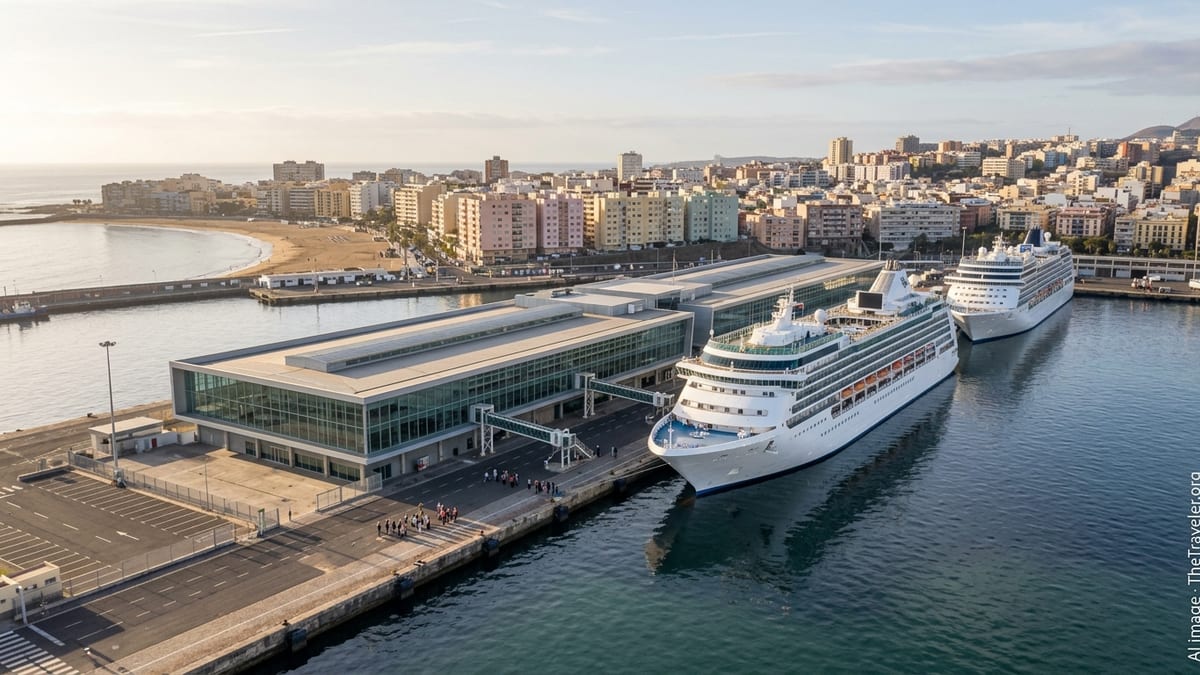
New EU FuelEU Maritime Derogation Highlights Role of Madeira Ports
Publicly available information from the Official Journal of the European Union shows that Portugal has activated a derogation under Regulation (EU) 2023/1805 on the use of renewable and low carbon fuels in maritime transport, commonly known as FuelEU Maritime. The notification, released in June 2026, lists key ports in Madeira and the Azores among those benefiting from more flexible application of the new rules during an initial phase.
The derogation specifically covers cruise and other passenger services operating between ports in Madeira, the Azores and the wider family of EU outermost regions. In practice, this means that vessels serving itineraries that interconnect islands such as Madeira, Porto Santo, São Miguel or Terceira, as well as links to other outermost regions, will face reduced immediate compliance pressures compared with ships on standard intra-EU routes.
Regional and European-level documents describe the measure as part of a broader approach to accommodate the structural challenges of remote island economies, where maritime connections are essential for tourism, trade and social cohesion. Madeira’s gateways at Funchal and Caniçal, together with a network of Azorean ports, are central nodes in that system and are now explicitly recognised within the FuelEU Maritime framework.
The decision aligns with the long-standing status of Madeira and the Azores as EU outermost regions under Article 349 of the Treaty on the Functioning of the European Union, which allows tailored responses to geographical and economic constraints. The derogation is framed as temporary, linked to the period in which local operators and port authorities adapt to the technical and financial demands of cleaner propulsion and alternative fuels.
List of Benefiting Ports Confirms Strategic Island Network
The European Commission’s communication on Portugal’s use of the FuelEU Maritime exemption includes a detailed table of ports in the autonomous regions. For Madeira, the Port of Funchal and the cargo-focused Port of Caniçal are named, reflecting their dual importance for cruise tourism and essential supply chains. Porto Santo’s port is also identified, underlining the role of short inter-island links in the overall transport network.
In the Azores, the list runs from Ponta Delgada on São Miguel to Praia da Vitória and Angra do Heroísmo on Terceira, as well as Horta, Lajes do Pico, Madalena, São Roque, Vila do Porto and a series of smaller island ports including Corvo and Flores. By mapping these locations, the EU effectively designates an interconnected set of maritime corridors within which the derogation applies to specified services.
Travel and tourism operators are expected to benefit from greater predictability as they plan itineraries for the late 2020s. Cruise lines linking Madeira with the Canary Islands and other Atlantic destinations, as well as inter-island ferry providers, can schedule fleet investments and retrofits with clearer knowledge of how fuel intensity and emissions targets will be phased in on these particular routes.
For passengers, the effect is likely to be most visible in the preservation of existing connectivity patterns. Reports indicate that policymakers were keen to avoid abrupt changes to capacity or pricing on lifeline services, particularly for smaller islands that depend on regular maritime links for both residents and visitors.
Alignment with EU Emissions Trading and Wider Climate Policy
The new FuelEU Maritime derogation sits alongside earlier flexibility granted to outermost regions under the extension of the EU Emissions Trading System (EU ETS) to shipping. Guidance from European institutions notes that voyages between ports in Madeira or the Azores and mainland Portugal already benefit from a specific surrender derogation during the transition period for maritime ETS, reflecting concerns about disproportionate cost impacts on island regions.
By pairing the ETS approach with the FuelEU Maritime exemption, Brussels and Lisbon are effectively layering instruments that recognise the same structural vulnerability: high dependence on maritime transport combined with limited immediate access to alternative fuels and shore-side infrastructure. The combined effect is intended to give operators in Madeira and the Azores a realistic timeframe in which to modernise vessels and bunkering systems without undermining connectivity.
At the same time, recent European Commission reports on outermost regions emphasise that long-term climate objectives remain unchanged. Madeira and the Azores are expected to transition toward lower-emission fleets and improved port facilities, including better energy efficiency, onshore power supply and readiness for sustainable fuels. The derogations are described as targeted calibrations of the timeline rather than exemptions from the eventual standards.
For the travel sector, this balancing act is significant. Cruise tourism is a major contributor to Madeira’s visitor economy, while ferries and mixed-use vessels are vital for mobility within the archipelagos. Maintaining service levels while accelerating decarbonisation is presented as a shared challenge for authorities, port managers and private operators alike.
Economic Stakes for Tourism and Regional Development
Recent data from the Regional Directorate of Statistics of Madeira show that the archipelago has been improving its position in EU social and economic indicators among outermost regions, helped in part by a resilient tourism sector. Cruise traffic through Funchal and rising numbers of island-hopping visitors have supported local employment and business activity, particularly in hospitality, retail and shore excursions.
The cost of maritime energy transition, however, is expected to be substantial. Installing alternative fuel infrastructure, upgrading port facilities and refitting or replacing vessels involve multi-year investment cycles. Analysts following EU cohesion and transport policies note that the outermost regions, including Madeira and the Azores, will likely depend on a mix of EU funds, national programmes and private capital to finance these changes.
Without calibrated derogations, there had been concerns that stricter fuel rules could push up operating costs more quickly than smaller island markets could absorb, with potential knock-on effects for fares and service frequency. The newly formalised exemption for specific routes is being interpreted in regional coverage as a signal that the EU intends to protect territorial cohesion while still steering the sector toward net-zero objectives.
For local communities, the stakes are not only economic but also social. Maritime links underpin access to healthcare, education and cultural exchange across the islands, as well as facilitating the flows of visitors that many businesses rely on. Ensuring that regulatory shifts do not unintentionally erode this connectivity has been a recurring theme in debates across outermost regions.
What the Derogation Means for Travelers and Next Steps
For travelers planning cruises or ferry journeys involving Madeira and the Azores over the next few years, the immediate implications of the EU derogation are subtle but positive. Industry observers expect continuity in existing itineraries and capacity, with operators less likely to withdraw or substantially alter routes purely because of short-term regulatory cost spikes linked to fuel rules.
In the medium term, visitors may begin to notice more visible signs of the green transition at island ports, such as investments in cleaner auxiliary power systems, modernised terminals and, eventually, vessels capable of running on alternative fuels. Policy documents on the EU’s outermost regions stress that these upgrades are not only environmental measures but also opportunities to enhance service quality and resilience.
Further EU and national-level decisions will determine how long the FuelEU Maritime derogation for Madeira and the Azores remains in force and under what conditions it might be adjusted. The evolving strategy for outermost regions, which the European institutions are currently updating, is expected to integrate transport, climate and cohesion objectives in a more coordinated framework covering the period to 2030 and beyond.
For now, the formal recognition of Madeira’s ports within the new exemption framework reinforces their status as strategic Atlantic hubs linking Europe to its most distant territories. As regulatory timelines and investment plans crystallise, the archipelagos are positioning themselves as laboratories for reconciling ambitious decarbonisation goals with the practical realities of island connectivity and tourism growth.