


More news on this day
UAE travellers are being advised to closely monitor flight status screens on Friday as Emirates, Etihad Airways, Air Arabia and flydubai report a mix of on-time services, rolling delays and selective cancellations across key routes.
Get the latest news straight to your inbox!
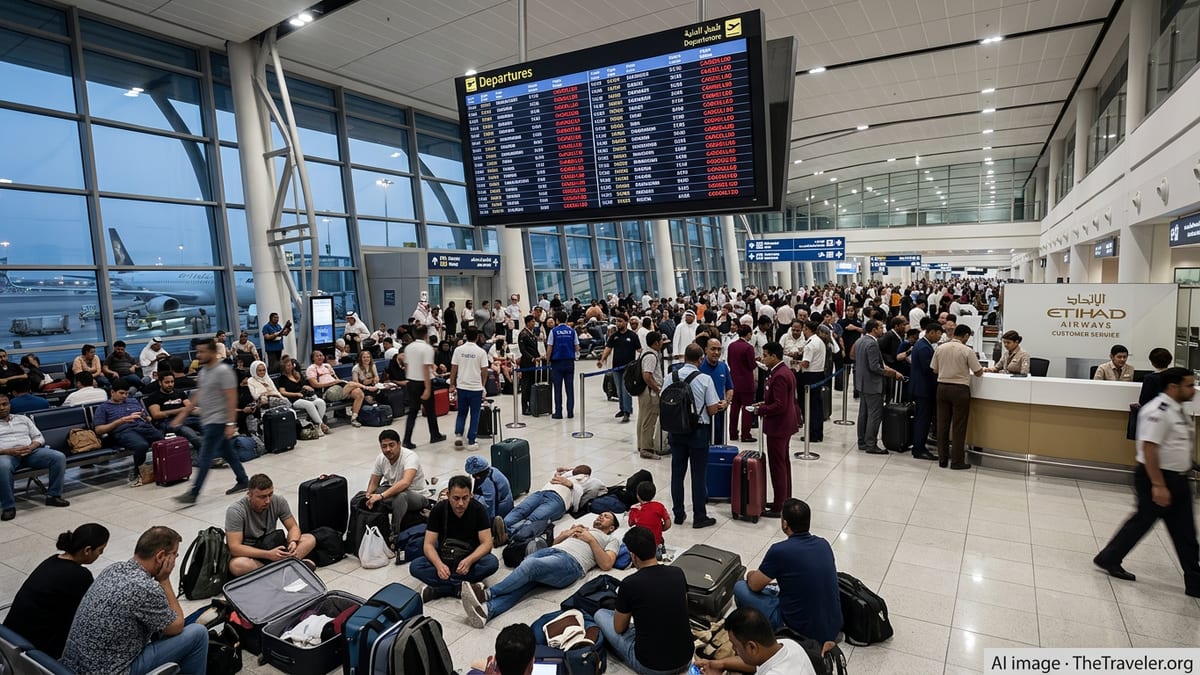
Mixed operations across Dubai and Abu Dhabi hubs
Publicly available airport and airline information on September 11 indicates that operations at Dubai International Airport and Abu Dhabi’s Zayed International Airport remain largely active, but with an uneven pattern of departures and arrivals. Flights on major trunk routes are continuing, while some regional and international services are either delayed or removed from schedules at short notice.
Recent coverage of UAE aviation developments describes a “mixed picture” for outbound and inbound passengers, with Emirates, Etihad, flydubai and Air Arabia continuing to operate key regional and long-haul services while adjusting timings in response to operational constraints and external factors. Some flights are turning around close to schedule, whereas others are subject to extended ground holds, revised departure times or rebooking options for affected passengers.
Travel reports highlight that disruptions are not uniform across the network. Services to certain Gulf and South Asian destinations are operating close to normal, while flights to specific airports facing congestion, airspace restrictions or weather issues may experience knock-on delays. This has left travellers relying heavily on live status tools rather than general timetables when planning journeys to and from the UAE.
Emirates and Etihad adjust schedules but maintain core routes
For Emirates, the latest travel updates and flight-status pages show the airline maintaining a broad global network, including services across Europe, Asia, Africa and the Americas, while advising passengers that schedules remain subject to change. The carrier continues to direct customers to check individual flight status before leaving for the airport and to monitor email and SMS notifications for any last-minute adjustments.
Etihad Airways is operating from Abu Dhabi with a similar emphasis on live information, especially on services to busy regional gateways and destinations affected by external disruption. Earlier sector-specific updates this week pointed to delays on some Asia-Pacific routes, including flights from Indonesia after volcanic ash activity disrupted air traffic around Jakarta, prompting schedule changes for both outbound and inbound services.
Both Emirates and Etihad are signalling operational flexibility rather than widespread cancellations. Networks remain largely intact, but flights can be retimed or rerouted, especially where overflight permissions, congestion in nearby airspace or weather-related constraints add complexity to flight planning. Travellers are being urged by published guidance to arrive early, complete online check-in where possible and reconfirm flight status on the morning of travel.
Air Arabia and flydubai see selective cancellations on regional routes
Low-cost carriers Air Arabia and flydubai continue to operate dense regional networks out of Sharjah and Dubai, but recent days have brought a higher concentration of schedule changes on short-haul Gulf routes. Published UAE aviation coverage notes that Air Arabia has cancelled a number of services to Kuwait and Bahrain over the past week, reflecting a more cautious approach on certain sectors while other flights have continued as scheduled.
Flydubai’s operational updates similarly encourage passengers to review real-time status before heading to the airport. The carrier has kept most regional links running, but some flights have experienced timing changes as airlines across the region respond to evolving airspace conditions, airport congestion and passenger demand patterns. Where services are cancelled, customers are being moved to later departures or offered alternative arrangements in line with each airline’s policy.
These selective cancellations underscore that the most vulnerable routes tend to be short regional sectors, which are more easily consolidated or retimed. For travellers connecting beyond Dubai or Abu Dhabi, this can mean longer layovers or rebooked itineraries, even when long-haul flights themselves are still operating.
Regional security, airspace risks and weather add to disruption
The current wave of schedule adjustments comes against a backdrop of elevated regional security concerns and intermittent airspace restrictions. Over the past week, Gulf-based coverage has detailed how renewed tensions involving the United States and Iran have contributed to cautious routing decisions by international and regional airlines, with some foreign carriers suspending or extending suspensions of services to the UAE.
Air France, for example, has extended the suspension of its Dubai flights until at least September 15, after earlier halting operations while it monitors the security situation. Other global airlines have maintained temporary suspensions on select Gulf and wider Middle East routes, diverting passengers onto alternative hubs or partner carriers. These decisions, while primarily affecting non-UAE airlines, have secondary effects on capacity and connection options for travellers starting or ending journeys in Dubai or Abu Dhabi.
In parallel, weather and geological events in other regions are feeding into UAE schedules. Volcanic activity in Indonesia has prompted delays and cancellations on some flights between the Gulf and Southeast Asia, including services linking Jakarta and Abu Dhabi. When flights are rescheduled or delayed at origin, the impact can ripple through subsequent rotations, leading to late arrivals and retimed departures from UAE airports.
What UAE-bound and outbound passengers should do now
With conditions shifting day by day, publicly available airline guidance consistently stresses the importance of checking live flight status immediately before travel. Emirates, Etihad, Air Arabia and flydubai all maintain online tools and mobile apps where passengers can enter route details or flight numbers to confirm departure and arrival times and see whether a flight is delayed, retimed or cancelled.
Travel updates from Emirates recommend that customers ensure their contact details are current in the “Manage booking” section so that any schedule changes can be communicated quickly. Similar advice is visible on flydubai’s operational updates page, which points travellers to regularly refreshed status information and country-specific requirements that could add to processing times.
Airport portals, including Dubai Airports’ real-time flight boards, offer a further reference point for those already on the way to the terminal. However, given the possibility of last-minute airspace or operational changes, travellers are being encouraged by published advisories to rely primarily on airline channels and to allow extra time at check-in, security and immigration while disruption persists.
For now, the UAE’s main carriers continue to operate the bulk of their schedules while fine-tuning timings and frequencies. Passengers planning to fly over the coming days are likely to encounter mostly functioning operations but should be prepared for longer queues, potential gate changes and occasional last-minute adjustments as airlines navigate a fluid operating environment.
Gulf News: UAE flights status – Emirates, Etihad, Air Arabia, flydubai delays and cancellations
Gulf News: UAE flights – delays as Air France extends Dubai suspension