


More news on this day
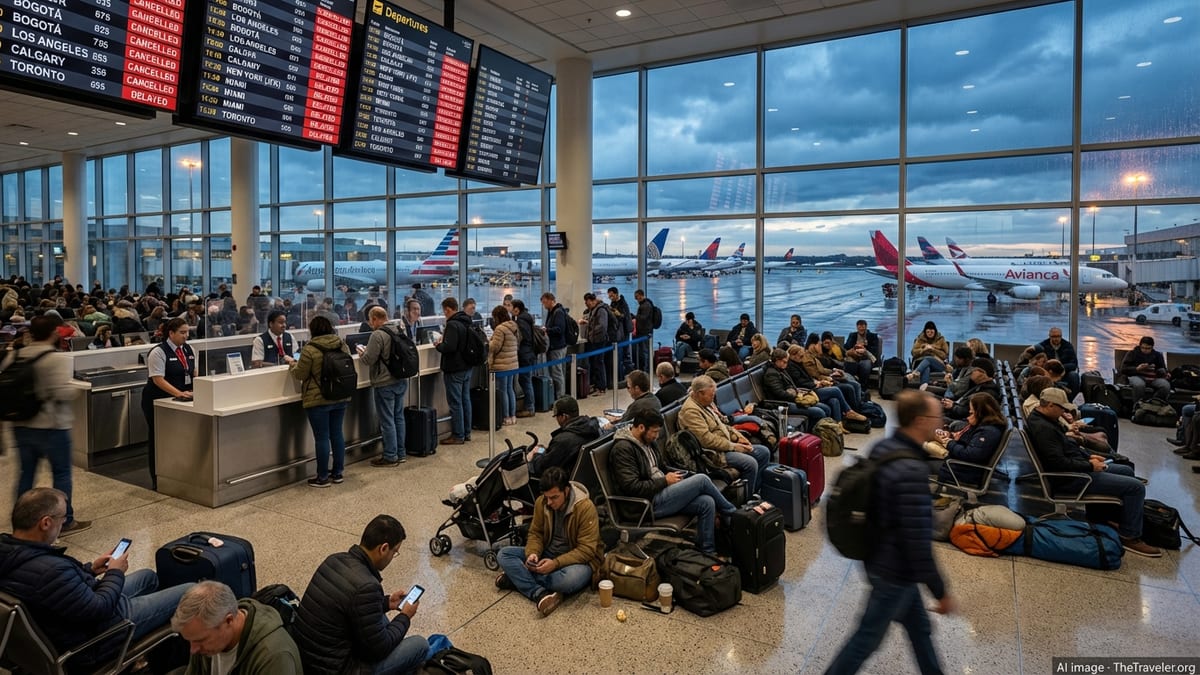
Air travelers across the United States faced another difficult day as more than 866 flights were delayed and at least 89 were canceled within, into, or out of the country, according to live flight-tracking data, underscoring how quickly routine strains can tip the system into widespread disruption.
Get the latest news straight to your inbox!
Live data shows mounting delays and cancellations
Publicly available information from flight-tracking platforms indicates that U.S. airlines collectively reported over 866 delayed flights alongside 89 cancellations, affecting domestic routes as well as international services operating to and from major hubs. The figures represent a snapshot taken in the afternoon hours, meaning totals could continue to rise into the evening as the system works through congestion.
The disruption level places the day among the more difficult recent travel periods, though not at the scale of severe weather events or technology outages that have produced thousands of cancellations. Even so, the combination of late-arriving aircraft, volume constraints and localized operational issues has proved enough to create long lines at airports and tight connections for many passengers.
Data patterns in federal aviation reports and industry analyses show that days like this, in which a relatively modest share of overall flights are canceled but a much larger number run late, can still produce outsized effects for travelers. Missed connections, crew scheduling challenges and aircraft repositioning needs can compound the impact of what appear at first to be manageable delays.
Recent federal statistics on airline performance highlight how such disruptions sit within a broader trend of elevated delay rates during busy travel periods. While airlines have adjusted schedules and added buffer time in recent years, congestion and weather-sensitive hubs remain pressure points that can quickly ripple across the national network.
Weather, congestion and operational strains converge
Operational advisories published by the Federal Aviation Administration describe a patchwork of weather impacts and traffic management initiatives that have constrained capacity at several major airports in recent days. Thunderstorms, low cloud ceilings and shifting wind patterns have prompted ground delay programs and reroutes at key hubs, reducing the number of arrivals and departures that can be handled each hour.
On top of weather-related constraints, traffic management measures designed to balance demand across busy airspace sectors have slowed flows into metropolitan areas with multiple airports. These initiatives can help maintain safety and prevent gridlock, but they also lengthen flight times and increase taxi and holding patterns that register as delays for passengers.
Industry analyses of recent disruption periods point to a familiar mix of causes beyond weather and airspace constraints, including tight aircraft utilization, crew scheduling limits and ongoing efforts to rebuild staffing after the sharp downturn in travel earlier in the decade. When a storm cell or bottleneck appears at the wrong moment, those structural factors can leave airlines with limited flexibility to recover quickly.
Experts who track performance data note that even short-lived constraints at a single hub can reverberate across the system for hours. Aircraft arriving late into one city may go on to operate onward segments elsewhere, spreading delays far beyond the initial trouble spot.
Major hubs feel the brunt, but regional airports also hit
While the latest disruption numbers reflect nationwide conditions, a significant share of delayed and canceled flights originate at or pass through large hub airports that concentrate connecting traffic. Published coverage of recent travel days has frequently highlighted pressure on airports serving Chicago, New York and Boston, where thunderstorms and low visibility have spurred lengthy queues for takeoff and landing.
Flight-tracking breakdowns of airline performance during these events often show big network carriers and large low cost operators absorbing the bulk of delays, simply because they operate the most flights through constrained airspace. High-frequency shuttle routes and peak-period bank structures at hubs can amplify congestion when capacity is reduced, creating a cascade of knock-on delays.
Regional airports, however, are not immune. When mainline hubs encounter trouble, smaller cities that depend on inbound aircraft and crews from those hubs can experience schedule gaps, rolling delays and occasional cancellations. Passengers in those markets may have fewer rebooking options and longer waits for alternative flights, particularly late in the day.
Analysts who examine federal transportation statistics emphasize that these ripple effects are a hallmark of a hub-and-spoke aviation system. Even if only a relatively small percentage of total daily departures is disrupted, the impact can be highly concentrated on itineraries involving particular hubs or connection windows.
Travelers navigate changing rights and airline policies
Consumer-facing resources from advocacy organizations and government agencies stress that passengers facing delays and cancellations should begin by checking their airline’s mobile app or website, where same-day rebooking tools and travel alerts typically appear first. Many carriers also enable customers to switch to nearby airports or adjust routing when significant systemwide disruption occurs.
Recent policy discussions at the U.S. Department of Transportation and in Congress have focused on strengthening passenger protections in these scenarios. Proposals and rulemaking efforts have addressed automatic refunds for canceled or significantly changed flights, clearer disclosure of compensation policies, and minimum standards for services such as meal vouchers and hotel accommodations during controllable disruptions.
Federal data compiled in recent years illustrate how sustained periods of disruption can generate large volumes of consumer complaints related to refunds, communication and customer service. Lawmakers and regulators have cited those trends in arguing for more consistent standards across airlines, as existing obligations can vary significantly from one carrier to another.
For now, travelers remain subject to a patchwork of airline-specific policies shaped by carrier customer service commitments and evolving regulatory guidance. On difficult days with hundreds of delays and dozens of cancellations, the practical experience can differ widely depending on the airline, itinerary and timing of the disruption.
Outlook for the rest of the day and weeks ahead
As the current disruption period unfolds, live air traffic reports indicate that conditions may gradually improve as weather systems move through and evening traffic peaks subside. However, late-day departures remain vulnerable when aircraft and crews are out of position, and passengers with tight connections may continue to face challenges.
Looking ahead, analysts expect a continued pattern of uneven performance, with many days of relatively smooth operations punctuated by episodes of concentrated disruption driven by storms, congestion or localized incidents. Federal statistics and independent research both suggest that while the overall rate of cancellations has moderated compared with some previous years, delay rates during peak travel periods remain elevated.
Ongoing debates over air traffic control modernization, staffing levels and airline scheduling practices point to the structural nature of these issues. Improvements in technology and infrastructure, combined with more resilient schedules and staffing models, are widely seen as key to reducing the frequency and severity of nationwide disruption days.
For passengers, the latest wave of delays and cancellations is a reminder that even on days without headline-grabbing storms or system-wide outages, the U.S. air travel network can be fragile. Building in extra time, monitoring flight status closely and understanding carrier policies remain essential strategies for navigating a system in which more than 866 delays and 89 cancellations can emerge from what began as a routine travel day.
Coverage of recent U.S. flight delay and cancellation totals