


The Monterey Peninsula is often reduced to a single star attraction: the Monterey Bay Aquarium. Yet this compact stretch of California’s central coast, roughly two hours south of San Francisco, rewards a slower weekend with historic streets, sea-otter coves, wild headlands and one of the country’s richest whale habitats. It is also expensive, sometimes foggy and increasingly busy. This guide lays out a realistic coastal weekend that shows why Monterey is worth your time beyond its aquarium, while staying honest about costs, crowds and conditions.
Get the latest updates straight to your inbox!
Understanding Monterey and the Peninsula
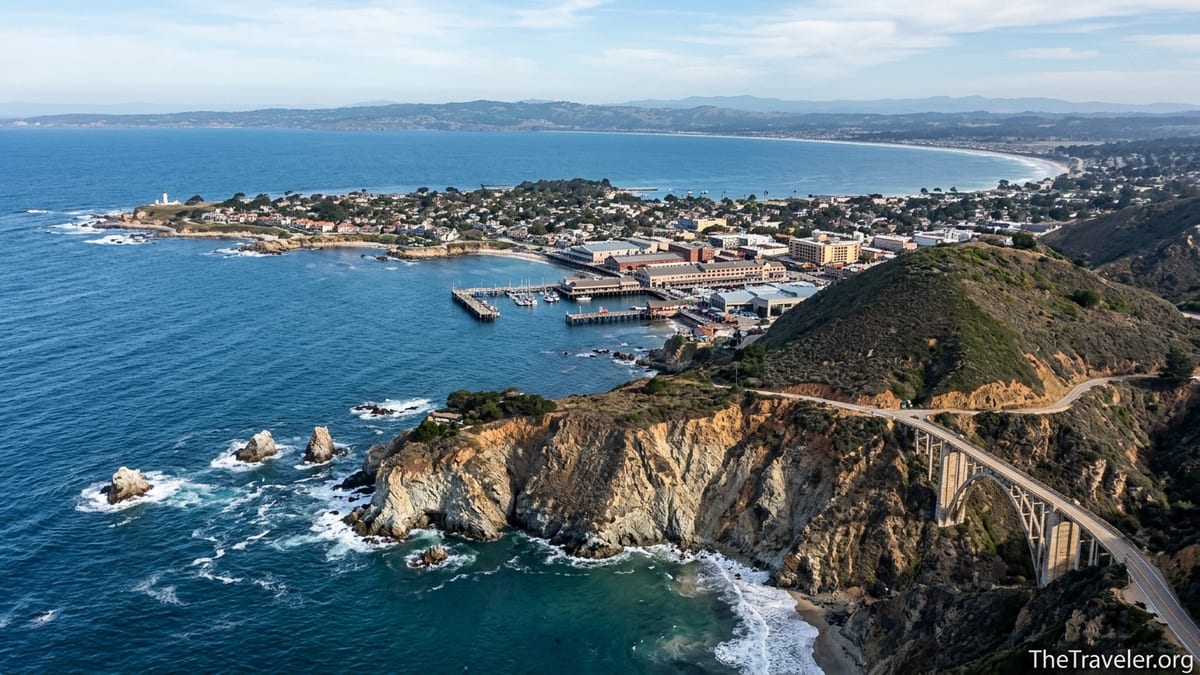
Monterey sits on the southern edge of Monterey Bay, about 120 miles south of San Francisco and 70 miles south of San Jose by road. It forms a tight cluster with three neighboring destinations. Pacific Grove borders Monterey to the west, wrapping around the tip of the peninsula. Carmel by the Sea lies just south across the coastal bluffs, and the Big Sur coastline begins a short drive beyond Carmel. For a weekend, you can realistically sample all four without turning the trip into a forced march.
In practical terms, Monterey offers the largest concentration of hotels, the famous Cannery Row district, Old Fisherman’s Wharf and the Monterey Bay Aquarium. Pacific Grove is calmer and more residential, with low-key beaches, Lovers Point, Asilomar State Beach and Point Pinos Lighthouse. Carmel by the Sea delivers a more overtly romantic village atmosphere, fine dining and easy access to Carmel Beach and Point Lobos State Natural Reserve. Big Sur, which stretches for roughly 90 miles along Highway 1, is best tackled as a focused half-day or day trip, not an item tacked onto every afternoon.
For a two day visit, plan to stay based in Monterey or Pacific Grove and explore the peninsula in a loose loop. One day can focus on Monterey’s waterfront, Cannery Row, the historic downtown and the coastal recreation trail, with the aquarium as an optional centerpiece. The second day can push south to Carmel, Carmel Beach and Point Lobos, with a limited extension into Big Sur if Highway 1 is open and the weather is cooperative. A third day, if you have it, is ideal for a full Big Sur outing or an in depth whale watching experience.
It is worth acknowledging cost and crowding at the outset. Hotel rates most weekends commonly range from roughly 200 to 350 dollars per night for a midrange room in Monterey or Pacific Grove, and significantly more in Carmel. Summer weekends, holidays and special events drive those prices higher and fill roads and parking lots early. Fog can blanket the coast in June and July, while winter storms occasionally close Highway 1 or limit access to some trails. Treat those variables as part of the planning, not as unpleasant surprises.
A Two Day Coastal Itinerary (Plus Options)
Day one works best if you keep your car parked for long stretches and work your way along the waterfront on foot or by bike. Start around Cannery Row and the Monterey Bay Coastal Recreation Trail, which runs along the shoreline over the route of the old railroad. Much of this experience is free. You can walk the path, watch sea otters and harbor seals in the kelp, and detour into pocket beaches and overlooks without paying any admission beyond parking. Metered and garage parking near Cannery Row can run several dollars per hour, and private lots near the aquarium are among the priciest, so check posted rates before committing to a space.
Continue along the trail toward Old Fisherman’s Wharf and the adjacent marina. This stretch is a relaxed, flat walk of about 1.5 miles each way between Cannery Row and the wharf, making it a comfortable outing for most visitors with basic fitness. The wharf itself is free to wander. Here you will find whale watching outfitters, chowder stands handing out samples, and views across the harbor to moored boats and the curve of the bay. If you plan a whale watching trip, scheduling it this first afternoon or early the next morning helps you adapt around weather and sea conditions.
Downtown Monterey and the Monterey State Historic Park sit a short walk inland from the wharf. The historic park is a collection of adobe buildings and small gardens tied to the era when Monterey was the capital of Alta California. Walking the grounds and peering into courtyards is free, though some buildings and guided tours may carry modest fees or limited hours. A couple of hours here yields context that Cannery Row’s commercial strip lacks, and it is easy to string this into a loop that returns to the waterfront via Alvarado Street with its restaurants and cafes.
Day two shifts focus to Pacific Grove and Carmel. Drive or rideshare to Lovers Point Park in Pacific Grove and walk the oceanfront path that curls west toward Asilomar State Beach. This stretch, often less crowded than central Monterey, delivers rocky coves, tidepool areas and regular sea otter sightings. Parking along Ocean View Boulevard is generally free but can fill quickly on sunny weekends. The walk from Lovers Point to the main Asilomar beach area and back is several miles, so those with limited mobility might opt to drive between stopping points and focus on shorter segments.
From Pacific Grove, continue to Point Pinos Lighthouse, which occupies a low bluff at the tip of the peninsula. The lighthouse grounds provide panoramic views, and there is typically a small admission fee to enter the building when open, while walking the nearby shoreline is free. Afterward, you can either loop back toward Monterey or head south through Pebble Beach via 17 Mile Drive toward Carmel, a topic covered in detail later. Carmel itself invites a leisurely afternoon. Park in a town lot or on a side street, stroll down to Carmel Beach and linger until sunset if conditions allow. If you have a third day, reserve it for Point Lobos and a deeper foray into Big Sur, rather than trying to squeeze everything into a single rushed drive.
Cannery Row, Coastal Walks and the Aquarium Question
Cannery Row’s appeal today is less about Steinbeck’s sardine warehouses and more about its waterfront access. You can walk the paved Monterey Bay Coastal Recreation Trail past the backs of hotels and restaurants, step down to pocket beaches and watch kayakers and stand up paddleboarders navigate the kelp beds. This entire shoreline section is free to experience on foot or by bike. Bicycle rentals in the Cannery Row area typically start at a modest hourly rate, but it is worth confirming opening hours and pricing before you arrive, especially in the quieter winter months.
Parking is where costs mount. Expect higher hourly garage rates near Cannery Row and surcharges in private lots closest to the aquarium entrance. Some hotels on Cannery Row charge separate overnight parking fees on top of room rates, often in the range of 25 to 40 dollars per night, so check this before booking. Walking is entirely practical for exploring Cannery Row, the coastal trail and the wharf in a single day if you are comfortable with 4 to 6 miles of mostly flat terrain at sea level.
The Monterey Bay Aquarium, situated at the western end of Cannery Row, remains the area’s defining attraction. Advance online tickets are required, with dated reservations available through at least the end of 2026 according to the aquarium’s own information. Current standard ticket prices listed by the aquarium indicate adult admission in the mid 60 dollar range per person, with lower prices for children and seniors. Children four and under are free, which helps families with toddlers but still leaves a noticeable total when you are paying for multiple adults and older children.
For many travelers, the aquarium is worth both the ticket price and the time commitment. A realistic visit lasts three to five hours if you want to see the major tanks, attend a feeding or two and allow younger visitors to explore interactive exhibits without rushing. Crowds swell on weekends, school holidays and mid summer. Visitors who dislike confined indoor spaces or who have already spent heavily on whale watching may decide to skip it. Families with school age children or visitors especially interested in marine science are the ones most likely to find the cost justified. If you do go, book a morning arrival to enjoy a bit more space before midday, wear layers for transitions between cool outdoor decks and warmer galleries, and avoid locking yourself into a whale watching departure so close to your ticket window that you feel forced to sprint through the exhibits.
Whale Watching and Coastal Wildlife
Monterey Bay is one of North America’s most reliable year round whale watching locations thanks to the deep submarine canyon just offshore, which concentrates marine life and draws cetaceans close enough for half day boat trips. Operators based at Monterey’s Old Fisherman’s Wharf and nearby Moss Landing run trips throughout the year, with schedules and trip lengths that change by season. Some companies currently offer three to four hour daily trips in the main seasons, along with occasional longer specialty excursions focused on specific species or seabirds.
Seasonality affects which animals you are most likely to see. Independent compilations of operator data and regional wildlife calendars confirm that humpback whales are commonly encountered from roughly April through October, gray whales migrate along the coast from about December through April, and orcas can appear in any month, although they remain unpredictable. Blue whales sometimes visit in summer and early autumn in years with favorable feeding conditions. Sea lions, harbor seals, dolphins and seabirds are present year round. While marketing material often emphasizes near certain encounters, no ethical operator can guarantee sightings on a particular day, and trip reports show slow days mixed with spectacular ones even in peak months.
Sea conditions and seasickness are major practical considerations. Even on clear, mild days, the combination of swell and boat motion on the open bay can be challenging for those unaccustomed to being at sea. Local advice from frequent passengers stresses starting preventative seasickness medication the night before and again about an hour before departure, eating a light, non greasy meal beforehand, and avoiding alcohol. On rough days, a noticeable percentage of passengers may still feel unwell. If you are highly motion sensitive, you may be happier focusing on shore based wildlife viewing.
Onshore, you can see an impressive amount of marine life without ever stepping on a boat. The shoreline between Cannery Row and Lovers Point, the rocks around Pacific Grove’s Ocean View Boulevard and the edges of Asilomar State Beach are all dependable spots to watch sea otters raft together in kelp, pelicans and cormorants diving, and harbor seals hauled out on rocks. Point Lobos adds chances to see sea lions and otters from its coastal trails. All of these sites can be accessed for the cost of parking alone, and in the case of roadside pullouts and city streets, parking may be free or modestly priced. Bring binoculars and patience; you may not get the breaching whale moments the tour boats sometimes enjoy, but you will still experience Monterey Bay as a living marine sanctuary.
If you decide to take a boat, look for operators that emphasize naturalist guides, adherence to federal marine mammal viewing guidelines and a safety first approach when seas worsen. Several local companies promote their commitment to education and conservation, and independent reviews point travelers toward small boat outfits for more intimate experiences and larger boats for more stability. Check current trip prices, which often range from roughly 70 to 120 dollars per adult for a standard half day outing, and remember to factor in gratuities for the crew.
17 Mile Drive, Scenic Alternatives and Big Sur Logistics
17 Mile Drive is the privately operated scenic route through Pebble Beach that connects the outskirts of Pacific Grove with Carmel’s northern edge. As of late 2026, the company that manages the road lists a standard entrance fee of 12 dollars and 50 cents per vehicle for day visitors, collected at one of several gates. The fee is sometimes reimbursed if you spend a qualifying amount at certain Pebble Beach restaurants, though policies can change and you should confirm at the gate before counting on this. Walking or cycling sections of the drive from outside the gates does not involve a toll, but safe access points and parking may be limited.
The drive’s main appeal lies in its wave battered rocky shoreline, views of golf courses like Pebble Beach Golf Links and stops such as the Lone Cypress. In good weather with light traffic, you can complete the loop with photo stops in two to three hours. On busy weekends, you may find yourself queuing at gates or crawling behind tour buses between pullouts. If you are short on time, already plan to visit Point Lobos or Big Sur, or are on a strict budget, it is reasonable to skip 17 Mile Drive and instead focus on free coastal roads like Ocean View Boulevard in Pacific Grove and the public sections of the Carmel coastline.
Driving south from Carmel into Big Sur is what many visitors most associate with the region. However, California Highway 1 through Big Sur is vulnerable to landslides, winter storm damage and planned construction closures. In recent years, there have been extended closures around slide zones that created dead end segments accessible only from the north or south. Before setting out, check current Caltrans highway updates for Monterey County and local tourism sites for details on any closures, one way controls or weight restrictions. Never assume you can drive the full Carmel to San Simeon stretch on any given weekend.
For a two day Monterey based visit, a practical Big Sur outing might involve driving from Carmel to Point Lobos early in the morning, spending several hours on trails there, then continuing only as far south as Bixby Creek Bridge and a few signed vista points if conditions allow. This keeps total driving manageable and leaves room for weather delays or parking challenges at popular pullouts. Attempting to visit Point Lobos, multiple Big Sur state parks and distant attractions like McWay Falls in a single short day from Monterey often results in more time in the car than on the trails.
Point Lobos itself operates as a state natural reserve with more restrictions than typical state parks. The official information indicates a vehicle entrance fee of 10 dollars per car collected at the small parking lot near the main gate. Once interior parking is full, which can happen by mid morning on good weather days, visitors are turned away until space opens. You can still park outside along Highway 1 where allowed and walk in on foot, but this adds a significant roadside walk. Oversize vehicles over about 21 feet in length are not permitted inside the reserve at all. Planning to arrive near opening time, carpooling and treating Point Lobos as a focused half day visit rather than a quick stop are the best ways to enjoy it without frustration.
Where to Stay and Whether to Rent a Car
Choosing where to sleep on the peninsula shapes your entire weekend. Downtown Monterey offers chain and independent hotels at a range of prices, generally lower than comparable properties in Carmel. From a downtown base near Alvarado Street you can walk to the wharf, historic park and some sections of the coastal trail, though Cannery Row is a longer stroll. Parking fees at these hotels are mixed; some include self parking, while others charge per night. The atmosphere meets in the middle: livelier than Pacific Grove, less polished than Carmel.
Staying near Cannery Row puts you within a few blocks of the aquarium and the waterfront path, which is ideal if you want to leave the car behind for much of a day. The trade off is cost. Many hotels in this strip command some of the highest rates on the peninsula and frequently charge separate daily parking fees. The area is busy deep into the evening on weekends, with foot traffic and restaurant noise adding to the energy. For families focused on the aquarium and short walks, the convenience may outweigh the expense. For couples seeking quiet, it may not.
Pacific Grove tends to deliver a slower paced, neighborhood feel. You will find historic inns, smaller motels and vacation rentals within walking distance of the rocky shoreline and Lovers Point. Nightlife is limited, and most dining options are small local restaurants rather than big brand names. Parking is often easier and may be included at your lodging. This suits travelers who value coastal walks and quieter evenings over proximity to major attractions. Carmel by the Sea, on the other hand, is tuned to romance and luxury. Its compact village core is extremely walkable, lined with galleries and restaurants, and the beach is an easy downhill stroll from most hotels. Room rates, resort fees and parking charges typically reflect that positioning.
Arriving without a rental car is technically possible but limiting. Monterey Regional Airport, with flights from several West Coast hubs, sits only a few miles from downtown, and taxis or rideshare services connect the airport to hotels. There are also bus services linking Monterey with San Jose and other Bay Area points. Once in town, you can walk between many key sights, use local buses for some connections and book guided tours for whale watching and occasional Big Sur day trips. However, without a car you relinquish flexibility. Spontaneous sunset stops along Highway 1, early morning access to Point Lobos or detours to quiet Pacific Grove coves become much harder or more expensive. For most visitors planning to explore beyond central Monterey, renting a car remains the most practical option.
Weather, Seasons and What It Really Costs
Monterey’s coastal climate surprises many visitors. Summer does not guarantee blue skies. From roughly late May through August, a marine layer often brings cool, gray mornings and sometimes all day fog, especially along the immediate shoreline. Daytime highs often sit in the 60s Fahrenheit even in July, and a stiff breeze can make it feel colder. Late September and October are often sunnier and slightly warmer, while winter introduces periods of heavy rain and storm surf mixed with crisp, clear breaks.
Sea temperatures remain cold year round by most visitor standards, often in the low to mid 50s Fahrenheit. That makes unprotected swimming uncomfortable and potentially risky for those unused to cold water. Wetsuits are standard for surfers and kayakers. On land, layered clothing is the rule. Pack a light insulated jacket, a windproof shell, a beanie and closed toe shoes, even if you are visiting in midsummer. Having a dry change of clothes in the car is wise if you plan prolonged time at windy viewpoints or on boats.
Costs vary widely, but it is possible to sketch realistic weekend budgets. A budget minded couple might find a basic motel room in Monterey or Seaside for around 150 to 200 dollars per night outside peak holidays, eat breakfast from groceries, choose casual lunches and dinners in the 15 to 25 dollar per person range, skip the aquarium, and rely on free coastal walks and a single shared whale watching outing. That still adds up to several hundred dollars over two nights once fuel, parking meters and taxes are included. For a family of four staying centrally and visiting both the aquarium and a whale watching tour, total weekend expenses can easily enter low four figures when you factor in tickets, restaurant meals, lodging and parking.
Midrange couples willing to spend more on location might book a 250 to 350 dollar per night room in downtown Monterey or Pacific Grove, add aquarium tickets, always dine out and perhaps take a whale watching tour or pay the 17 Mile Drive fee for one afternoon. Upscale travelers choosing Carmel or waterfront Cannery Row properties, dining at higher end restaurants and adding private tours or spa time will see their weekend budgets expand accordingly. The key is to price your likely choices in advance, including hidden items like hotel parking fees, resort charges, and the cumulative cost of multiple paid attractions.
Common Pitfalls and Final Comparisons
Several recurring mistakes affect first time visitors. One is assuming that a July or August visit will guarantee warm, sunny beach days. In reality, those months can be among the grayest on the immediate coast. Planning beach lounging as a bonus rather than the centerpiece of a summer weekend reduces potential disappointment. Another is trying to cram an ambitious Big Sur dream list into a single short slot. Road conditions, limited pullout parking, and the sheer number of tempting viewpoints make it easy to spend hours leapfrogging without ever taking a real hike.
Overlooking parking charges is another common misstep. Visitors sometimes choose what looks like a moderately priced Cannery Row or Carmel hotel only to be surprised by nightly parking fees and high day rates in nearby garages. That can shift a property from midrange to borderline luxury in practical terms. Similarly, some travelers schedule both an aquarium visit and a long whale watching trip on the same day, then feel rushed at the aquarium or too exhausted for an early morning departure. Spreading anchor experiences across days or dropping one entirely often results in a more relaxed and memorable weekend.
When considering alternatives, it helps to compare Monterey with nearby coastal options like Carmel and Santa Cruz. Monterey is arguably best for a balance of family friendly attractions, accessible wildlife viewing and moderate urban infrastructure. Families with school age children often appreciate the combination of aquarium, whale watching, beaches and easy coastal walks. Nature oriented travelers who want a base with strong access to Point Lobos and Big Sur while still having extensive dining and lodging choices also tend to favor Monterey or Pacific Grove.
Carmel by the Sea excels as a romantic destination. Its compact, walkable village, high concentration of intimate inns, galleries and restaurants, and the sweep of Carmel Beach attract couples focused on slower, more luxurious weekends rather than kid centered attractions. Santa Cruz, about 45 miles north of Monterey around the other side of the bay, often provides a lower cost alternative with a more casual, surf town mood. Its boardwalk, broader selection of budget motels and generally lower dining prices can appeal to younger travelers and cost conscious families, though it lacks an aquarium on the scale of Monterey’s and has a different, busier beach culture. Ultimately, Monterey earns its place as a weekend destination not just because of a single world class aquarium, but because the surrounding coastline, wildlife and neighboring towns combine into a compact slice of central California that rewards careful planning and realistic expectations.