


More news on this day
Travelers at Athens International Airport in Greece faced widespread disruption on Tuesday as publicly available flight-tracking data indicated 351 delayed services and three cancellations, affecting a broad mix of domestic and international routes and leaving passengers bound for cities such as London, Paris and Rome facing long waits in crowded terminals.
Get the latest news straight to your inbox!
Operational Bottlenecks Trigger Daylong Disruption
Data from real-time flight status boards and aggregators showed Athens International Airport operating under heavy strain, with delays building steadily through the morning peak and cascading into the afternoon schedule. The disruption affected both arrivals and departures, with a particularly high concentration around popular European hubs and Greek island connections.
Reports indicate that the bottlenecks were linked to capacity constraints in the airport’s summer operating window, where scheduled movements frequently approach hourly limits outlined in recent operational planning documents. When individual departures encountered turnaround or staffing issues, knock-on effects quickly reduced the system’s ability to recover.
By early afternoon, flight-tracking dashboards were showing delay times ranging from 30 minutes to more than two hours on some services, including departures from Athens to major Western European capitals. Three flights were recorded as canceled, compounding pressure on airline customer-service desks as passengers sought rebooking options and duty-of-care assistance.
Publicly available airport statistics show that Athens handles more than 500 departures on a busy summer day, meaning that disruption on the scale recorded on Tuesday affected a very large share of scheduled traffic. With the airport serving as the primary gateway for Greece’s tourism economy, any widespread operational issue has rapid and visible effects on travelers at the start of the peak holiday season.
Aegean, Sky Express and Low-Cost Carriers Under Pressure
The latest disruption hit Aegean Airlines hardest, reflecting its role as the dominant carrier at Athens and its dense schedule of short-haul flights across Greece and Europe. Flight-status pages showed a string of Aegean services marked as delayed on routes linking Athens with island destinations and major European cities, resulting in missed onward connections and complicated rebooking efforts for some travelers.
Sky Express, which also operates an extensive domestic network from Athens, appeared among the carriers affected as delays rippled across the day’s rotations. Historical performance analyses published by consumer rights platforms have previously highlighted punctuality challenges on some Sky Express routes from Athens, indicating that even modest new disruptions can have an outsized impact when aircraft are scheduled tightly.
Low-cost carriers including Ryanair were also caught in the congestion, particularly on high-demand routes between Athens and cities in Italy, France and the United Kingdom. For these airlines, which typically operate point-to-point networks with quick turnarounds, delays at a key base can soon propagate across multiple flights, affecting passengers far beyond Greece.
Network carriers such as Lufthansa and Emirates, which serve Athens as part of broader intercontinental schedules, were managing their own knock-on risks as aircraft and crews needed for subsequent legs into and out of major hubs encountered Athens-related hold-ups. While long-haul operations were generally less numerous than European short-haul services, disruption at a single point in the chain can still lead to schedule reshuffles and missed connections.
Domestic Island Links and European Hubs Hit Alike
The pattern of delays at Athens on Tuesday cut across both domestic and international traffic. Live departure boards showed services to Greek islands such as Santorini, Mykonos, Rhodes and Kos experiencing hold-ups as aircraft arriving late from earlier legs struggled to turn around on time. These sectors are critical for Greece’s tourism flows, particularly in early summer when visitors depend on tight schedules to meet ferry connections and hotel bookings.
At the same time, key European hubs including London, Paris and Rome featured prominently among the delayed destinations. These routes are served by a mix of full-service and low-cost airlines, and they function as vital feeder links into wider global networks. When Athens-originating flights depart late, passengers risk missing long-haul departures at onward hubs, increasing the demand for rerouting, overnight accommodation and ticket changes.
According to published airport capacity parameters, Athens operates with carefully managed hourly limits on arrivals and departures during the summer season. Once those ceilings are approached, even relatively minor operational disruptions can force ground handlers and air-traffic managers to prioritize certain flights and resequence others, which can lengthen delays for services deemed less time-critical or operating with spare connection windows.
Travel industry observers note that the early June timing of the disruption is particularly problematic for travelers, as leisure demand is already ramping up while airlines and airports are still calibrating peak-season schedules. With domestic island flights and European city breaks both in high demand, any sustained period of irregular operations places further strain on aircraft utilization and staffing flexibility.
New EU Entry/Exit Rules and Peak-Season Crowds Add Strain
The disruption at Athens is unfolding against the backdrop of new European Union border procedures that have recently taken full effect for many non-EU nationals entering or leaving the Schengen Area. Guidance published by Athens International Airport and several airlines urges travelers on non-Schengen routes to arrive well in advance of departure to allow extra time for check-in, security and border checks.
As summer traffic builds, the combination of fuller flights, additional document checks and increased baggage volumes creates a more fragile operating environment. Publicly available performance data from recent seasons at Athens and other Mediterranean hubs indicates that airports with high seasonal peaks are particularly exposed to compounding delays when check-in, security or border-control queues extend beyond planned thresholds.
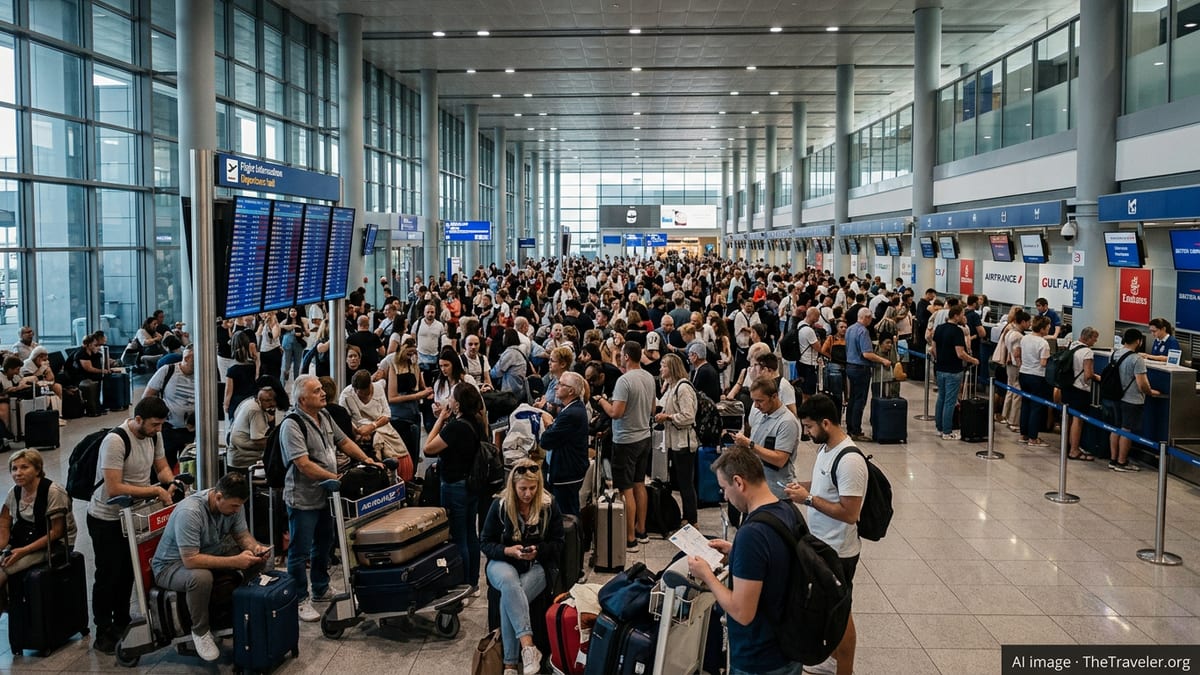
On Tuesday, scenes described in local media coverage and shared via public social platforms depicted crowded departure halls and long lines at airline service counters as passengers sought updates, vouchers and alternative itineraries. While many flights were still eventually able to depart, the cumulative effect of late departures and arrivals contributed to a perception of generalized disruption across the airport.
Consumer advocates stress that travelers transiting through Athens during the summer period should build in longer buffer times between flights, particularly when connecting onward to non-Schengen destinations or long-haul services. They also highlight the importance of monitoring flight status frequently on the day of travel, as schedules can change rapidly when airports operate near their capacity limits.
What the Disruption Means for Affected Travelers
For passengers caught in the latest wave of delays at Athens, the practical impact ranged from missed dinner reservations and shortened holidays to lost nights of accommodation and rebooked long-haul segments. Travelers on itineraries involving London, Paris, Rome and other hubs were among those most exposed to onward connection risks, particularly when their tickets combined different airlines on separate bookings.
Publicly available guidance based on European air passenger rights frameworks notes that travelers departing from EU airports, or flying to the region with EU or UK carriers, may be entitled to assistance in cases of long delays or cancellations, depending on the length of the delay, the distance of the flight and the cause of the disruption. This can include meals, refreshments, hotel stays where necessary and in some circumstances financial compensation.
Airlines and travel agents generally encourage affected travelers to keep receipts for any additional expenses incurred and to submit claims through official customer-service channels once their journey is complete. Specialized claim-handling companies also operate in this space, although consumer groups recommend that passengers first explore direct claims processes with the airline involved.
With the summer peak only just beginning, analysts following European aviation warn that the disruption seen at Athens may foreshadow a challenging season for both airlines and airports if capacity, staffing and scheduling pressures intensify. Travelers planning to transit through the Greek capital in the coming weeks are being advised in public travel advisories to allow extra time, consider earlier flights on key travel days and remain alert to real-time schedule changes.