


More news on this day
Passengers at London Heathrow and London Gatwick are facing significant disruption as 337 flights are reported delayed and 11 canceled, leaving travelers stranded across both airports and affecting major carriers on busy domestic and international routes.
Get the latest news straight to your inbox!
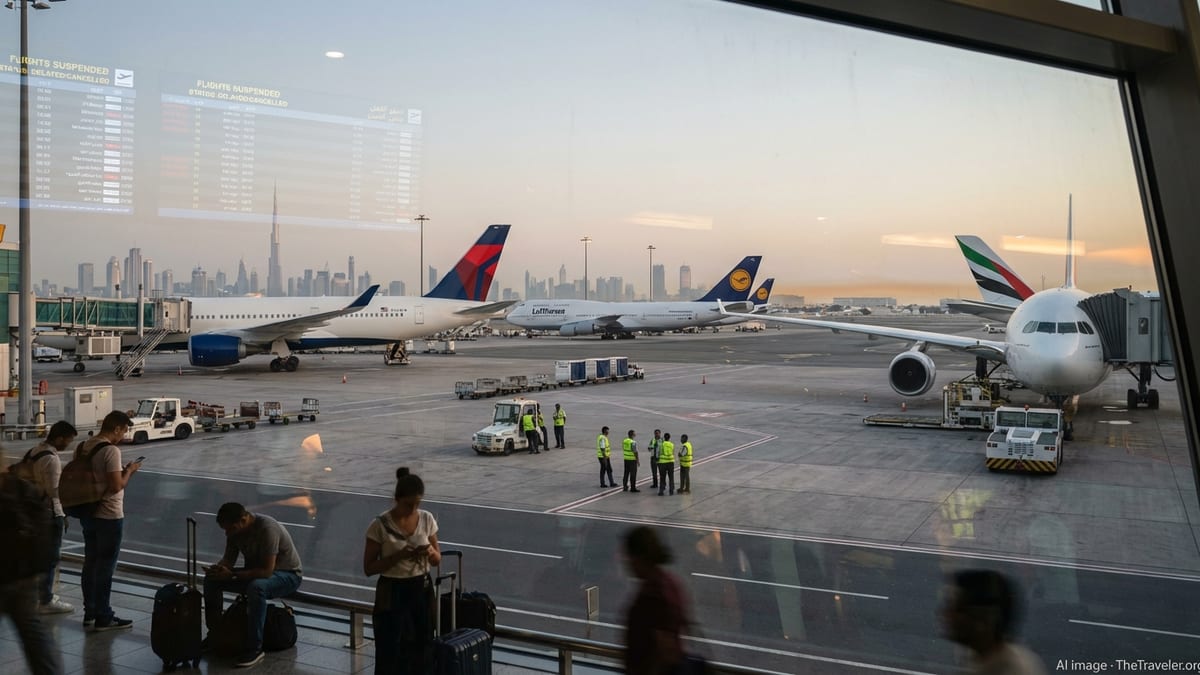
UK’s Busiest Hubs Hit by Fresh Wave of Disruption
The latest operational disruption at Heathrow and Gatwick comes during an already pressured travel period for UK airports, where high passenger volumes and tight schedules leave limited room to absorb delays. Publicly available tracking data and aviation disruption reports indicate that more than 300 flights have been affected at Heathrow alone on several recent days of intense congestion, with Gatwick also recording elevated levels of late and canceled services.
The current episode, involving 337 delayed flights and 11 cancellations across the two airports, reflects that wider pattern. Delays are reported across morning and evening peaks, with knock-on effects that push some services well behind schedule as aircraft and crews struggle to return to position.
Heathrow, one of the world’s busiest international hubs, has been particularly sensitive to any shock in the system, from weather systems over northern Europe to airspace restrictions linked to wider regional tensions. Gatwick, the UK’s second-busiest airport, continues to feel pressure from strong demand for short-haul European and leisure routes, where even modest timetable slippage can quickly ripple across multiple rotations in a single day.
Recent operational dashboards and compensation-tracking analyses for UK airports show that Heathrow and Gatwick have already logged hundreds of combined delays and dozens of cancellations on multiple days this spring, underscoring how quickly disruption can accumulate when traffic levels are high.
Flag Carriers and Low-Cost Airlines Among Those Affected
The disruption is affecting a broad mix of airlines, including British Airways and Virgin Atlantic at Heathrow, and easyJet and Ryanair at Gatwick. Full-service carriers and low-cost operators alike are reporting delayed departures and arrivals as congestion, aircraft rotation issues, and earlier knock-on delays compound through the schedule.
Reports indicate that British Airways, Heathrow’s dominant carrier, has seen a high number of delayed flights on key long-haul and European routes whenever disruption spikes at the hub. At Gatwick, easyJet’s dense schedule across Europe means that even short delays during the morning wave can cascade into widespread late departures later in the day. Ryanair’s operations are also vulnerable to airspace constraints and out-of-position aircraft when delays accumulate across its wider European network.
Long-haul operators are feeling the strain as well. Airlines such as Emirates, which links Gatwick and Heathrow with Dubai, can face schedule challenges when weather systems, airspace reroutings, or ground-handling bottlenecks lengthen flight and turnaround times. Virgin Atlantic services to North America and other long-haul destinations are exposed to similar pressures, particularly during busy transatlantic travel days.
While each airline publishes its own status updates and rebooking procedures, passengers across all carriers are experiencing the same on-the-ground reality: long queues at check-in desks and service counters, busy departure halls, and uncertain departure times that change as operations teams attempt to recover the schedule.
Key Routes to Global Hubs Disrupted
The disruption is hitting some of the busiest and most strategically important city pairs in global aviation. Flights between London and New York, one of the world’s highest-demand long-haul corridors, have been affected, with late departures from Heathrow and Gatwick feeding into arrival delays and missed connections in the United States.
Routes to Dubai are also experiencing knock-on effects. When flights depart late from London, aircraft are arriving behind schedule in the Gulf, compressing ground time and putting pressure on onward connection banks serving Asia, Africa, and Australasia. Publicly available tracking data for recent days already shows Dubai services arriving or departing off-schedule on several occasions as network disruption ripples outward.
Short-haul European routes from London to Paris, Amsterdam, and Madrid are similarly exposed. These services often operate multiple times per day on tight turnarounds, so a delay on a morning rotation can trigger late-running flights throughout the afternoon and evening. Amsterdam in particular has been a focus for wider European congestion in recent months, adding another layer of complexity when both origin and destination airports are under pressure.
Even longer-range services to Singapore and other major Asian hubs are not immune. Late departures from London can push arrivals into more congested times of day in Asia, increasing the risk of missed onward connections or the need to rebook passengers onto later flights when itineraries cannot be preserved.
Weather, Airspace, and Staffing Combine to Create Bottlenecks
Recent travel coverage across Europe points to a combination of factors driving flight disruption, rather than a single cause. Periodic storms across the UK and northern Europe have brought strong winds and low visibility, triggering air traffic flow restrictions, extended approach sequences, and occasional runway constraints at Heathrow and Gatwick.
In parallel, airspace restrictions and reroutings linked to geopolitical tensions have lengthened some flight paths and compressed available routes over parts of Europe and the Middle East. Industry analysis this year has highlighted days when hundreds of flights across the continent were delayed or rerouted because of changing overflight permissions and capacity measures.
Staffing continues to play a role as well. Post-pandemic recruitment and training challenges in areas such as air traffic control, ground handling, and security screening mean that operations can be vulnerable when sickness or unexpected absences occur. Once delays build up over several hours, airlines may be forced to cancel a small number of flights to prevent crew duty-time limits being exceeded, which helps explain why a limited but notable set of cancellations accompany the far larger number of delays.
Operational data and disruption trackers for UK airports in recent months have repeatedly cited this combination of weather, airspace, and staffing pressures as the main drivers of large-scale delays and cancellations, a pattern that appears to be repeating in the latest episode at Heathrow and Gatwick.
What Passengers Can Expect and How to Navigate Disruption
For travelers caught up in today’s delays at Heathrow and Gatwick, the most immediate challenge is uncertainty. Departure boards may show rolling delays as airlines and air traffic control adjust schedules in real time, and gate changes can be frequent as operators attempt to optimize scarce stand and runway capacity.
Publicly available guidance from airlines and consumer-rights organizations emphasizes the importance of checking flight status repeatedly on the day of travel, arriving at the airport with additional time when disruption is expected, and ensuring that contact details are up to date in airline booking profiles so that rebooking messages and gate updates are received quickly.
Under UK and European passenger-rights rules, travelers on many delayed or canceled flights may be entitled to care and assistance, including food, refreshments, and, in some cases, hotel accommodation when overnight stays are required. Compensation can depend on the exact cause of the disruption, but published guidance stresses that airlines remain responsible for rerouting or refunding passengers when flights are canceled or significantly delayed.
With 337 flights delayed and 11 canceled across Heathrow and Gatwick, today’s disruption underlines how closely interconnected global aviation networks have become. A combination of local weather, regional airspace constraints, and operational pressures can quickly leave thousands of passengers from New York to Singapore facing the same question as they watch departure screens in London: when will my flight finally leave?