


More news on this day
The UK Foreign, Commonwealth & Development Office (FCDO) has updated its travel advice for Bahrain and Kuwait, warning British nationals of elevated security risks and potential disruption as tensions between the United States and Iran reverberate across the Gulf.
Get the latest news straight to your inbox!
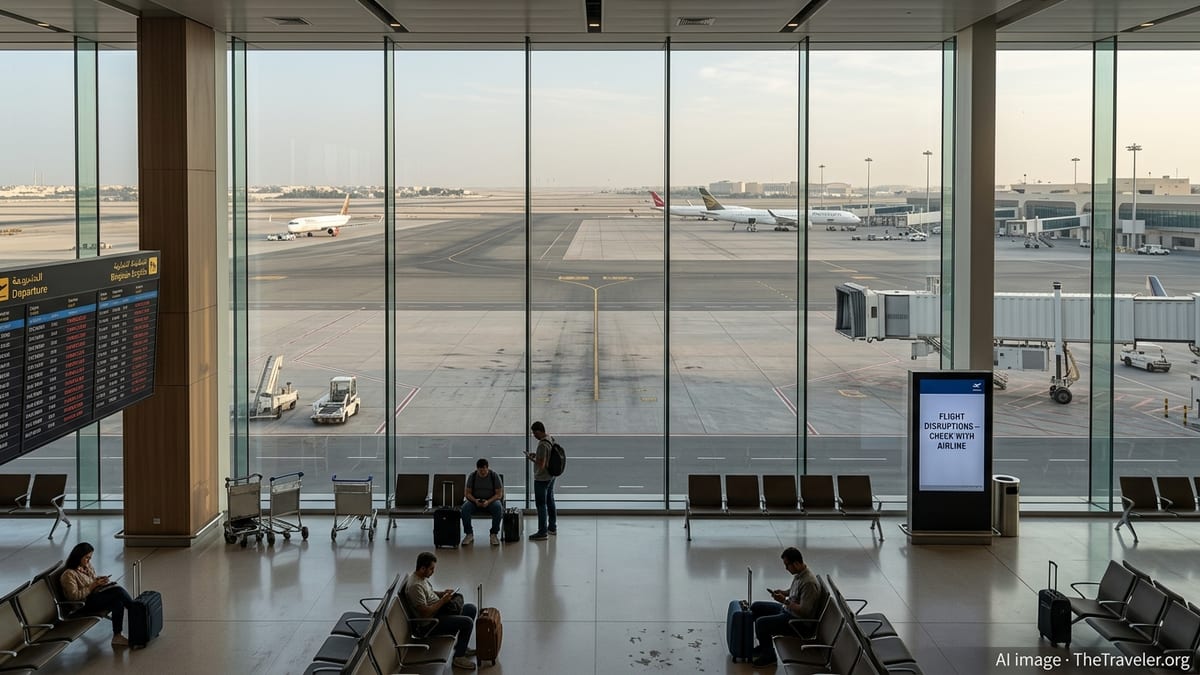
Heightened risk as regional conflict spills into Gulf hubs
According to the latest FCDO travel advice, the revised guidance comes in response to a series of strikes and retaliatory attacks across the region that have directly affected both Bahrain and Kuwait. Publicly available government updates describe recent incidents in which Iranian forces targeted locations tied to United States military and civilian infrastructure in multiple Gulf states, including facilities in and around Manama and sites in Kuwait.
The updates highlight that the risk profile for British travellers has shifted since the outbreak of large-scale hostilities between the United States and Iran earlier this year. Official notices describe an ongoing threat of missile and drone activity, as well as the possibility of further strikes aimed at American interests and locations associated with Western presence in the Gulf.
While the FCDO has not issued a blanket prohibition on travel to Bahrain or Kuwait, the language of the advisory urges heightened vigilance and emphasises that the security situation can deteriorate quickly. Travellers are encouraged to monitor UK government travel advice before and during trips and to be prepared to change plans at short notice if the situation worsens.
US security alerts and global travel advisories add to concern
The UK warning is part of a wider pattern of tightening guidance from Western governments in response to the US–Iran confrontation. The United States has issued security alerts covering multiple countries in the Middle East, with American citizens advised to exercise increased caution and have contingency plans in place for sheltering during potential attacks.
US travel advisories for Bahrain and Kuwait currently recommend that travellers reconsider non-essential visits, citing the threat of armed conflict, the risk of missile and drone strikes, and the potential targeting of locations frequented by Westerners. Travel guidance also notes that commercial flights may face disruption, including delays, diversions and sudden cancellations as airlines respond to shifting assessments of airspace safety.
These messages, though aimed primarily at US nationals, are being closely watched by travellers from other countries as an additional indicator of risk. For British holidaymakers and business visitors, the alignment of US and UK advisories is reinforcing the perception that trips to certain Gulf destinations now carry significantly greater uncertainty than in previous years.
Operational disruption: airspace, border crossings and movement restrictions
The FCDO’s latest Bahrain and Kuwait advisories stress that conflict-related disruption can affect not only personal safety but also the basic logistics of travel. Previous episodes during the current crisis have seen short-notice airspace closures over parts of the Gulf, as well as temporary suspension of traffic on key regional routes.
Travel notices point to earlier instances in 2026 when Gulf airspace was restricted and cross-border links, including the King Fahd Causeway between Bahrain and Saudi Arabia, were closed simultaneously. Regional aviation agencies have at times recommended that airlines avoid certain flight information regions, forcing carriers to reroute or cancel services using Gulf hubs.
Within Bahrain and Kuwait, local authorities have periodically imposed security cordons and movement restrictions around sensitive sites such as military bases, government buildings and energy infrastructure. Public information indicates that such measures can be introduced at short notice following incidents or in response to intelligence about possible threats, limiting access to some districts and causing knock-on disruption to road networks and public transport.
Travellers are therefore being advised to keep itineraries flexible, allow extra time for journeys and hold confirmed accommodation and transport options that can be amended without excessive penalties.
Guidance for British travellers considering the Gulf
For UK nationals weighing trips to Bahrain or Kuwait in the current climate, the Foreign Office guidance places particular emphasis on preparation and situational awareness. Prospective visitors are urged to review the detailed country pages on the government’s travel advice service, paying close attention to safety, security and transport sections as well as any recent update notes.
Registration for travel advice email alerts is recommended so that changes in guidance are delivered directly. British nationals already in Bahrain or Kuwait are encouraged by public information to ensure they have valid travel documents to leave at short notice, maintain regular contact with family or employers, and identify safe locations where they could shelter in the event of renewed strikes.
Holidaymakers considering new bookings are being advised by many travel industry observers to check cancellation terms and insurance coverage carefully, especially with regard to war and terrorism exclusions. Some policies may not cover trips to destinations where government advice has changed to reflect a heightened threat level, making it important for travellers to confirm details with insurers before committing to non-refundable arrangements.
Implications for tourism, business travel and regional connectivity
The revised UK guidance is expected to weigh on leisure tourism demand to Bahrain and Kuwait in the near term, even as other Gulf destinations attempt to maintain a sense of normality. Analysts following the Middle East hospitality and aviation sectors note that repeated security alerts and airspace adjustments can quickly erode traveller confidence, particularly among first-time visitors or families.
Business travel to the two countries is also being reassessed, with many companies reviewing the necessity of in-person visits and, where possible, replacing them with virtual meetings. Corporate travel managers are updating internal risk assessments and in some cases are requiring specific authorisation for trips that transit or overnight in Bahrain or Kuwait.
For regional connectivity, further changes to the security outlook in the Gulf could have consequences beyond the immediate conflict zone. Major carriers that use Bahrain or Kuwait as transit or operational points may need to rework schedules, shift capacity to alternative hubs or temporarily suspend certain routes if risk levels rise again. Travellers with long-haul itineraries through the region are therefore being encouraged to check booking conditions and to stay informed as airlines continue to adjust to evolving guidance from governments and aviation authorities.