


More news on this day
Air travel across Australia and New Zealand is facing fresh disruption as more than 55 flight cancellations and an estimated 808 delays ripple through major airports, affecting services operated by Qantas, Virgin Australia, Air New Zealand, Solomon Airlines and several regional carriers.
Get the latest news straight to your inbox!
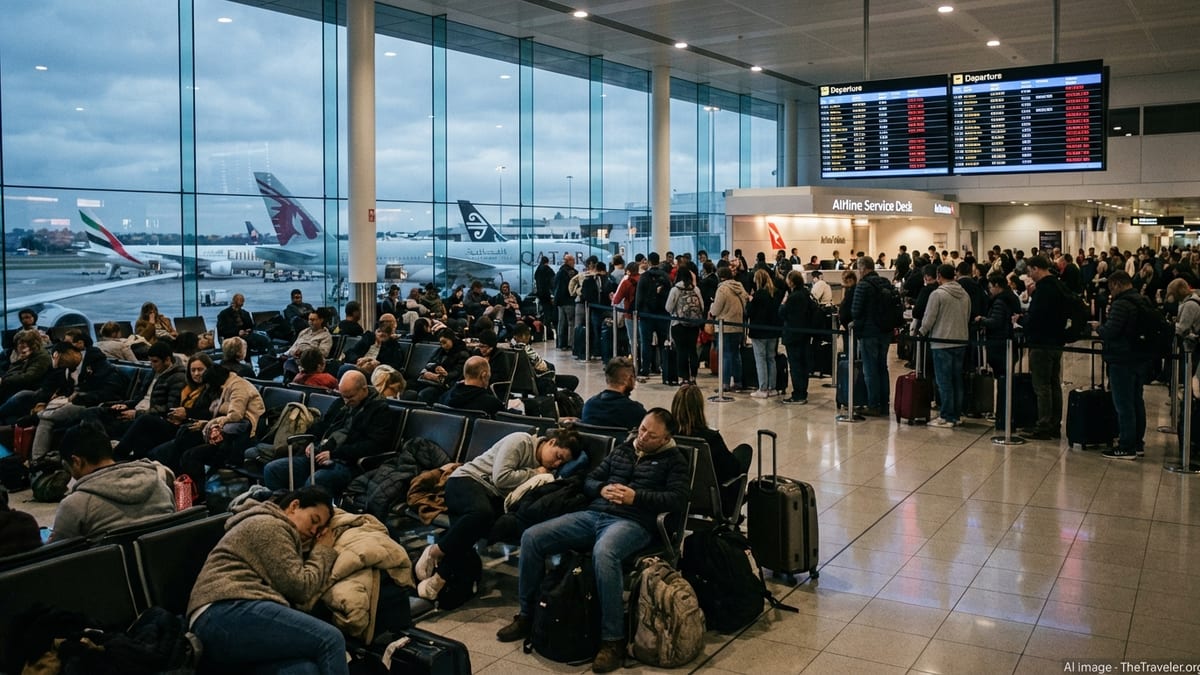
Major Hubs from Melbourne to Auckland Affected
The latest wave of disruption is being felt most acutely across the region’s busiest gateways, with Melbourne, Sydney and Brisbane in Australia and Auckland and Wellington in New Zealand bearing the brunt of operational strain. Publicly available airport and aviation tracking data indicate that high traffic volumes on these routes leave little margin when schedules begin to unravel.
Melbourne and Sydney, which handle some of the densest domestic and trans Tasman traffic, are particularly exposed when delays accumulate early in the day. Once aircraft and crew fall out of position, subsequent departures between the east coast capitals and New Zealand’s main centres are frequently pushed back or scrubbed altogether, amplifying disruption for both business and leisure travellers.
On the New Zealand side, Auckland and Wellington are experiencing knock on effects as delayed inbound services from Australia compress turnaround times and reduce flexibility for local carriers. According to published coverage of recent disruption patterns, even a relatively small number of cancellations on core routes can cascade into hundreds of delayed movements by evening peaks.
Regional airports linked into these hubs, such as Christchurch and smaller centres connected via Auckland and Brisbane, are also reporting secondary delays as aircraft arrive late, creating rolling schedule changes throughout the day.
Qantas, Virgin Australia, Air New Zealand and Solomon Airlines in Focus
The disruption is hitting a broad mix of airlines. Qantas and Virgin Australia, the two largest Australian based carriers, are seeing delays across key domestic corridors, including services between Sydney, Melbourne and Brisbane that then feed into international connections. Industry monitoring has highlighted that when punctuality dips on these trunk routes, knock on effects spread quickly to trans Tasman operations.
Air New Zealand, which dominates many New Zealand domestic routes and operates a substantial share of flights between New Zealand and Australia, is also contending with schedule pressure. Recent on time performance reports for the trans Tasman sector already showed variability in punctuality on routes such as Auckland to Sydney and Brisbane, suggesting limited slack in the system when additional disruption arises.
Solomon Airlines, which serves select links between the Pacific and New Zealand and Australia, is a much smaller player by volume but can see a disproportionate impact from a handful of cancellations. Publicly available performance summaries have previously noted that even a single cancelled service on a thin route can affect a significant percentage of the airline’s scheduled operations for that day.
Low cost and regional operators, including Jetstar and QantasLink, often operate tightly timed rotations using shared airport infrastructure. When congestion intensifies, these carriers can also experience extended ground delays, adding another layer to the overall disruption picture for travellers across the region.
Trans Tasman Routes Under Particular Strain
The corridor between Australia and New Zealand is one of the most heavily trafficked international markets in the southern hemisphere, and the latest figures on 55 cancellations and over 800 delays highlight how quickly pressure can build on these links. Routes connecting Melbourne, Sydney and Brisbane with Auckland and Wellington are especially sensitive to any operational irregularities.
Government and industry data on aviation punctuality in recent months have pointed to fluctuating performance on these city pairs, with some services recording relatively high rates of delays. When combined with periods of elevated seasonal demand, such as school holidays and major events, even moderate disruptions can leave flights fully booked for days, limiting options for rebooking affected passengers.
Trans Tasman routes also function as important connectors for long haul traffic. Delays on flights between Australia and New Zealand can cause passengers to miss onward services to North America, Asia and the Pacific, compounding the financial and logistical impact. Travel analysts note that airlines often must juggle aircraft allocations at short notice, weighing whether to protect long haul departures or maintain regional frequency.
Capacity adjustments, including previous schedule tweaks and temporary route increases by larger carriers, have helped bolster resilience on some days but have not eliminated vulnerability to sudden spikes in delays, particularly during weather disruptions or ground handling bottlenecks at major hubs.
Impact on Travellers and Travel Industry Response
The cumulative effect of 55 cancellations and 808 delays is being felt most directly by passengers facing missed connections, overnight layovers and last minute accommodation scrambles. Reports from recent disruption episodes across Australia and New Zealand show long queues at service desks, with travellers seeking rebooking options on already crowded services.
Travel insurers and consumer advocates have been urging passengers to retain boarding passes, delay notifications and any written confirmation of disruptions, as these documents are often required for claims involving missed tours, cruises and prepaid hotel stays. Some policy providers in the region have already reported increased claim volumes linked to recurring schedule instability.
Industry observers note that airlines and airports are continuing to refine contingency plans, including redeploying aircraft, adjusting rosters and coordinating more closely with air traffic management when backlogs develop. However, publicly available analyses also suggest that structural constraints such as limited spare aircraft, staffing pressures and congested peak hour slots leave the system exposed when several issues occur simultaneously.
Tourism bodies on both sides of the Tasman have expressed concern in prior commentary that repeated disruptions risk undermining confidence in short haul travel, particularly for high value business and event related trips. While demand for trans Tasman journeys remains robust, ongoing reliability challenges are prompting some travellers to build in wider connection buffers or opt for fewer, longer trips rather than frequent short visits.
What Passengers Can Do Right Now
For travellers booked in the coming days, aviation experts and consumer groups generally recommend checking flight status repeatedly before departure, rather than relying solely on the original itinerary. Given the scale of recent delays, same day schedule changes are not uncommon on busy routes between Melbourne, Sydney, Brisbane, Auckland and Wellington.
Passengers are also encouraged to ensure contact details in airline bookings are up to date so they receive real time notifications of gate changes, retimings or cancellations. Where possible, opting for earlier flights in the day on critical travel dates can provide more rebooking options if a disruption occurs, as later services may already be heavily committed.
For those with tight international connections, building in longer layover times at major hubs may help reduce the risk of misconnecting when delays accumulate. Travel advisers in the region have been steering some clients toward itineraries with more generous buffers, particularly on routes known for variable on time performance.
While conditions remain fluid, the current pattern of 55 cancellations and more than 800 delays underscores the importance of flexible planning, close monitoring of schedules and awareness of passenger rights under Australian and New Zealand consumer frameworks when significant disruptions occur.