


More news on this day
A major freight train derailment near Lordsburg in southwestern New Mexico has severed a critical rail link and disrupted travel across the borderland region, with early reports pointing to extensive damage to tracks, railcars and nearby infrastructure along this busy transcontinental corridor.
Get the latest news straight to your inbox!
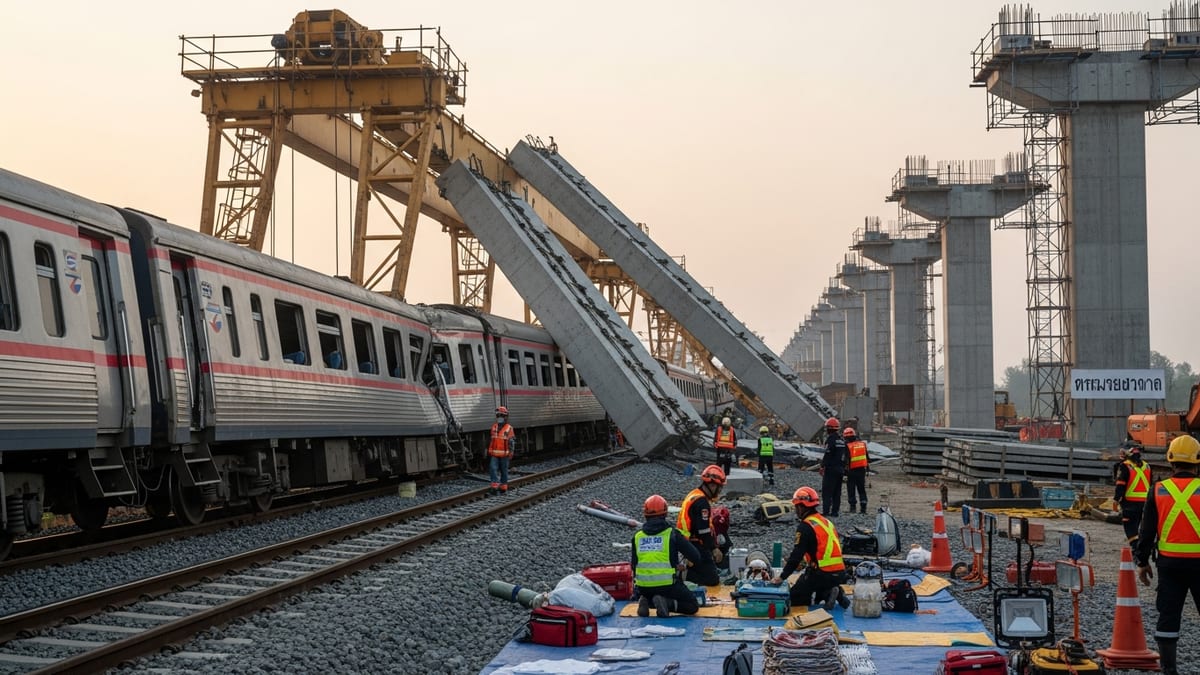
Key Southwest Rail Route Brought to a Standstill
The derailment occurred on a heavily used east west freight artery that parallels Interstate 10 near Lordsburg, a small desert community close to the New Mexico and Arizona state line. This stretch of track forms part of a mainline used by long, high tonnage freight consists that connect West Coast ports with inland distribution hubs across Texas and the Midwest.
Published coverage indicates that a significant number of railcars left the tracks, scattering wreckage along the right of way and forcing an immediate shutdown of traffic in both directions. Initial images shared by local media and rail observers show damaged intermodal equipment and containers piled at sharp angles, as well as torn up ballast and twisted rail that will likely require full reconstruction before normal operations can resume.
Rail traffic through the Lordsburg area plays an important role in moving consumer goods, industrial products and cross border freight. The sudden closure of this corridor is expected to ripple across freight schedules, with trains held at sidings hundreds of miles away while crews work to clear the scene and rebuild the damaged segment.
Passenger travel is also affected, as long distance services that typically traverse this route are diverted, shortened or replaced with buses. Travelers crossing the Southwest by rail face extended journey times and last minute changes to itineraries while the mainline remains out of service.
Impact on Regional Travel and Interstate 10
The derailment is drawing particular attention from travelers because of its location near Interstate 10, a principal highway for both long distance motorists and commercial trucking between California, Arizona, New Mexico and Texas. Reports describe heavy equipment and emergency vehicles staged near highway interchanges and frontage roads as response and recovery operations expand.
While the rail incident is centered on the tracks, knock on effects can include rolling lane closures, slowdowns near access points and increased congestion at rest areas and fuel stops. Motorists in the Lordsburg and Deming area are being advised through local advisories and traffic updates to anticipate possible delays and to watch for work crews operating close to the roadway.
For commercial carriers, the rail disruption may increase near term dependence on trucking to keep time sensitive cargo moving. Logistics analysts note that when a major mainline is knocked out, some shippers shift loads to long haul trucks, which can tighten highway capacity and affect service levels on already busy corridors such as Interstate 10.
Travelers planning cross country trips through the desert Southwest are being encouraged to monitor rail and highway updates closely, especially those coordinating rail and road segments on the same journey. Conditions can evolve quickly as wreckage is removed, track work progresses and detours are adjusted.
Response, Recovery and Safety Evaluation
According to publicly available information, railroad incident response teams and contractors have been deployed with cranes, side booms and specialized heavy equipment to remove derailed cars and damaged track components. These operations typically proceed in stages, beginning with hazard assessment and stabilization before large scale lifting and cutting can begin.
Once the site is secure, crews work to clear the right of way of debris so that track and signaling specialists can rebuild the roadbed, reset new ties and rail, and restore power and communications systems. On a heavily used mainline, railroads often prioritize returning at least one track to service as soon as possible, allowing limited movements to resume under slow orders while additional repairs continue.
Major derailments of this kind also prompt renewed questions about the integrity of the infrastructure and the safe handling of long, heavy trains through remote stretches of the network. Recent analytical studies on freight risk have underscored how derailments, while relatively infrequent compared with truck incidents, can have outsized consequences when they affect mainline routes or involve hazardous materials.
Investigative reviews typically examine a combination of factors, including train handling, track condition, equipment performance, recent maintenance records and any extreme weather that may have preceded the event. Findings from these reviews often translate into localized infrastructure upgrades, revised inspection regimes or changes in operating practices along the affected subdivision.
What the Lordsburg Incident Means for Travelers
For passengers booked on long distance trains that traverse the New Mexico and Arizona desert, the most immediate effect is the likelihood of altered routes, substitute bus segments or temporary service suspensions. Rail operators usually issue service alerts as soon as the scale of a derailment becomes clear, followed by more detailed rebooking and refund options as the expected closure window is refined.
Travel industry observers note that travelers who are flexible with dates and routing have more options in the days following a significant rail interruption. Some may choose to shift to alternate rail lines farther north, while others opt for regional flights or point to point bus services that bypass the affected corridor entirely.
In the wider tourism economy of the borderland region, delays and cancellations can affect hotel occupancy, car rentals and tour schedules, particularly in gateway cities that serve as rail hubs. Even when the derailment itself occurs in a sparsely populated area, the knock on effects can reach major urban centers that rely on consistent rail connectivity to feed visitor flows.
Local businesses in and around Lordsburg may experience a temporary uptick in demand from workers involved in recovery efforts, while at the same time seeing through traffic patterns change as detours are implemented. The balance of these effects will depend on how long it takes to restore full rail capacity and how widely route planners adjust freight and passenger flows.
Looking Ahead on a Critical Desert Corridor
Once the immediate emergency has passed and traffic begins to move again, attention is likely to shift toward long term resilience of this strategic corridor. The Lordsburg area has long been recognized in transportation planning documents as a key juncture for both rail and highway freight, linking markets across the Southwest with gateways to Mexico and the Pacific.
Analysts expect the derailment to feed into ongoing discussions about track capacity, maintenance strategies and technology investments designed to reduce the likelihood and impact of future incidents. Ideas that frequently surface after major disruptions include enhanced wayside monitoring, additional passing sidings to improve traffic management and targeted infrastructure reinforcement in locations that see high train counts and extreme thermal stress.
For travelers, the incident is a reminder that journeys across the wide open spaces of the desert Southwest depend on a tightly coordinated web of rail and highway assets. When a single link is severed near a place like Lordsburg, the effects can cascade across timetables, itineraries and supply chains far beyond the immediate scene of the crash.
As rail operations gradually return to normal, the performance of the recovery effort and the lessons drawn from this derailment will shape how carriers, planners and travelers alike think about risk, redundancy and reliability along one of North America’s most important east west transport lifelines.