


More news on this day
Passengers using Manchester Airport today, 18 June 2026, are facing a scattered but significant pattern of cancellations and delays, with disruption affecting a mix of short-haul European departures and arrivals alongside some longer leisure services.
Get the latest news straight to your inbox!
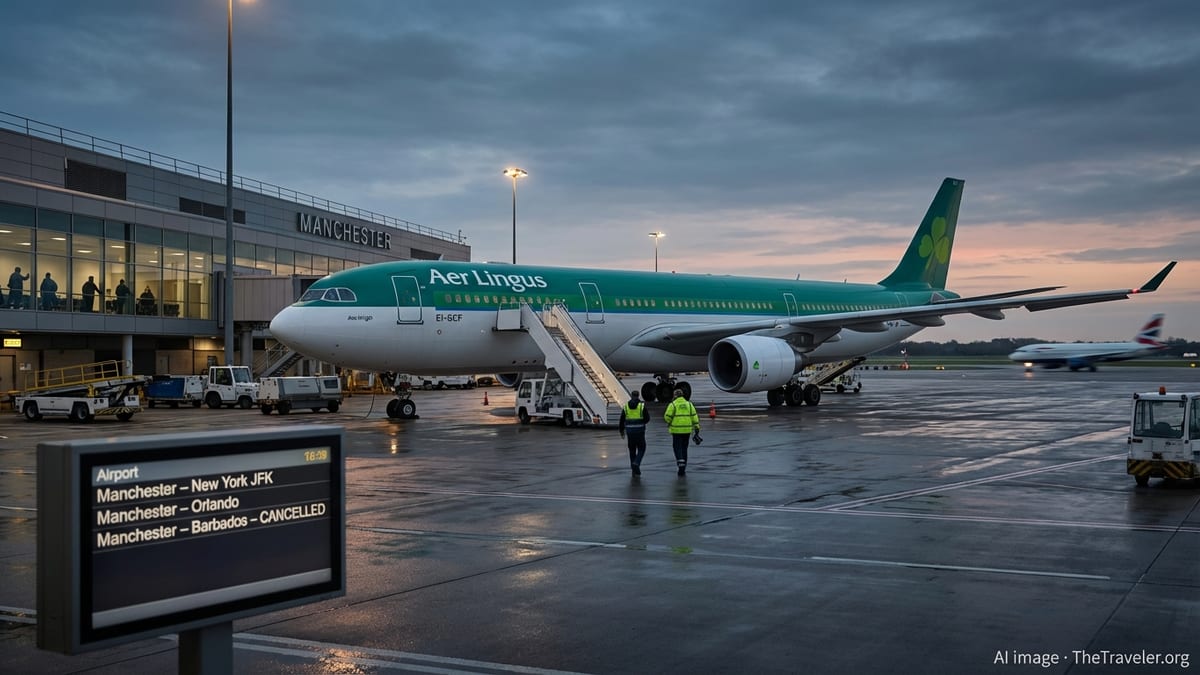
Snapshot of today’s disruption at Manchester Airport
Publicly available live flight boards and tracking services indicate that Manchester Airport is seeing a moderate level of disruption today rather than a complete operational breakdown. A cluster of cancellations appears across several European routes, while a wider band of services are operating with delays ranging from modest schedule slips of 30 to 60 minutes to longer holds linked to aircraft and crew rotation issues.
The picture is also uneven across terminals. Terminal 1 and Terminal 2 show isolated cancellations and a higher incidence of late-running departures to holiday destinations, reflecting tight aircraft utilisation during the summer schedule. Terminal 3, which handles a number of domestic and short European flights, shows fewer outright cancellations but various services operating behind schedule as earlier delays cascade through the day.
Overall traffic levels at Manchester remain high, and most flights are still operating, but today’s timetable illustrates how even a handful of early disruptions can ripple outward and generate missed connections, gate changes and extended waits at busy departure lounges.
Routes and airlines most affected
Based on live-status snapshots across multiple flight-tracking platforms, cancellations are concentrated on short-haul links between Manchester and European leisure or secondary city destinations. Flights to Mediterranean holiday islands, Iberian coastal airports and selected central European cities feature prominently among the affected services, reflecting how weather or operational constraints at one end of a route can quickly render a round trip unworkable.
Low-cost carriers appear among the most visible in today’s cancellation list, largely because they operate dense schedules with quick aircraft turnarounds. When a single rotation is heavily delayed early in the day, the aircraft may drop one sector entirely to reset its timetable, which shows up as a same-day cancellation from Manchester. Full-service airlines are not immune, but they sometimes have greater flexibility to swap aircraft or reroute passengers through other hubs, so their disruption is more likely to show as extended delays than outright scrapped flights.
The pattern on arrivals mirrors the departures board. Services inbound from southern Europe and popular holiday regions show some of the longest delays, which then push back subsequent outbound departures using the same aircraft. This knock-on effect is a recurring feature of Manchester’s summer operations and is particularly visible on days like today when the network is already running close to capacity.
Weather, knock-on effects and wider network pressures
Today’s problems at Manchester do not appear to stem from a single local incident such as a runway closure or power failure. Instead, the disruption reflects a combination of wider European air traffic pressures, unsettled summer weather in parts of the continent and general congestion across airline networks as carriers operate intensive holiday schedules.
Reports from other major hubs in recent days highlight how thunderstorms, temporary runway work and air-traffic-control flow restrictions can trigger large numbers of late flights and cancellations far from the original source of disruption. When aircraft and crews are held on the ground or forced to divert, the effects often reach airports like Manchester hours later, visible in the form of late-evening cancellations, missed curfews or aircraft arriving too late to operate their final sector of the day.
Manchester’s own summer runway and noise-management plans, published ahead of the season, show that the airport is operating at sustained high utilisation during daytime hours. In such conditions, even small external shocks can have outsized effects, since there are few spare slots to absorb delays and limited slack in stand and gate availability once traffic peaks.
What today’s cancellations mean for travellers
For passengers, the main impact of today’s cancellations and delays is extended journey times and a higher likelihood of missed onward connections, particularly for those booked on tight same-day links via other European hubs. Travellers with evening departures may also face uncertainty if inbound aircraft arrive late, potentially triggering last-minute schedule changes while aircraft positioning is adjusted.
Publicly accessible guidance from regulators and consumer bodies emphasises that passengers whose flights are cancelled or subject to long delays may be entitled to rebooking options, refreshments, and in some cases hotel accommodation and financial compensation, depending on the cause of the disruption and the operating carrier. However, the exact level of support varies, especially where airlines cite external causes such as severe weather or air-traffic-control restrictions.
Airport information screens and airline apps today highlight repeated reminders for passengers to monitor their booking closely rather than relying solely on printed boarding passes or earlier schedule information. Because some flights are switching departure gates at short notice to keep aircraft and crews moving, keeping track of real-time updates is particularly important for those travelling with checked baggage or needing special assistance.
Advice for passengers flying through Manchester today
Given the current level of disruption, travellers due to fly from Manchester today are being encouraged by publicly available travel advisories to build additional time into their airport journey and to check flight status repeatedly in the hours before departure. Airline digital channels and third-party tracking tools may show different update intervals, so it is sensible to refresh information frequently and verify any apparent cancellation or gate change directly with the carrier.
Passengers connecting through Manchester on separate tickets, particularly those linking low-cost short-haul flights with long-haul services, are among the most exposed to today’s delays. Travel-planning resources consistently advise leaving generous buffers between flights at busy hubs, and today’s rolling delays across parts of the Manchester schedule underline why short connections can be risky during peak season.
Those already at the airport and facing lengthy waits are finding that rebooking options can be limited on popular leisure routes where alternative services are already heavily sold. In such cases, some travellers may be offered rerouting via different European hubs or next-day departures. Observed patterns from previous disruption events at Manchester suggest that early communication with airlines and proactive use of self-service rebooking tools can improve the chances of securing a workable alternative itinerary.