

More news on this day
The United Kingdom has lifted its warning against all but essential travel to the United Arab Emirates, following an agreement between the United States and Iran to end their war and reopen vital Gulf transport routes, in a development expected to accelerate the recovery of tourism and business traffic through Dubai and Abu Dhabi.
Get the latest news straight to your inbox!
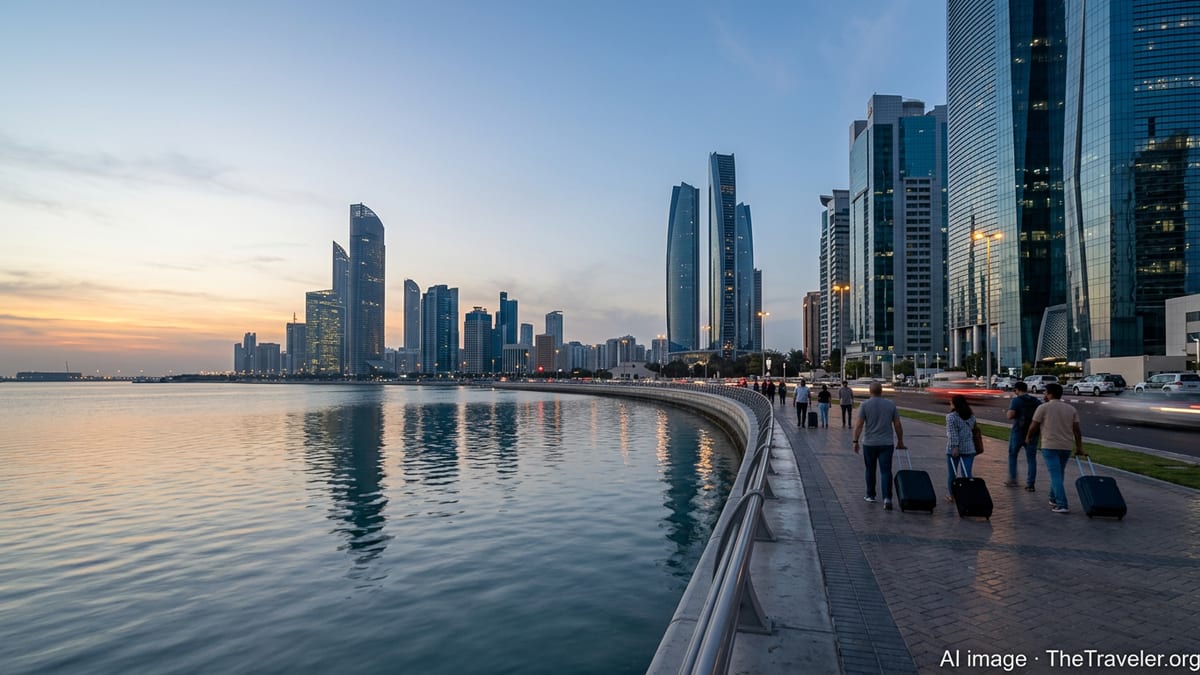
Travel advice shift follows de-escalation in Gulf conflict
According to publicly available Foreign Office guidance updated after the US–Iran memorandum to end the war, the United Kingdom has removed its heightened advisory for the United Arab Emirates, reflecting a rapid reassessment of security risks across the Gulf. The shift comes after months in which the UK, alongside several other governments, had urged citizens to avoid non-essential trips to the UAE because of missile and drone threats linked to the conflict.
Recent travel-industry digests and government advisories show that the UAE was previously grouped with a wider Middle East region facing partial airspace closures, disrupted schedules and the withdrawal of some diplomatic staff families. Those documents indicated that British authorities had been advising against all but essential travel to the country for much of the spring, citing the risk of spillover from attacks on energy and transport infrastructure.
The updated stance now positions the UAE as one of the first frontline states to benefit from the de-escalation triggered by the US–Iran accord. While officials in London continue to warn that the wider region remains volatile, the removal of the elevated warning for the UAE signals confidence that immediate threats to commercial hubs such as Dubai and Abu Dhabi have diminished.
US–Iran deal reopens Strait of Hormuz and calms markets
The travel advisory change closely follows the signing of an initial deal between Washington and Tehran that aims to end months of war and reopen the Strait of Hormuz, the narrow waterway that handles a significant share of the world’s oil and liquefied gas shipments. Coverage by international outlets describes the memorandum as taking immediate effect, halting hostilities, easing sanctions and setting out a timetable to restore shipping and aviation links through the Gulf.
Published summaries of the agreement indicate that the United States has committed to lifting a naval blockade on Iranian ports while Iran begins de-mining and reopening the strait to commercial traffic. The framework is described as a first step toward a broader final settlement addressing Iran’s nuclear programme and regional proxies, but markets have already responded with tumbling oil prices and rising airline and travel stocks.
For Gulf transport hubs, the reopening of Hormuz and the easing of military tensions are crucial. During the height of the conflict, airspace restrictions forced complex rerouting, extended flight times and prompted carriers to suspend some services altogether. Analysts now expect airlines based in the UAE to progressively restore pre-war schedules as flight corridors are normalised and insurance premiums for overflying the region begin to fall.
Tourism and aviation in the UAE brace for rapid rebound
Travel-industry assessments circulated in recent days suggest that the UAE’s tourism and aviation sectors are preparing for a sharp uptick in demand from Europe following the UK decision. The country’s major carriers, which rely heavily on long-haul transfer traffic from London and other British cities, are viewed as early beneficiaries of any rebound in confidence.
Prior to the advisory change, corporate travel planners and tour operators had reported significant postponements of Middle East itineraries that included Dubai stopovers, often rerouting clients through alternative hubs or delaying trips altogether. With the UK warning lifted and the US–Iran deal reducing the perceived risk of further missile attacks in Gulf airspace, those same planners are now expected to reinstate suspended routes and packages.
Hotel groups with large footprints in Dubai and Abu Dhabi are also likely to see improved booking momentum from British holidaymakers and business visitors. Travel analytics consulted by industry publications point to a pattern seen after previous regional flare-ups, where pent-up demand is released quickly once major Western governments downgrade their warnings, especially when accompanied by promotional fares and flexible booking policies from airlines.
Regional advisories remain mixed as security picture evolves
Despite the positive signal for the UAE, publicly available advisory trackers show that many governments continue to warn strongly against travel to other parts of the Middle East. Countries directly affected by fighting, including Iran itself as well as neighbouring conflict zones, remain under stricter categories, reflecting ongoing security incidents and political uncertainty even after the ceasefire.
Reports summarising changes by a group of Western and Asian states indicate that while the UAE, Qatar and Saudi Arabia have seen some easing of restrictions, destinations such as Iraq, Syria, Yemen and Lebanon remain subject to more severe warnings. In several cases, advisories still highlight the risk of missile strikes, civil unrest and disrupted consular services.
Travel risk consultancies note that the situation may continue to shift in the coming weeks as the US–Iran deal is implemented and as talks on a longer-term settlement proceed. Governments are expected to review their advice regularly, weighing improvements in maritime and aviation security against the possibility of renewed tensions if diplomatic efforts stall.
What the change means for UK travellers and the wider industry
For British travellers, the lifting of the UK’s warning for the UAE primarily affects insurance coverage, corporate travel approvals and the willingness of individual tourists to book trips. Many standard travel insurance policies either exclude or restrict coverage when a destination is subject to “no travel” or “essential-only” government advisories, so the downgrade is likely to restore fuller protection for holidays and business visits to the Emirates.
Corporate travel policies that automatically block staff from visiting destinations under the highest warning levels may also be relaxed, enabling multinational firms to resume in-person meetings, conferences and project work in the UAE. This is particularly significant for sectors such as finance, energy and construction, where Dubai and Abu Dhabi function as regional headquarters.
For the broader travel industry, the change underscores how closely route planning and consumer sentiment are tied to geopolitical developments. The UK move, coming so soon after the US–Iran agreement to end the war, provides an early case study in how quickly official perceptions of risk can pivot once a peace framework is in place. Airlines, hotels and tour operators will now watch closely to see whether other European governments follow suit and whether the fragile calm in the Gulf holds through the summer peak season.