


More news on this day
Passengers travelling through Manchester Airport faced fresh delays on Monday after another UK air traffic control IT issue triggered knock-on disruption for flights heading to and from northern airports, coming less than two weeks after a separate nationwide systems failure.
Get the latest news straight to your inbox!
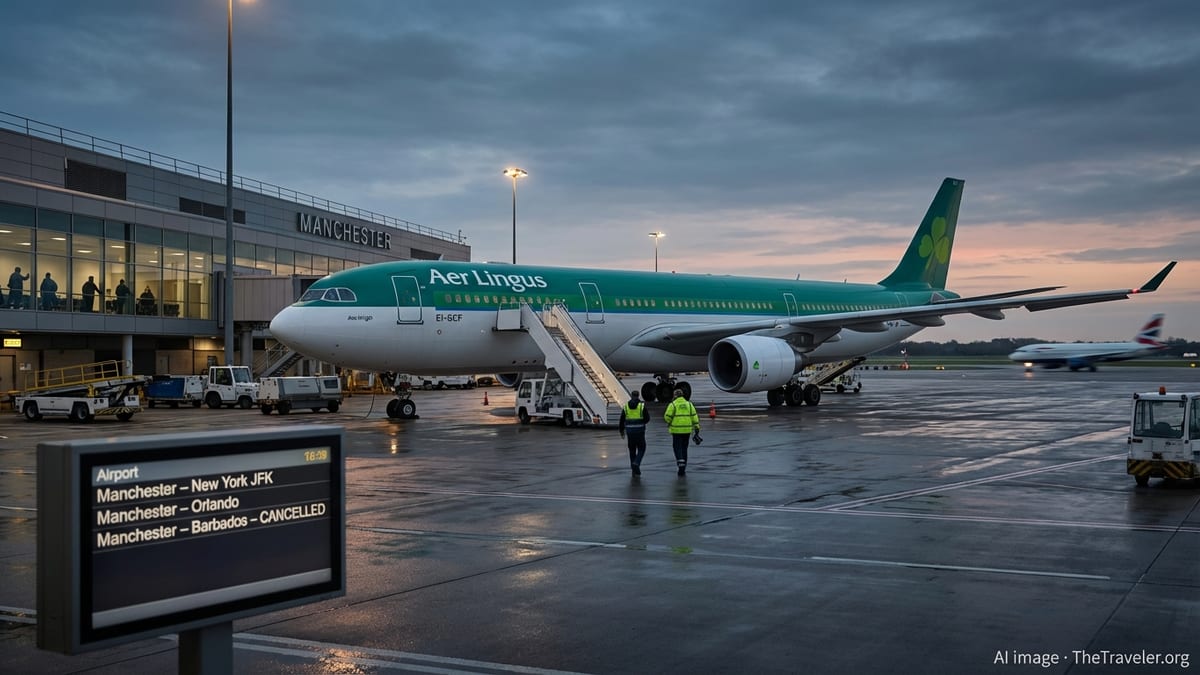
What happened, and why Manchester was affected
Published coverage indicates the latest disruption was linked to a technical problem at NATS’ Prestwick air traffic control centre in Scotland, a facility that supports flight management for parts of the UK network. While the issue was reported as resolved later in the day, the impact lingered as traffic regulations were lifted and flight schedules were rebuilt.
Manchester Airport was among the airports reporting delays, alongside Glasgow and Belfast, as constraints were applied to keep operations safe during the interruption. Reports also indicated that airports south of Manchester were broadly less affected, though some services touching London still warned of disruption as aircraft and crews ended up out of position.
For Manchester passengers, the most visible effects were extended waits for departures and arrivals as airlines managed congested slots and adjusted rotations. Because Manchester is a major base for short-haul and leisure carriers, even a small reduction in capacity can ripple quickly into missed connections, rebookings, and late-night arrivals.
A second NATS incident in two weeks raises pressure on resilience
The new failure arrived shortly after a larger UK airspace disruption on Tuesday, September 8, when a software defect in NATS’ National Airspace System contributed to widespread restrictions and days of recovery for airlines and airports. NATS subsequently published a preliminary report describing how a specific flaw during a manual aircraft-code request led to corrupted output and reduced information available to controllers, prompting safety-related traffic restrictions.
In that September 8 incident, the restrictions lasted about six hours, but the backlog took more than two days to clear, affecting hundreds of thousands of passenger journeys. NATS’ preliminary report also stated that the event was unrelated to the major outage in August 2023.
Monday’s disruption was described in published reporting as unrelated to the earlier September issue, with coverage pointing to a connectivity problem at Prestwick. Even so, the back-to-back nature of the incidents has intensified scrutiny of how quickly the system can recover and how effectively disruptions can be contained to prevent cascading delays across the national network.
What travelers should expect at Manchester Airport today
Published coverage indicated the immediate operational problem was fixed, but passengers were still advised to check flight status directly with their airline as schedules stabilized. In practical terms, that means travelers may see rolling delays, gate changes, and last-minute aircraft swaps as carriers try to protect later flights and comply with crew duty limits.
Manchester-bound flights can also be affected even when the airport itself is operating normally. If an aircraft is delayed on an earlier leg into Manchester, that late arrival can reduce the turnaround window for the next departure, raising the risk of missed departure slots and further compounding delays.
Cancellation patterns can vary by airline and route, but the airports most closely associated with the day’s disruption included Manchester, Belfast International, Edinburgh, and George Best Belfast City, according to data cited in published coverage. That matters for Manchester passengers flying to Scotland or Northern Ireland, as well as anyone connecting onto those routes later in the day.
Passenger rights: compensation may be limited, but care still applies
In disruption caused by air traffic control restrictions, passengers often focus first on compensation. Published coverage cited guidance that delays or cancellations directly caused by the incident are unlikely to trigger compensation under UK and EU-derived consumer rules, because air traffic control failures are generally treated as outside an airline’s control.
Even when compensation is unlikely, airlines still have obligations to provide “duty of care” during significant delays. Depending on the length of the delay and the circumstances, this can include meals and refreshments, and where an overnight stay becomes necessary, hotel accommodation and transport between the airport and lodging.
For Manchester passengers, the most time-sensitive step is documentation: keep boarding passes, screenshots of delay notifications, and receipts for reasonable expenses if the airline instructs travelers to claim costs back. Travelers who are rebooked onto later flights may also want to confirm whether checked baggage is being moved automatically, especially when an itinerary involves a same-day connection to another UK or European airport.
Airlines react as disruptions affect northern routes
Airlines serving Manchester and other affected airports signaled frustration in published coverage, with some carriers warning customers to expect disruption and urging travelers to monitor flight trackers for real-time changes. Industry commentary in reports framed air traffic control as critical national infrastructure that needs higher resilience to prevent repeated system-wide impacts.
For travelers, the near-term takeaway is operational rather than political: when ATC restrictions hit, disruption tends to concentrate on certain flows, such as flights heading north from England or departing from Scottish airports, with knock-on effects as aircraft rotations fall behind. That can be especially challenging for late-evening departures from Manchester, when fewer alternative flights remain and hotel availability can tighten quickly.
Manchester Airport passengers due to fly over the next 24 to 48 hours may see continued knock-on effects as airlines reposition aircraft and crews. The situation can change quickly, so the most reliable steps remain checking airline alerts, arriving with extra time if traveling with checked baggage, and confirming rebooking options early if a delay appears likely to push travel into an overnight window.