


More news on this day
Passengers flying from Manchester Airport on Friday 4 September are being advised to monitor flight status closely, as live departure boards highlight a series of delays affecting services throughout the day.
Get the latest news straight to your inbox!
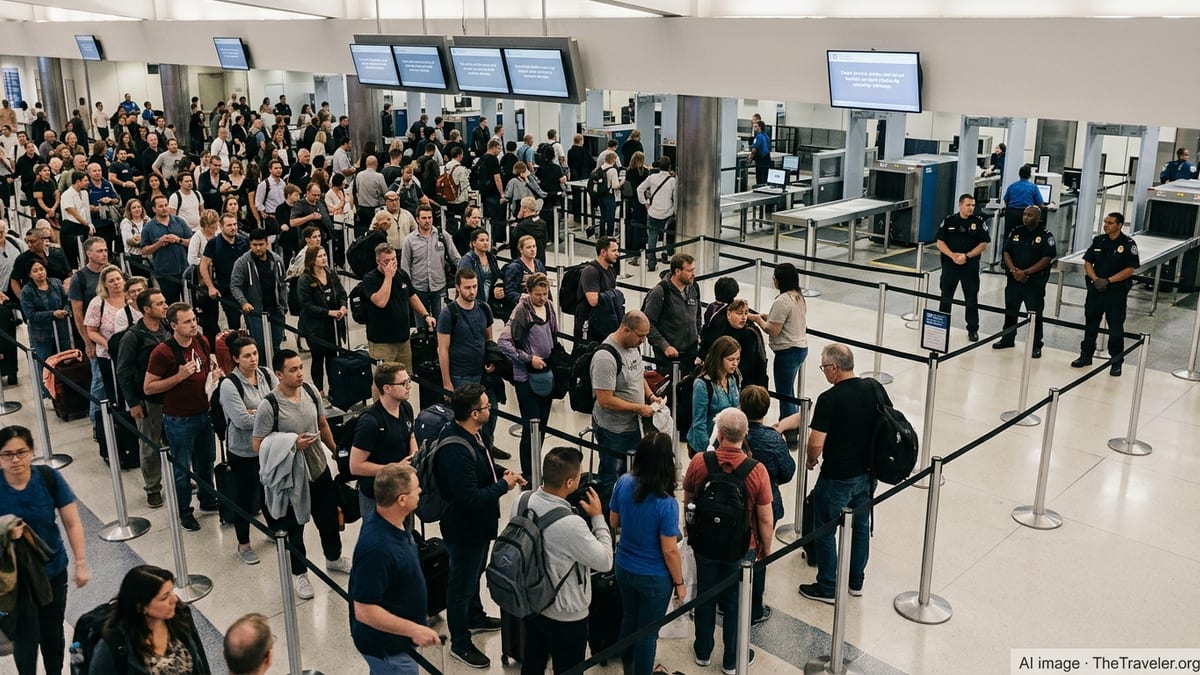
Live data shows disruption across morning and midday departures
Publicly available live departure boards for Manchester Airport on Friday 4 September indicate that a number of flights have departed later than scheduled, particularly during the busy early morning and midday periods. Services to popular European leisure destinations and key hubs appear among those affected, according to multiple real time tracking platforms that compile airline and airport status feeds.
Aggregated departure data for the date shows that Manchester Airport typically handles more than 250 outbound flights on a normal day, with a large concentration between 05:00 and 14:00 local time. Within this window on Friday 4 September, delay patterns are most visible on short haul routes, where relatively small schedule changes can quickly affect connecting ground transport and onward travel plans.
While many services continue to operate broadly on time, the live boards and third party trackers emphasise that individual flights can move from on time to delayed at short notice. Travellers are therefore being encouraged by publicly available guidance to check both airport departure boards and their airline’s digital channels on the day of travel.
Examples of delayed services on key European routes
Real time tracking platforms highlight several specific Manchester departures on Friday 4 September that have operated behind schedule. On short haul routes, services such as Ryanair’s FR3208 from Manchester to Malaga are shown departing later than timetabled, with recent data listing the flight as en route in the early afternoon following a delayed pushback compared with its planned early afternoon slot.
Similarly, EasyJet flights from Manchester to major European hubs, including services such as U2 2117 to Paris Charles de Gaulle, are listed on independent trackers with delay indicators for the same date. These platforms use a combination of airline schedule data, live radar and airport feeds to display whether a flight has departed, is en route, or remains delayed at the gate.
Other short haul links to destinations around the Mediterranean and mainland Europe, including Spain, Greece and Portugal, also appear with revised departure times on 4 September. In many cases, the recorded delays are under one hour, but they can still have knock on effects for passengers with tight hotel check in windows, ground transfers or same day activities arranged at their destination.
Impact on passengers and recommended steps before travelling
The pattern of delays reported on Manchester Airport’s departures for Friday 4 September has a practical impact on how passengers are advised to plan their journeys. With real time boards showing that services can shift from scheduled to delayed status relatively close to departure, travellers are being urged through publicly available information to build in additional buffer time when travelling to the airport and when arranging onward connections.
Passenger information sites emphasise that the most reliable source for real time changes remains the combination of the airport’s own digital departure board and direct airline channels, including apps and text or email alerts. Third party trackers provide a useful overview of wider disruption trends, but they may not update as quickly as an airline’s internal systems if gate changes or operational decisions are made shortly before boarding.
For those already at Manchester Airport, screens in the terminal continue to display changes to gate assignments and boarding times throughout the day. Reports indicate that crowding can increase around busy departure banks when several flights experience simultaneous delays, so it is advisable to proceed through security in good time and remain close to the assigned gate once boarding time approaches.
Operational context behind current delay levels
Manchester Airport is one of the United Kingdom’s busiest aviation hubs and routinely manages several hundred daily departures across three terminals. Historical traffic and capacity planning documents for recent summer seasons show that early morning waves are particularly dense, as airlines time departures to reach European destinations by late morning. In this context, relatively small schedule disruptions can cascade across multiple flights if aircraft and crew are operating tight rotations.
Recent capacity declarations for the summer 2026 season indicate that Manchester operates near its declared runway and stand limits during peak periods, especially on weekday mornings and early afternoons. When combined with variable weather, air traffic flow restrictions in European airspace or upstream delays affecting inbound aircraft, this high utilisation can contribute to departure times being pushed back on short notice.
Weather data for Manchester on Friday 4 September points to overcast conditions with relatively low wind speeds in the morning, suggesting that any delays recorded on departure boards are more likely related to operational or network factors rather than severe local weather disruption. Nevertheless, even modest headwinds or congestion along busy flight corridors can extend block times and reduce the available buffer for aircraft to return to schedule later in the day.
How to check the latest status for individual flights
Travellers planning to depart from Manchester Airport on Friday 4 September or in the coming days can use several free tools to verify the status of their flight before setting out. The airport’s own departure page allows users to search by flight number or destination and provides scheduled and estimated times alongside the operating airline and terminal.
Specialist flight tracking platforms also display live departure and arrival boards for Manchester, typically allowing users to filter by date and time window. These services can be helpful in identifying broader patterns, such as whether a particular airline or route group is experiencing elevated delays, and in confirming whether an aircraft has taken off or is still shown as delayed at the stand.
However, publicly available information consistently advises that passengers should always treat their airline’s direct communications as the final word on whether a service is delayed, cancelled or operating on time. Checking in online where possible, enabling app notifications and arriving at the airport within the recommended time frame remain the most practical steps to minimise disruption from any day of irregular operations.
Manchester Airport live departures board
Departra Manchester Airport live departures