


More news on this day
Chicago’s O’Hare International Airport is confronting thousands of flight delays in the final days before Labor Day, disrupting travel plans at one of the country’s busiest aviation hubs and straining an already crowded holiday weekend schedule.
Get the latest news straight to your inbox!
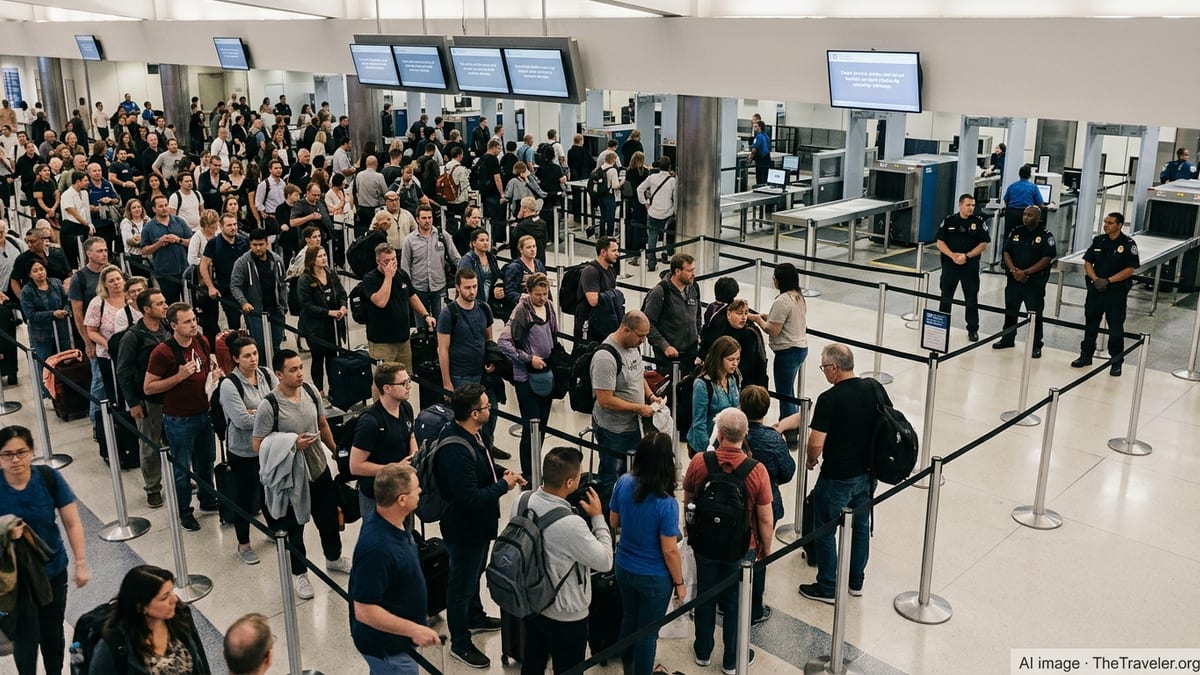
Stormy Skies Slow One of the Nation’s Busiest Airports
Real-time tracking data and airport dashboards indicate that O’Hare has struggled with heavy delays in the run-up to Labor Day, with weather listed as a primary factor. Flight statistics compiled by FlightAware show hundreds of delayed flights on recent days and more than 550 delays on a single day earlier this week, underscoring how quickly disruption can build at a major hub when conditions deteriorate.
Thunderstorms across northern Illinois and the broader Midwest have produced repeated pockets of heavy rain, lightning and low clouds near Chicago, conditions that can sharply reduce the number of aircraft allowed to arrive and depart each hour. Forecast discussions from the National Weather Service for the O’Hare area highlight daily chances of showers and storms through the holiday period, creating an unsettled backdrop for one of the peak travel weekends of the year.
When storms move through at key times of day, ripple effects can be significant. Arrivals must be spaced farther apart, departures held longer on the ground and ramp work temporarily suspended when lightning is detected nearby. Even short-lived storms during the morning or evening rush can trigger cascading delays that extend late into the night.
O’Hare’s scale amplifies the impact. Federal aviation data and airport records show the facility regularly handles well over 2,000 flights per day, with tightly timed “banks” of connecting departures and arrivals. Once those banks are disrupted by weather, there is limited room to recover before the next wave of flights arrives.
Federal Air Traffic Programs Add to Departure Wait Times
National air traffic advisories issued ahead of the holiday period point to additional constraints on flights bound for Chicago. A recent notice from the Federal Aviation Administration’s air traffic command center described arrival delays of up to 30 minutes at O’Hare due to thunderstorms, with traffic management initiatives used to meter inbound flights into the congested airspace serving both O’Hare and nearby Midway Airport.
Broader status pages tracking O’Hare’s performance in real time have also shown elevated departure delays, with some snapshots indicating average waits of more than an hour for flights to take off. Apps and web-based dashboards that aggregate federal and airline data describe slower-than-normal operations and cite weather and volume as key drivers as the holiday rush builds.
These traffic management programs are standard tools used by air traffic controllers to keep the system safe when demand exceeds what the weather-affected airspace can handle. Ground delay programs and flow restrictions reduce the number of aircraft taxiing or holding in the sky near congested hubs, but they push the wait onto passengers still at the gate, lengthening departure times across the network.
Because O’Hare serves as a central hub for multiple major carriers, delays there can reach far beyond Chicago. Aircraft and crew schedules built around tight turn times are vulnerable when departures back up. Once an aircraft leaves O’Hare late, its subsequent flights later in the day around the country are more likely to depart and arrive behind schedule as well.
Holiday Travel Surge Meets Chronic Congestion
Labor Day has increasingly become one of the busiest travel weekends of the late summer season, and publicly available projections show that Chicago’s airports are again expecting heavy passenger volumes. Local transportation agencies last year forecast millions of people on the region’s roads and through its two major airports over the long weekend, and early indicators this year point to a similarly crowded period.
O’Hare’s role as a central connecting hub means that many travelers pass through the airport even if Chicago is not their final destination. Industry data and academic research on delay propagation in the U.S. airspace system have repeatedly highlighted O’Hare as a key node: disruptions there tend to echo through the national network more than at many other airports.
Recent policy documents also point to a structural congestion problem at O’Hare during busy bank periods. A 2026 notice in the Federal Register referenced federal efforts to discuss voluntary schedule reductions with airlines at the airport, citing numerous 30-minute time blocks that were considered severely congested and recommending targets for trimming flights during those peaks.
When that underlying congestion meets a holiday surge and unsettled weather, delays mount quickly. Even when individual storms are relatively brief, the combination of full flights, packed departure banks and already tight runway capacity leaves little slack in the system to absorb disruptions.
What Travelers Are Experiencing on the Ground
Experiences shared on travel forums and social media in recent days depict crowded concourses, long customer service lines and passengers bedding down in terminals overnight after missed connections. Posts referencing O’Hare describe prolonged waits on taxiways, rolling departure time adjustments and difficulties securing alternative routings once evening departure windows close.
These individual accounts align with the aggregate data: real-time delay trackers list O’Hare among the country’s most affected airports on several days leading into the holiday, with hundreds of late flights and a notable share of cancellations. While some disruptions stem from storms directly over Chicago, others trace back to severe weather along the routes aircraft must traverse to reach or depart the city, further complicating operations.
Travel experts and aviation analysts often note that once delays at a hub pass certain thresholds, recovery within the same operating day becomes challenging. Crews can time out under duty limits, gates become constrained as delayed aircraft arrive all at once, and there are simply fewer remaining departure slots to re-accommodate large numbers of passengers before the overnight curfew on some routes.
For travelers, the result at O’Hare ahead of Labor Day is a more stressful start or end to summer trips, with missed vacations, disrupted business plans and unexpected overnight stays. The impact is especially sharp for those holding tight connections or last departures of the evening, where a single delay can translate into an additional lost day of travel.
Outlook for the Remainder of the Holiday Weekend
Short-range forecasts for the Chicago area suggest continued chances of showers and thunderstorms near O’Hare through Labor Day, although the precise timing and intensity of storms remain uncertain. National Weather Service outlooks point to warm, humid air lingering over the region, a pattern that often produces scattered storms that can be disruptive even when they are not severe.
Industry performance statistics indicate that O’Hare’s delay profile is particularly sensitive to weather, with analyses of federal transportation data showing that a large share of the airport’s cancellations in recent years have been attributed to extreme or convective weather. Operational briefings and aviation reference materials note that thunderstorms along key routes can force aircraft to detour hundreds of miles, reducing the airspace capacity feeding into already busy hubs like O’Hare.
As the Labor Day weekend continues, publicly available flight status tools from airlines, third-party trackers and federal agencies will remain critical resources for passengers trying to navigate the disruption. Travelers are watching those dashboards closely for signs that delays at O’Hare are easing or, if storms flare at the wrong time, building again into the thousands.
The situation illustrates how vulnerable peak holiday travel can be to a combination of crowded schedules and unsettled late-summer weather at a few pivotal hubs. With O’Hare once again near the top of national delay tables heading into Labor Day, many passengers are learning in real time how quickly a single airport’s troubles can reshape travel plans across the country.
https://www.flightaware.com/live/airport/KORD
https://www.flightaware.com/live/cancelled/yesterday/ORD
https://forecast.weather.gov/MapClick.php?lat=41.9789&lon=-87.9048
https://www.govinfo.gov/content/pkg/FR-2026-03-18/pdf/2026-05325.pdf