


Ask a New Yorker what most first-time visitors get wrong about Manhattan, and you’ll hear the same answer in different words: people treat a few square blocks of Midtown as if that is New York City. They spend three or four precious days shuffling between Times Square, big-ticket observation decks, chain restaurants and souvenir shops, then fly home saying they’ve “done” Manhattan. In reality, they have only met its loudest, most crowded corridor. The biggest mistake is not that visitors come to Midtown, but that they rarely leave it in any meaningful way.
Get the latest updates straight to your inbox!
What The Real Mistake Actually Is
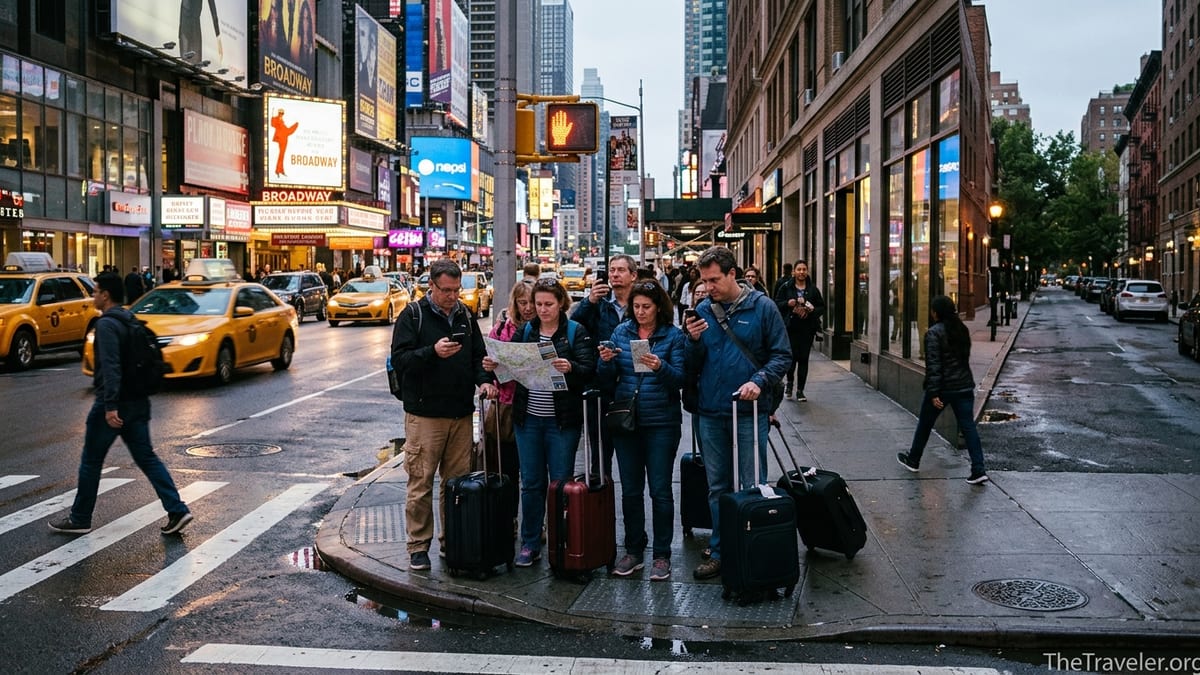
The core error most first-time visitors make in Manhattan is confusing convenience with experience. They book a Midtown hotel near Times Square because it looks central, then stack their itinerary with whatever is within a 15-minute walk: Broadway, Rockefeller Center, Empire State Building, Bryant Park, hard-to-miss chain restaurants. On paper it feels efficient. In practice, they are paying some of the highest prices in the city to spend their limited time in the least representative part of it.
Spend 72 hours between West 34th Street and Central Park South and you will see plenty of neon, screens and crowds, but you will miss what makes Manhattan compelling day to day: neighborhood-scale streets, small parks, corner delis, local bars, brownstone blocks and the quieter waterfronts. You can leave feeling oddly underwhelmed by a place that millions of people love, simply because you grazed the surface in the same three overburdened ZIP codes.
This is not an argument for skipping icons entirely. It is about recognizing that Times Square and the observation decks are snapshots, not the story. The mistake is letting those snapshots crowd out the rest of your trip, as if New York were an amusement park whose main attractions all stand in the same line.
How The Midtown Bubble Eats Your Time And Budget
You can see the Midtown bubble mistake most clearly in how it drains both hours and dollars. Picture a couple staying near Seventh Avenue and West 47th Street for three nights. They buy full-price timed tickets for the Empire State Building and Top of the Rock on separate evenings, pay for a hop-on hop-off bus they barely use, and grab every meal within a few blocks of their hotel simply because it is there. Between two observation deck tickets for two people, they can easily spend more than 150 dollars before tax and fees, even though several attraction passes now bundle multiple decks and museum entries for less than that per person if you plan ahead.
The lost time is harder to see until you are in it. Walking from Times Square to the Empire State Building in heavy foot traffic can take 20 to 25 minutes one way at peak hours, because the sidewalks clog with slow-moving groups and costumed characters angling for photos and tips. Add security lines, elevator waits and the return slog, and you have burned half a day on a single view. Repeat the same pattern for the Top of the Rock or Edge at Hudson Yards and you will discover that two or three signature skyline shots have quietly devoured most of your stay.
The bubble also encourages you to overpay for the ordinary. Grab-and-go lunches around major Midtown intersections routinely run well above 15 dollars per person for basic sandwiches or salads, not because the food is exceptional but because the rent is. Venture 10 or 15 blocks south into parts of the Garment District or east into residential pockets of Turtle Bay, and you will find independent delis and diners selling filling lunches for several dollars less, often with actual seating and fewer crowds. That small geographic shift, multiplied across a few days, can easily free up enough budget for a museum ticket, a walking tour or a great neighborhood dinner.
Why “Only Seeing Manhattan” Is Not The Point Either
There is a related but slightly different mistake you will sometimes hear locals complain about: visitors who never leave Manhattan at all. It is true that Brooklyn, Queens and the Bronx offer some of the city’s most interesting food, parks and residential streets, and that a quick ride over the East River can transform how you understand New York. But for a first-timer with three or four days, the deeper problem is not borough borders. It is the narrow, Midtown-centric definition of Manhattan itself.
If your mental map of Manhattan begins at Penn Station, peaks at Times Square and Rockefeller Center, and ends at Central Park South, you are missing entire worlds that are a single subway ride away. The West Village, for example, is a 10-minute trip on the downtown 1 train from Times Square. Step out at Christopher Street or Houston Street and suddenly you are in a low-rise maze of townhouses, tree-lined blocks and corner cafes that feel more like a small European city than the neon canyon you left behind.
Head further downtown and a similar transformation happens. The Financial District and Battery Park City show a Manhattan of waterfront promenades, ferries and harbor views where office workers jog at lunch and families push strollers past playgrounds. Chinatown and the Lower East Side place you in narrow streets of produce stands, bakeries and century-old tenements that have shaped immigrant life for generations. These areas are every bit as “real” as Midtown, and they are also where many New Yorkers actually live and spend their time.
How To Break Out Of The Midtown Trap
The simplest way to avoid the biggest Manhattan mistake is to plan your days by neighborhood, not by a list of famous names. Instead of arranging your trip as “Empire State Building in the morning, followed by Times Square, followed by Central Park,” start with a part of town and cluster whatever you want to see within or near it. That might mean spending one day centered on Lower Manhattan, another in and around Central Park and the Upper West Side, and a third drifting through Greenwich Village, SoHo and the East Village.
Consider a morning downtown as an example. Taking the subway to Fulton Street or World Trade Center Station drops you into an area where you can walk to the 9/11 Memorial, Wall Street, the narrow canyons of the Financial District and the waterfront in minutes. From nearby Battery Park you can board the official ferry to the Statue of Liberty and Ellis Island, which is a far more complete experience than a distant glimpse from Midtown. When you return, you are already within walking distance of cobbled Stone Street for lunch or the calm lawns of Battery Park City for a break. You will have seen skyscrapers, water, historic sites and lived-in streets in a single, coherent loop.
Apply the same logic uptown. Rather than sprinting from Times Square to Central Park and back, start your day on the park’s western edge near Columbus Circle or the Upper West Side. From there it is an easy stroll through the park to the lake or Bethesda Terrace, a short subway ride to the American Museum of Natural History, or a quiet walk along tree-lined residential avenues that show you how much of Manhattan is actually calm and neighborly. Times Square can still appear in your itinerary, but it becomes a glance on the way to something else, not the gravitational center of your trip.
Using The Subway To Unlock The Rest Of The Island
One of the reasons the Midtown bubble persists is fear of the subway. Many visitors default to taxis and ride-hailing cars because the idea of navigating a large transit system feels intimidating. Yet the subway is designed to connect you quickly from one part of Manhattan to another and out to the other boroughs. The main lines that matter for many visitors, like the 1, 2, 3 on the west side, the 4, 5, 6 on the east, and trunk routes like the A, C, E or N, Q, R, often link tourist-heavy spots with quieter neighborhoods in a single ride.
Modern smartphone apps make this far less complex than it appears on a printed map. Plug “Washington Square Park” or “Brooklyn Heights Promenade” into a mapping app from your Midtown hotel and it will show you which entrance to use, which direction the train will be labeled and when it will arrive. Pay for your ride by tapping a contactless bank card or phone at the turnstile and you avoid the old ritual of calculating how many paper fare cards to buy. For many short-term visitors, after a certain number of taps in a week the system automatically caps your total, making frequent rides effectively free after that point compared with pay-per-ride.
This is not only about saving money on taxis. The subway gives you back the one resource you cannot replenish on a short visit: time. A crosstown taxi from Times Square to the East Village on a weekday evening can easily take half an hour or more in traffic. The same trip by subway, transferring once or walking a portion, is often 15 minutes of travel and a few blocks of strolling. The result is that you arrive with energy left to actually absorb the place, rather than stumbling out of a stalled car wondering where your day went.
Realistic Alternatives To The “Icons-Only” Itinerary
Breaking the Midtown habit does not mean giving up the postcard moments. It means pairing them with experiences that reveal a broader, more livable Manhattan. One practical approach is to limit yourself to one expensive, ticketed attraction per day and fill the rest of the time with low- or no-cost experiences nearby. If you visit the Empire State Building in the late afternoon, for instance, you might spend the morning exploring Koreatown just south of it and walking down to Madison Square Park to see the Flatiron Building and grab a casual lunch from a local vendor.
On another day, you could reserve an evening slot at Top of the Rock but keep your day grounded closer to street level. Start in Bryant Park with a coffee, wander through the New York Public Library’s public spaces, then ride the subway downtown for a few hours in the West Village. When you come back uptown for your observation deck time, you are returning to Midtown with context and contrast, rather than drifting from one crowded line to another.
Even classic “tourist” moves can be reframed this way. Take the Staten Island Ferry from Lower Manhattan not as a rushed photo opportunity but as a built-in rest: a chance to sit down, feel the harbor wind and watch the skyline slide by without buying another ticketed cruise. Explore a few blocks of Staten Island’s North Shore when you dock, where the pace is noticeably slower, before returning to Manhattan. These small shifts transform your trip from a checklist into a set of layered impressions.
The Takeaway
If there is one thing first-time visitors should understand before landing at LaGuardia, JFK or Newark, it is that the glow of Times Square is a tiny fraction of Manhattan, not its definition. The biggest mistake is not only spending time there, but spending most of your trip inside that narrow corridor and assuming you have seen the city. You can correct that simply by allowing yourself to move: a neighborhood or two south, a subway ride east or west, a ferry across the harbor.
Plan at least one full day that does not revolve around an observation deck or a block of Broadway, and you will likely remember that day far more clearly than any line you waited in. Prioritize streets where New Yorkers actually live, eat and commute over stretches of sidewalk designed to capture your attention and your wallet at the same time. When you leave, you may still have only scratched the surface, but it will be a real surface, textured with everyday life rather than just LED lights and ticket queues.
FAQ
Q1. Is Times Square really worth visiting on a first trip to Manhattan?
Yes, but keep it brief. Walking through once in the evening to see the lights and energy is enough for most people. Use the rest of your time to explore neighborhoods like the West Village, Lower Manhattan and the areas around Central Park, which give you a much better sense of how the city actually feels.
Q2. Where should first-time visitors stay if they want to avoid the Midtown trap?
A central but less overwhelming base is often around the Upper West Side, parts of Chelsea or near Bryant Park rather than directly in Times Square. These areas are still very convenient for transit and sightseeing, but the streets tend to be calmer, with more local cafes, groceries and quieter evenings, which helps balance the intensity of your days.
Q3. How many major paid attractions should I plan per day?
For most first-time visitors, one big ticketed attraction per day is plenty. Pair an observation deck or museum with unstructured neighborhood time nearby. Trying to squeeze in several timed entries in one day often leads to rushing between lines and security checks, which can leave you exhausted and less able to appreciate what you are seeing.
Q4. Is the subway safe for tourists in Manhattan?
In general, yes. The subway is the way most New Yorkers get around, including families and workers on all schedules. Use the same common sense you would in any large city: stay aware of your belongings, avoid empty train cars when others are full, and stand back from the platform edge. Riding during normal daytime and early evening hours is straightforward for most visitors.
Q5. Do I need a transit pass, or can I just pay per ride?
If you will be using the subway several times a day over three or more days, tapping a contactless bank card or phone at the turnstile is usually the simplest choice. The system tracks your taps and stops charging after a certain number in a week, which effectively turns your card into an unlimited pass without needing to do any math at a vending machine.
Q6. How far in advance should I book observation decks like the Empire State Building or Top of the Rock?
Booking a few days in advance is usually enough outside of major holidays and peak summer weekends. Reserve the time slot you care about most, such as sunset, then build your neighborhood exploration around it. Avoid booking multiple decks for the same part of the day, since the views can feel repetitive and the time commitment is larger than it appears on paper.
Q7. Can I see “real New York” without leaving Manhattan?
Absolutely. Areas like the West Village, Lower East Side, Harlem, the Upper West Side and parts of the East Village all show you lived-in streets, local restaurants and everyday routines. Crossing into Brooklyn or Queens broadens the picture, but you can have a rich, authentic first visit without ever stepping into another borough if your Manhattan time reaches beyond Midtown.
Q8. How much walking should I expect to do in Manhattan?
Most visitors are surprised by how much they walk. It is common to cover several miles a day without realizing it, simply moving between subway stations, parks and sights. Comfortable shoes matter more than almost any other clothing decision. Plan short breaks in parks, cafes and waterfront areas to rest your feet and absorb where you are instead of marching continuously from one attraction to another.
Q9. Are hop-on hop-off buses a good way to avoid the Midtown mistake?
They can be useful for a quick overview, but they often follow routes that loop through the most tourist-heavy streets and get stuck in the same traffic as cars. If you rely on them for most of your movement, you may still end up seeing only the busiest corridors. Using the subway and walking between stops usually exposes you to a wider range of neighborhoods in less time.
Q10. How many days do I need in Manhattan to feel I’ve seen more than just the highlights?
With three full days, you can combine a few famous sights with genuine neighborhood time if you plan thoughtfully. Dedicate one day largely to Lower Manhattan and the harbor, one to Central Park and either the Upper West or East Side, and one to villages and downtown neighborhoods like Greenwich Village, SoHo and the East Village. That mix will help you avoid the biggest first-timer mistake of equating a few Midtown blocks with the entire city.