


More news on this day
Global broker Marsh has launched Cyber Aviation, an aviation-specific cyber insurance product for airlines intended to cover the fast-rising financial risk from cyber incidents and IT failures that can ground flights even when aircraft and airports remain physically undamaged.
Get the latest news straight to your inbox!
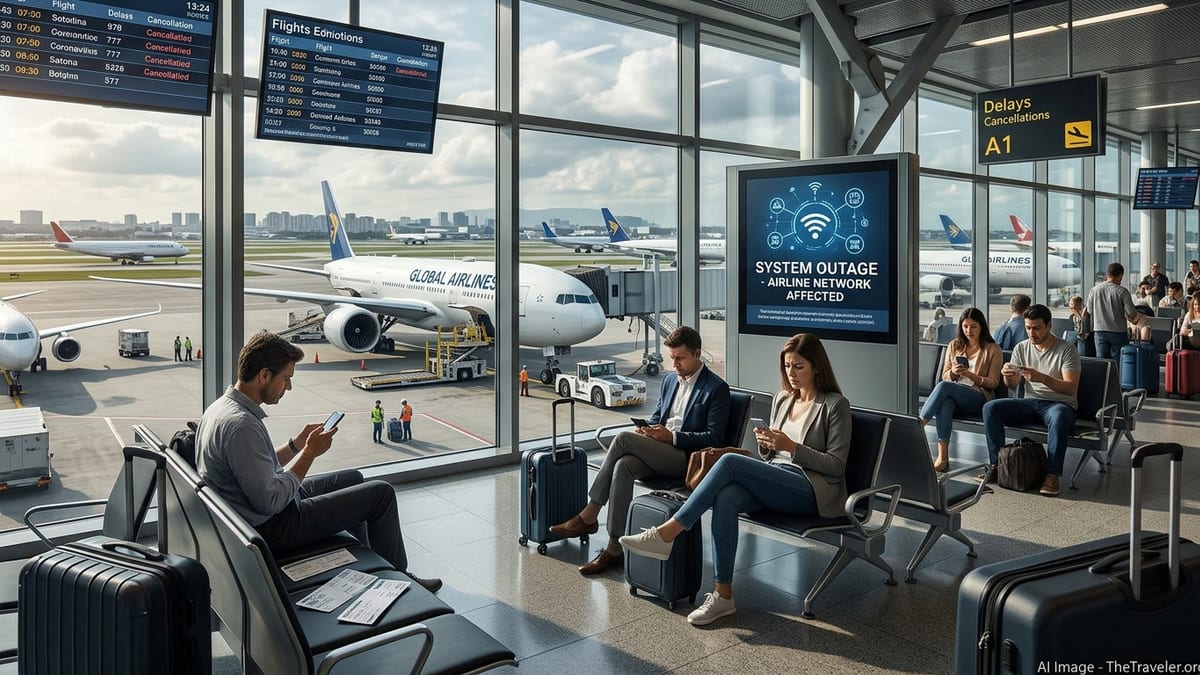
What Marsh’s Cyber Aviation policy is designed to cover
Marsh announced Cyber Aviation on 23 November 2026, describing it as a broad cyber insurance form developed specifically for global airlines and intended to sit alongside, rather than inside, traditional aviation hull and liability or general corporate cyber policies. According to the firm’s product documentation, the wording is framed around the core airline technology stack, including flight operations platforms, reservations, booking and ticketing tools, and passenger-facing applications used for check-in and disruption management.
The policy brings together first-party and third-party protections. On the first-party side, Cyber Aviation is designed to respond to business interruption and extra expense following a covered cyber event that disrupts an airline’s systems or, where underwriters agree and the wording is negotiated accordingly, the systems of key external technology providers. Eligible first-party losses can include revenue impact from flight cancellations and delays, incremental operating costs incurred to keep schedules running, and the cost of restoring corrupted or unavailable data after an incident.
Third-party coverage focuses on data and privacy liability arising from cyber incidents where personal or confidential information is compromised. Marsh’s materials indicate that this element of Cyber Aviation can extend to claims and regulatory actions related to unauthorized access, loss or disclosure of personal data held by an airline or processed by its vendors. Subject to local law and the precise policy wording, covered costs may include legal defense, settlements or damages where insurable, and certain regulatory fines and penalties.
Cyber Aviation is structured to respond to a range of cyber and IT events. These include malicious attacks such as ransomware and distributed denial of service incidents, as well as defined categories of nonmalicious technology failures, for example faulty software updates that cause outages. Depending on options chosen, covered loss types can encompass network interruption, operational disruption across an airline’s route network, cyber extortion payments where legally permitted, and associated incident-response costs such as specialist legal advice, public relations support and digital forensics.
Marsh also highlights optional extensions that allow airlines to insure specific categories of passenger and cargo-related costs they may incur while trying to maintain operations during a prolonged outage. Subject to negotiated terms and limits, these optional elements can include additional spending on customer care, temporary manual processing, and alternative transportation or logistics arrangements when regular systems are unavailable.
Recent outages showing why airline IT failures are now core risks
The timing of Marsh’s Cyber Aviation launch follows a series of high-profile disruptions that have illustrated how failures in shared or third-party IT systems can rapidly cascade through airline operations. On 19 July 2024, a faulty content update for CrowdStrike’s Falcon software on Microsoft Windows systems caused a global IT outage affecting millions of devices. Airlines were among the sectors hit as workstations and servers running Windows suddenly became unavailable or unstable.
U.S. carriers including Delta Air Lines, American, United, Allegiant and Spirit reported extensive delays and cancellations as key systems for flight operations and passenger processing were impaired. Delta was particularly affected. In securities filings and subsequent public statements, the airline has said that roughly 7,000 flights were cancelled over about five days and that around 1.4 million customers were impacted. Delta has estimated the financial impact at about 500 million dollars, combining lost revenue and customer compensation, and has stated in regulatory filings and legal documents that it is pursuing claims against CrowdStrike and Microsoft seeking at least that amount in damages.
Other episodes have highlighted the vulnerability of shared airport infrastructure. On 19 and 20 September 2025, a ransomware incident affecting systems that support Collins Aerospace’s ARINC MUSE common-use passenger processing platform disrupted check-in and boarding operations at several major European airports, including London Heathrow, Brussels, Berlin Brandenburg and Dublin. Public reports from airports, cyber security agencies and subsequent technical analyses describe airlines and airports reverting to manual fallback procedures such as paper boarding passes and hand-written luggage tags, with queues, delays and some cancellations persisting for several days while systems were restored.
Alongside these headline events, airlines have faced periodic outages of reservation platforms, airline websites and departure control systems linked to scheduled maintenance, software defects or targeted attacks. Insurance industry surveys and risk reports over the past few years consistently rank cyber incidents and digital disruption among the leading operational threats to airlines, alongside fuel price volatility, geopolitical developments and the cost and complexity of maintaining newer-generation aircraft and engines. In this environment, disruption to digital infrastructure can effectively halt flight operations without any physical loss or damage, creating large financial exposures that traditional hull, liability and war risk covers were not designed to absorb.
How Cyber Aviation fits with existing insurance and regulatory frameworks
Traditional aviation hull and liability policies are primarily designed to respond to physical perils such as aircraft damage, passenger injury and third-party property damage. Market wordings and public commentary from aviation insurers indicate that these policies generally do not cover non-physical business interruption where the proximate cause is a pure cyber or IT event, whether that event occurs within an airline’s own systems or at a third-party provider. At the same time, many stand-alone corporate cyber policies include aviation-specific exclusions or broad limitations on cover for systemic outages, war and terrorism, or operational disruption involving aircraft.
Industry working groups involving brokers, insurers and airline risk managers have spent much of the last decade exploring ways to close these gaps. Particular focus has fallen on dependent business interruption, where the financial impact on an airline stems from an outage at an external provider such as a global distribution system, airport common-use platform or cloud service. Bespoke cyber products built for individual airlines have existed since the late 2010s, but these have typically been crafted on a case-by-case basis and attached to wider programmes. Marsh is positioning Cyber Aviation as a more standardised but configurable wording for large and global carriers, designed to complement mandatory aviation insurances such as hull, passenger liability and war risk rather than to replace them.
From a regulatory standpoint, airlines affected by a cyber incident often have to respond simultaneously to data protection, network security and aviation safety requirements. For carriers operating into or within the European Union, this can mean complying with the General Data Protection Regulation if personal data is involved, meeting obligations under network and information security rules where they qualify as operators of essential or important services, and following aviation-specific incident reporting procedures overseen by national authorities and the European Union Aviation Safety Agency. In other regions, airlines face comparable obligations, including requirements in some markets to notify financial regulators or stock exchanges if a material cyber incident affects operations.
Marsh indicates that Cyber Aviation is structured so that many of the immediate response costs arising under these frameworks can fall within the scope of cover, subject to terms negotiated for each airline. Potentially covered expenses can include specialist legal advice on notification obligations in multiple jurisdictions, forensic investigation services to understand the scope and root cause of an incident, crisis communications support, and the costs of customer notification and credit monitoring where required by law or regulation. The intent is to provide airlines with a coordinated funding and response framework that aligns with the global nature of their operations, customer bases and regulatory obligations.
Third-party technology providers and what travelers might notice
Modern airlines depend on a dense network of external technology providers for mission-critical tasks, ranging from global distribution systems and revenue management to departure control, baggage messaging, loyalty platforms and airport common-use check-in and boarding systems. Several major disruptions over the past few years, including the Collins Aerospace MUSE incident, originated not in an airline’s own network but in the environment of a technology vendor whose services support multiple carriers and airports.
Responsibility for financial losses in such cases often depends on detailed contract terms covering service levels, indemnities and liability caps between airlines, airports and technology suppliers. Cyber Aviation is designed to operate within that contractual landscape by allowing airlines, where underwriters agree, to specify key external providers and obtain coverage for business interruption and extra expense resulting from outages in those vendors’ systems. This can include scenarios where the airline itself is not directly targeted by a cyberattack but suffers substantial operational and financial consequences because a system on which it relies is taken offline as a precaution or as part of a vendor’s incident response.
In practical terms, costs that might be insured under Cyber Aviation include deploying additional staff at airports to manage manual check-in and boarding, arranging alternative routings, rebooking passengers onto other carriers where interline agreements permit, and funding accommodation and meal vouchers during extended delays, all subject to the policy’s definitions and limits. The product cannot prevent incidents from occurring, but it is intended to provide a financial backstop when IT failures or cyber events significantly disrupt the passenger journey.
For individual travelers, the introduction of Cyber Aviation does not immediately affect booking options, ticket prices or entitlements under passenger-rights regulations such as EU261. The product is aimed at airlines’ balance sheets rather than consumers. However, the recent pattern of incidents has underlined that passengers can face widespread cancellations and delays even when aircraft and airport infrastructure are available, simply because digital tools for crew management, baggage handling or check-in and boarding are unavailable or unreliable. How effectively an airline plans for such scenarios, including the insurance protection it buys, can influence how quickly normal operations are restored and how consistently passengers are informed and assisted when problems arise.
Next steps for airlines and what travelers should watch for
Marsh states that Cyber Aviation is available globally and can be structured on a primary or excess basis, depending on how a carrier’s existing aviation and cyber insurance programmes are arranged. Airlines considering the product can expect a detailed underwriting process that examines their cyber security posture, incident history, reliance on specific technology providers, and the current allocation of risk in contracts with vendors, airports and ground handlers. A practical early step for many carriers is likely to involve mapping how losses from cyber and IT outages are currently borne between internal budgets, aviation insurance policies, stand-alone corporate cyber cover and supplier agreements.
Experience from recent disruptions suggests that even when a problem originates in a third-party system and is widely reported as such, regulators and the traveling public often focus on the airline’s handling of the incident, including communication with passengers and the speed of recovery. That dynamic is likely to shape how airlines structure their coverage and negotiate future contracts with key technology partners. As aviation-specific cyber products such as Cyber Aviation develop, important questions for airlines include how dependent business interruption and nonmalicious system failures are treated across different policies, what coverage limits are realistic given the scale of potential losses, and how exclusions for systemic events, war and terrorism are drafted.
Travelers will not typically see details of an airline’s cyber insurance in booking paths, fare rules or marketing materials. Nonetheless, passengers planning trips, especially during peak seasons when systems are under heavy load, can take practical steps informed by recent incidents. These include monitoring airline and airport communication channels on the day of travel, allowing additional time for check-in and security where possible, ensuring that contact details are up to date in bookings so that notifications can be received, and being prepared for temporary manual processes such as paper boarding passes if shared airport systems fail.
In the near term, the clearest indicators for travelers of how the industry is adapting to digital risk are likely to come from airlines’ operational and customer-service commitments rather than the specific wording of any one insurance product. Public updates on resilience initiatives, backup procedures, and policies around rebooking, accommodation and customer care in the event of large-scale IT disruption will provide more concrete signals of what passengers can expect when systems fail. Cyber Aviation adds a new option for airlines to transfer part of the financial impact of those events, while decisions on technology investment, redundancy and incident management will continue to shape how strongly travelers feel the effects of future cyber and IT outages.