


More news on this day
Flight disruptions across the United States eased on Friday, November 27, after days of severe weather and a rare nationwide ground stop, yet hundreds of passengers still faced delays and dozens more saw flights canceled as the busy Thanksgiving travel period continued.
Get the latest news straight to your inbox!
Current flight impact on Friday, November 27
By early Friday, November 27, flight-tracking data showed more than 300 delays and 86 cancellations on routes within, into or out of the United States, a marked improvement on the widespread disruption seen earlier in the week. The delays were spread across the national network rather than concentrated at a single airport, reflecting how weather and recent system issues continued to ripple through airline schedules even as conditions improved.
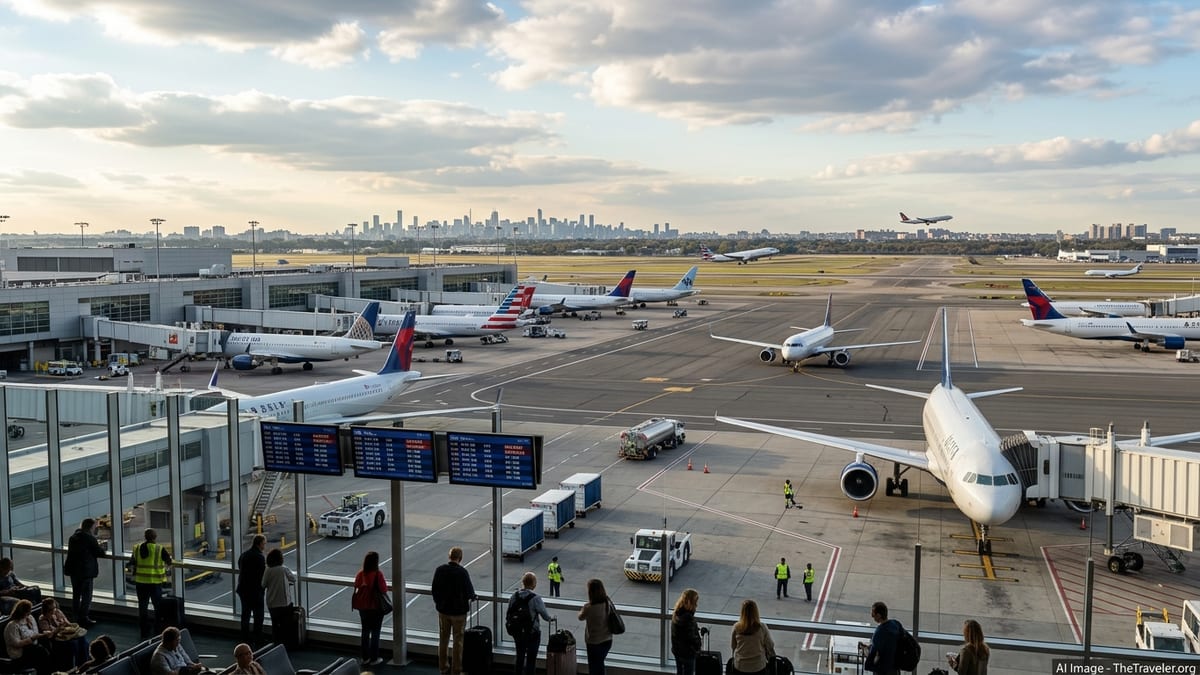
New York’s John F. Kennedy International Airport reported a relatively modest impact compared with the peaks seen during the worst of the storms and the ground stop. Data cited in Friday morning broadcast reports indicated 29 delayed departures or arrivals and eight cancellations at JFK in the early hours, figures that were expected to change through the day as airlines re-timed services and repositioned aircraft.
In the Washington region, Ronald Reagan Washington National Airport recorded six cancellations and 13 delays early Friday. Operations there were less affected than at some larger hubs, but the figures highlighted that even secondary airports were still working through residual disruption from the week’s events.
How this compares with earlier in the week
The relatively low totals on Friday followed several days of far more severe disruption triggered first by strong storms and then by an hourslong nationwide ground stop ordered by the Federal Aviation Administration. On Wednesday, November 25, more than 6,000 flights in the United States were delayed and about 150 were canceled as storms affected both coasts and key hub airports. Those problems eased on Thursday, November 26, but FlightAware data still showed around 2,500 delays and roughly 450 cancellations as airlines tried to get back on schedule.
The most acute disruption came on Friday, November 13, when the FAA temporarily grounded flights nationwide because of a failure in critical air traffic control communications equipment. According to subsequent tallies based on FlightAware data, more than 15,000 U.S. flights were either delayed or canceled that day. The outage lasted several hours and was only the second time since 2001 that the FAA had halted all U.S. departures, making it an unusually disruptive event for the aviation system.
Although most flights resumed later that evening, the scale of the disruption meant knock-on effects stretched into the weekend. On Saturday, November 14, more than 8,000 flights in the United States were delayed and about 6,000 canceled as airlines worked to reposition aircraft and crews. By Monday, November 16, the aviation system was still not fully recovered, with around 1,500 delays and nearly 300 cancellations recorded that day, but those figures were a fraction of Sunday’s 10,987 delays and 2,336 cancellations.
Weather’s role during the Thanksgiving travel period
The latest wave of disruption has coincided with the peak Thanksgiving travel period, which already strains airport capacity under normal conditions. This week a sprawling storm system brought heavy rain, strong winds and localized flooding to large parts of the East Coast, while separate weather disturbances affected the West, creating challenging conditions for both air and road travel. On Wednesday and Thursday, the National Weather Service highlighted significant weather impacts near several major metropolitan areas, prompting the FAA to issue advisories warning of likely delays at some of the country’s busiest airports.
Cities in the Mid-Atlantic and Northeast saw weather-related ground stops and ground delay programs earlier in the week, particularly around the New York and Boston areas. At several points, New York’s three main airports collectively reported hundreds of cancellations and more than 600 delays in a single day as carriers paused arrivals to manage low visibility, strong winds and runway conditions. Those operational measures are designed to keep traffic moving safely but often lead to departures backing up at origin airports across the country.
Even after local weather improves, the impact can continue for days. Aircraft and crews that end up out of position during a storm can take multiple rotations to return to their intended schedules. For this reason, travel data on Thursday and Friday showed disruptions in regions that were no longer experiencing severe weather, reflecting how delays and cancellations can propagate throughout the network long after the immediate meteorological trigger has passed.
Other recent system shocks and official data on delays
The recent FAA communications outage has drawn attention to how non-weather incidents can magnify disruption across the aviation system. During the November 13 event, flights nationwide were grounded while engineers worked to isolate and resolve the fault. Although the FAA has emphasized that there is no evidence of a cyberattack, the agency has acknowledged that aging infrastructure contributed to the failure and has urged Congress to accelerate funding for modernization of key systems.
This month’s ground stop followed a separate episode earlier in the year when a technical issue at a major airline forced the FAA to briefly halt that carrier’s departures bound for its Atlanta hub. In that case, an outage in the airline’s weight-and-balance system delayed hundreds of flights and contributed to more than 4,700 delays and nearly 200 cancellations across the United States on the day of the incident. The FAA downgraded the stop to a ground delay program after the airline began restoring service, but recovery again took much of the day.
Longer-term federal statistics underline how common weather and system issues are as causes of disruption. The U.S. Department of Transportation’s Air Travel Consumer Reports, which aggregate airline on-time performance and delay causes, show that in recent months roughly one in five domestic flights arrived at least 15 minutes late, with a significant share of delay minutes attributed to extreme weather and national aviation system factors such as congestion and air traffic control programs. While these figures describe overall patterns rather than the specific events of this week, they illustrate how even a single widespread storm or technical failure can quickly push the system beyond normal tolerance levels.
What travelers should do next
With overall delay and cancellation numbers now sharply lower than during last week’s ground stop and the worst of the storm disruptions, most travelers flying on Friday and over the remainder of the weekend are likely to complete their journeys as planned. However, the continuing presence of several hundred delays and dozens of cancellations each day underscores the importance of checking flight status frequently and building extra time into connections when possible, especially at large hubs that saw significant disruption earlier in the week.
Airlines and airports are advising passengers to use official apps and websites as the primary source of real-time information. These tools typically update more quickly than terminal departure boards and allow travelers to rebook onto alternative flights or join standby lists without waiting in long queues at airport customer service desks. Some carriers are also sending proactive alerts when significant schedule changes occur, although the availability of such notifications varies by airline and booking channel.
Travelers who experience long delays or cancellations should review their carrier’s published policies to understand available options. In many cases, U.S. airlines will rebook passengers on the next available flight at no additional fare when disruptions are caused by operational issues within the airline’s control. When weather is the primary cause, rebooking is still common, but compensation for hotels or meals is less likely. The Department of Transportation’s recent consumer reports and related guidance encourage passengers to keep receipts when they incur expenses and to submit claims directly to airlines, while recognizing that coverage decisions remain at the discretion of each carrier unless specific contractual obligations apply.
The FAA and forecasters are not currently projecting a repeat of this week’s most severe conditions in the immediate days ahead, but both agencies caution that winter-like storms and strong frontal systems are common at this time of year. Travelers with flights scheduled in the coming week are advised to monitor weather forecasts for both departure and arrival cities, enroll in airline alerts and allow for potential disruption when planning connections to cruises, rail journeys or other onward transport that may be difficult to change at short notice.