


More news on this day
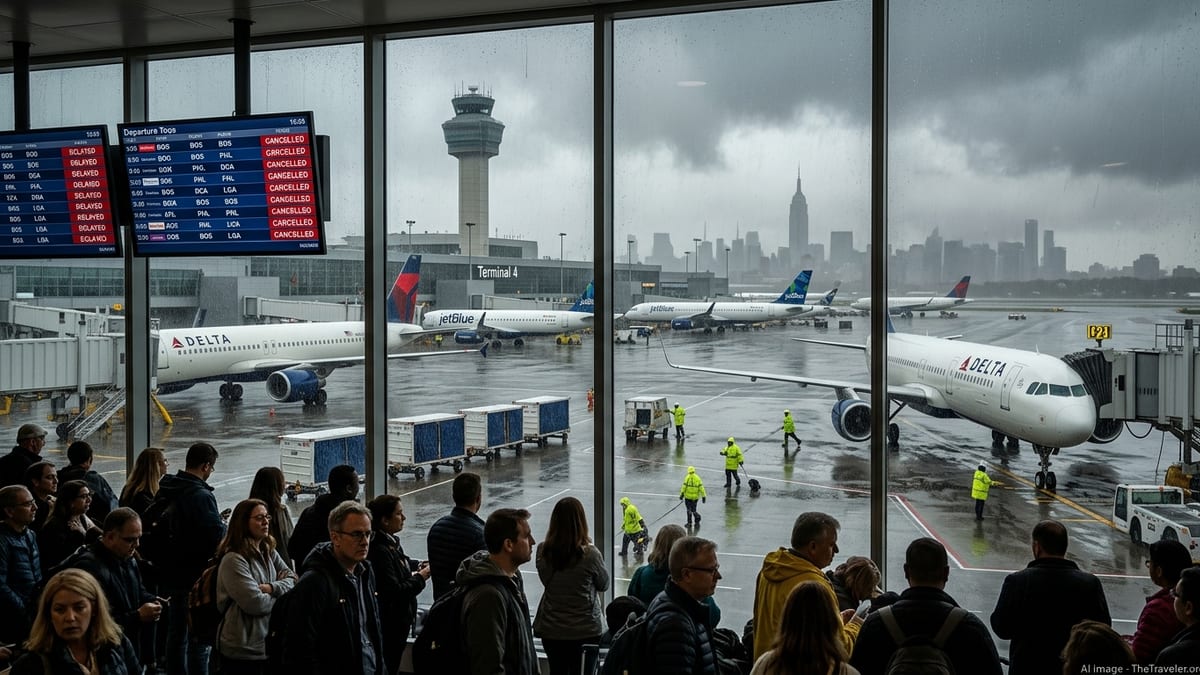
A powerful coastal storm striking the U.S. East Coast on Thanksgiving Day, Thursday, November 26, 2026, has brought high winds, heavy rain and coastal flooding to the New York City area, triggering significant flight cancellations and delays at John F. Kennedy International, LaGuardia and Newark Liberty airports and compounding disruption from the unprecedented decision to postpone the 100th Macy’s Thanksgiving Day Parade to Saturday, November 28.
Get the latest news straight to your inbox!
Storm Conditions Hit New York on a Peak Holiday Travel Day
The Thanksgiving storm affecting New York City is part of a broader nor’easter impacting the Mid Atlantic and Northeast, with the National Weather Service warning of a “major coastal storm” bringing strong winds, periods of heavy rain and coastal flooding on November 26 and into November 27. Forecast discussions issued from the New York office on November 25 and November 26 highlighted the risk of wind gusts in the 45 to 55 mile per hour range in and around the city, with higher gusts along exposed coastal areas and barrier islands.
New York City Emergency Management advised residents and visitors on November 24 to plan for 1 to 2 inches of rain, gusts near 50 miles per hour and multiple rounds of coastal flooding at high tide on Thanksgiving Day, particularly affecting low lying neighborhoods along the city’s shorelines. That outlook has largely verified, with National Weather Service briefings on Thursday afternoon flagging narrow corridors of rainfall rates near 1 inch per hour and ongoing coastal flooding concerns in parts of New Jersey and the New York Harbor region as the storm’s center tracks north of the city.
Although Thanksgiving Day is typically somewhat quieter for departures than the two days immediately preceding the holiday, it still falls squarely within the ten day peak travel window when millions of Americans fly. This year, the strongest wind and rain bands have lined up with morning and late afternoon departure “banks” at New York’s airports, affecting travelers who chose Thanksgiving flights in the hope of avoiding crowds and peak prices earlier in the week. The nor’easter has arrived on the heels of earlier frontal passages that already produced bouts of low cloud and rain across the Northeast, reducing the margin for airlines and airports to recover before the core of the storm reached the Interstate 95 corridor.
Flight Cancellations Mount Across the New York Airport System
By Thursday afternoon, the impact on air travel in the New York metropolitan area was clearly visible in airline schedules and federal aviation data. Flight tracking and aviation operations reports indicate that LaGuardia has seen the highest disruption rate among the region’s main airports, with roughly 1 in 11 scheduled flights canceled at points during the day and a high share of remaining services operating with significant delays. John F. Kennedy International has also experienced a notable spike in cancellations, while Newark Liberty has recorded a lower but still elevated cancellation rate compared with a typical Thanksgiving Thursday.
Industry data aggregated for the Thanksgiving period show that LaGuardia entered the holiday with more than 200 scheduled departures and arrivals per day. On Thursday, November 26, around 8 to 9 percent of those services were removed from the schedule, according to operational tallies compiled from airline and airport feeds. JFK’s cancellation rate also briefly reached the high single digits as the worst rain and crosswinds moved across its airfield. Newark Liberty, which handles a larger daily schedule, has reported a smaller proportion of cancellations but numerous extended delays as airlines and air traffic control slowed operations to manage wind shifts and wet runways safely.
The three airports share one of the most complex and congested airspace systems in the world, and on Thanksgiving that system has been operating with reduced capacity. Low cloud ceilings, periods of reduced visibility, strong crosswinds and standing water on runways have all constrained the use of certain runway configurations, forcing the Federal Aviation Administration to implement traffic management initiatives, including ground delay programs and airborne holding. Even flights that have operated have often departed or arrived well behind schedule, leading to missed connections for passengers using New York as a hub for onward travel within the United States or internationally.
Airlines Extend Weather Waivers and Adjust Holiday Schedules
Major U.S. carriers anticipated the timing and severity of the nor’easter and began publishing flexible rebooking policies for Thanksgiving period travel earlier in the week. As of Wednesday, November 25, large network airlines with significant footprints in the Northeast, including United, Delta, American and JetBlue, had active weather waivers covering trips touching a string of East Coast airports from Boston through New York and Philadelphia to Washington, D.C. These waivers allow customers scheduled to travel on or around November 26 to change their flights without standard change fees, subject to specific conditions defined by each carrier.
For passengers booked to or from JFK, LaGuardia and Newark, many of the waivers permit rebooking to alternative flights between Wednesday, November 25, and Saturday, November 28, while keeping the same origin and destination. In some cases, airlines are also waiving fare differences for travelers willing to move their trip into less disrupted windows within that timeframe, provided they travel in the same cabin and follow the same routing. Similar rebooking flexibility has been extended to other airports affected by the same storm system along the Mid Atlantic and New England coasts, reflecting the storm’s broad geographic footprint.
Despite those measures, seat availability has remained a pressure point. Flights on Tuesday and Wednesday before Thanksgiving were already heavily booked as travelers attempted to “beat the storm,” leaving fewer spare seats when carriers encouraged customers to move out of the most heavily affected time periods on Thursday. As the storm’s worst conditions have coincided with the holiday itself, options for same day rebooking are limited, and many travelers have been shifted onto flights on Friday or Saturday. Because New York’s airports operate under slot and scheduling constraints that limit the rapid addition of extra flights, airlines have instead concentrated on upgauging aircraft where possible, consolidating lightly booked services and rerouting customers through less affected hubs in the Midwest and Southeast.
Historic Parade Postponement Highlights Weather Concerns in Manhattan
The same storm system disrupting air travel has also forced an unprecedented change to one of New York’s most prominent holiday traditions. On Wednesday, November 25, New York City officials, Macy’s and broadcast partners confirmed that the 2026 Macy’s Thanksgiving Day Parade, the event’s planned 100th edition, would not take place on Thanksgiving morning as scheduled. Instead, the parade has been postponed to Saturday, November 28, with a new start time of 8:30 a.m., in response to forecasts showing damaging winds and driving rain along the route in Manhattan.
In public statements, city representatives and organizers cited established wind safety thresholds for the parade’s large balloons. Guidance used in recent years has stipulated that balloons may need to be lowered or not flown at all when sustained winds exceed roughly the lower 20 mile per hour range or gusts climb above the mid 30s. Ahead of Thanksgiving 2026, National Weather Service forecasts and later observations pointed to the potential for gusts in the 50 to 60 mile per hour range in corridor like Manhattan streets at times on Thursday, creating safety concerns for balloon handlers, performers and spectators alike.
Macy’s, city agencies and multiple broadcasters have confirmed that this is the first time in the parade’s history that the event has been postponed to a different day because of weather, although the parade was canceled during the Second World War. The rescheduled parade will follow the traditional route on Saturday, November 28, with street closures and security measures in Midtown and the Upper West Side similar to those originally planned for Thanksgiving morning. That shift has ripple effects for surface travel, as road closures and dense crowds on Saturday are now expected to coincide with one of the key post holiday travel days for people returning home from the New York area.
Ground Transport, Coastal Flooding and Regional Impacts Beyond Airports
Travel disruption in and around New York is not confined to air transport. New York City Emergency Management and local transit agencies have warned of ponding on roads, localized street flooding and potential service changes on bus routes in low lying neighborhoods, particularly around Thursday’s and Friday’s high tide cycles. In some coastal sections of Staten Island, southern Brooklyn and Queens, forecast storm tides are sufficient to bring moderate coastal flooding, and authorities have urged drivers to avoid flooded underpasses and to build extra time into trips to and from the airports.
Rail operators along the Northeast Corridor have also been monitoring conditions closely. As of Thursday afternoon, there have been no reports of long distance shutdowns on the mainline between Washington and Boston, but strong winds, falling branches and localized flooding have contributed to scattered delays on commuter lines feeding New York and Philadelphia. Ferry and water taxi operators around New York Harbor are operating against a background of small craft advisories and, at times, gale force warnings offshore, and have cautioned passengers that choppy conditions could lead to temporary suspensions or schedule alterations, particularly later on Thursday as winds peak.
The nor’easter’s effects extend well beyond the five boroughs. State level briefings in New Jersey and Pennsylvania describe multiple rounds of tidal flooding, strong onshore winds and heavy rain affecting coastal and bayside communities from Wednesday night through Friday, with the most significant coastal flooding anticipated on Thursday. Farther south, coastal sections of Maryland, Delaware and Virginia have also faced high surf and flooding, while a related storm system in the Midwest has brought early season wintry weather to parts of the Great Lakes region. For travelers connecting through New York from elsewhere in the United States, this means that weather related disruptions can arise both at origin airports and along the final approach to the New York terminals.
What Travelers With New York Flights Should Do Next
With the storm’s center gradually shifting away from New York but strong winds and unsettled weather expected to linger into the night of Thursday, November 26, and through parts of Friday, November 27, travelers with flights touching JFK, LaGuardia or Newark over the long weekend are being urged by airlines and airport operators to remain proactive. Schedules are continuing to evolve as carriers reassess aircraft routing, crew duty limits and updated weather forecasts, and additional cancellations or significant time changes remain possible, especially for early morning and late evening departures when marginal runway conditions can have the greatest impact on capacity.
Passengers scheduled to fly through New York between now and Saturday, November 28, should first confirm whether their itinerary falls under an active weather waiver for the nor’easter. Most major U.S. airlines are listing affected airports and dates on their travel advisory pages and specifying the last date on which rebooking is permitted without a change fee. Where waivers allow, moving to a flight outside the storm’s peak disruption window or shifting to an alternative airport such as Boston or Philadelphia may provide more reliable options, provided that onward ground connections and any necessary overnight accommodation can be arranged.
For those whose flights remain scheduled to operate, authorities recommend planning extra travel time to and from the airport on Friday and Saturday. On Friday, November 27, residual flooding, downed branches and ongoing road repairs may slow traffic flows on key expressways and parkways serving the airports. On Saturday, November 28, the rescheduled Macy’s Thanksgiving Day Parade will introduce extensive street closures around Midtown and the Upper West Side from early morning through midday, which could affect road and for-hire vehicle access routes, particularly for LaGuardia and, to a lesser extent, JFK. Travelers connecting internationally through New York this weekend should watch for last minute gate changes and verify that their planned connection times remain adequate as airlines work to reposition aircraft and crews and bring operations back toward normal levels.