


More news on this day
Travelers across East Asia faced widespread disruption as Shenzhen Bao’an International Airport logged 602 delayed flights and 27 cancellations, snarling connections on Shenzhen Airlines, China Southern, China Eastern, Air China and Hainan Airlines serving key routes to South Korea and Japan.
Get the latest news straight to your inbox!
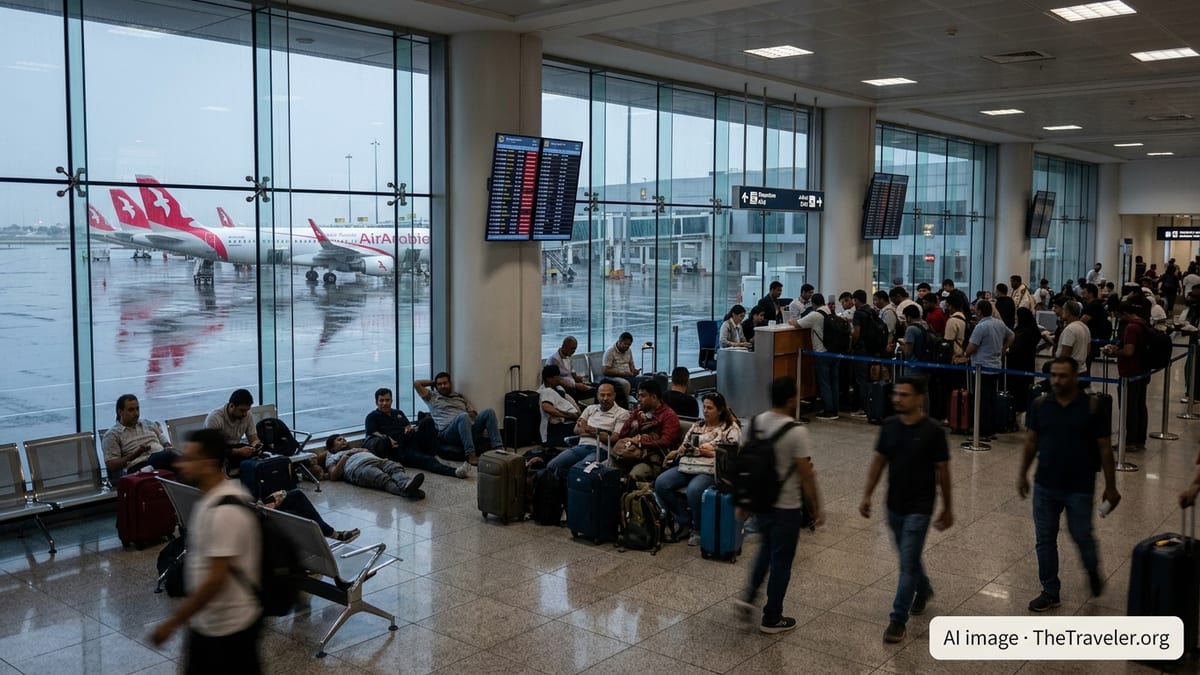
Severe Disruption at One of China’s Busiest Hubs
Publicly available operational data for Shenzhen Bao’an International Airport on the latest affected day show an exceptionally high volume of schedule disruptions, with 602 flights delayed and 27 cancelled. For a major hub that typically handles hundreds of daily movements, those figures indicate that a large share of the day’s schedule failed to operate on time.
Shenzhen Bao’an serves as a primary base for Shenzhen Airlines and an important hub or focus city for China Southern, China Eastern, Air China and Hainan Airlines. These carriers collectively operate a dense network of domestic and international services, including multiple daily links to major cities in South Korea and Japan. When operations at Shenzhen falter, knock-on effects tend to spread rapidly through airline networks across the region.
According to airport tracking platforms that aggregate real-time data, the volume of delays at Shenzhen placed the airport among the most disrupted in Asia for the day. While many services eventually departed, late departures cascaded into missed connections, missed curfews at destination airports and further retiming of later legs.
Passenger experiences shared on social platforms and travel forums describe long queues at check-in, crowded boarding areas and repeated revisions to estimated departure times. Many travelers reported being rebooked onto later services or rerouted via other Chinese hubs, adding hours to journeys that typically take only a few.
Weather, Congestion and Airspace Constraints Combine
Reports from aviation tracking services and weather monitors point to adverse weather patterns in southern China as a key trigger for the disruption. Thunderstorms and reduced visibility frequently affect operations at coastal airports like Shenzhen, and even short ground stops can quickly translate into lengthy backlogs when an airport is running near capacity.
Industry analysis regularly notes that China’s busiest air corridors are heavily congested, and that weather events at one hub can lead to a chain reaction of holding patterns, diversions and slot restrictions. In practice, once morning waves of flights are delayed, airlines often struggle to bring schedules back to normal before the end of the operating day.
Data published in recent years on Chinese airline punctuality show that the major state-linked carriers, including Air China, China Eastern, China Southern, Hainan Airlines and Shenzhen Airlines, routinely operate in a challenging environment of tight turnarounds and dense slot allocations at primary hubs. On a day when weather and airspace constraints converge, the room for recovery is limited.
Travel commentary over the past several seasons has also highlighted a pattern of delay-prone operations along China’s southeast coast, where frequent summer storms and heavy traffic combine. The latest disruption at Shenzhen appears to fit that broader pattern, with weather-related constraints triggering a wider operational breakdown.
Impact on Routes to South Korea and Japan
Shenzhen Bao’an has become an important starting point for leisure and business travel to South Korea and Japan, serving cities such as Seoul, Busan, Tokyo and Osaka either nonstop or via short connections through other Chinese hubs. The cluster of 602 delays and 27 cancellations significantly affected these corridors, as aircraft and crews scheduled to operate international segments were held up on earlier domestic legs.
Flight-status boards and tracking dashboards showed multiple services to Japanese and Korean gateways posting extended delays, with some departures pushed deep into the night or rescheduled for the following day. Travelers attempting same-day connections from Shenzhen to East Asian destinations were among the hardest hit, often forced to accept overnight stays or extensive rerouting via Guangzhou, Shanghai or Beijing.
Tourism operators and online travel agencies that focus on Greater China and Northeast Asia itineraries reported higher volumes of change and cancellation requests as customers attempted to salvage trips. Travel blogs and forums carried first-hand accounts of families missing onward flights to Japan’s regional airports and business travelers losing same-day meeting windows in Seoul due to late departures from Shenzhen.
The disruption has also drawn attention to the vulnerability of short-haul international routes that depend on tight aircraft rotations. When a single aircraft is delayed for several hours at Shenzhen, its subsequent flights into and out of South Korea and Japan can each inherit the knock-on delay, stretching the impact well beyond China’s borders.
Airlines Struggle to Restore Normal Operations
Publicly available schedules and fleet data show that Shenzhen Airlines, China Southern, China Eastern, Air China and Hainan Airlines maintain significant operations at Shenzhen Bao’an, using the airport as either a main hub or an important base. On the latest day of disruption, these carriers accounted for the majority of affected flights.
In the immediate aftermath of the delays, timetable displays indicated a mix of strategies: selective cancellations of lower-demand flights to free up capacity, consolidation of services on busier routes and substitution of larger aircraft where possible to move stranded passengers more quickly. However, with aircraft and crew displaced across the network, full normalisation proved difficult within a single operational day.
Recent commentary from frequent flyers on Chinese carriers has pointed to similar patterns following previous large-scale disruptions at mainland hubs: generous rebooking options in some cases, but limited information and long wait times at call centres and airport service desks. Experiences described online in this latest incident suggest a comparable mix, with some travelers quickly confirmed on alternative flights while others reported extended uncertainty over new itineraries and refunds.
Industry observers note that China’s big carriers have invested heavily in fleet and route expansion on international services to Northeast Asia, but that ground handling capacity, real-time customer communication and flexible crew planning can lag during sudden spikes in disruption. The Shenzhen episode is being viewed as another stress test of how quickly major airlines can recover in a complex, high-density operating environment.
What Travelers Can Expect in the Coming Days
Operational data from similar disruption events at major Asian hubs suggest that residual delays can persist for at least one to two days after the worst of the chaos, as airlines reposition aircraft and crews and work through passenger backlogs. Travelers departing Shenzhen or connecting through the airport in the near term are likely to encounter some remaining schedule irregularities, even as headline delay numbers gradually decline.
Public information from flight-tracking platforms indicates that airlines are progressively restoring planned timetables, but that individual services may still be retimed at short notice. Passengers booked on Shenzhen Airlines, China Southern, China Eastern, Air China and Hainan Airlines are being advised by travel intermediaries and online booking services to monitor their flight status frequently and allow additional time at the airport.
Travel experts commenting in recent coverage of disruptions at Chinese airports emphasize several recurring recommendations for days like these: favor earlier departures that offer more recovery options, build longer connection buffers when transiting through key hubs and consider carrying overnight essentials in hand luggage in case of unexpected layovers.
With the summer travel season intensifying across East Asia, the latest wave of delays at Shenzhen Bao’an underscores how quickly conditions can deteriorate at a major hub when weather and congestion collide. For the region’s airlines and airports, the episode is likely to renew discussion over how to expand capacity and resilience fast enough to match surging demand.