


More news on this day
Operations at Adolfo Suárez Madrid Barajas Airport were heavily disrupted today as around 260 flights were reported delayed and four canceled, affecting services by Iberia, Air Europa, Vueling and other carriers on busy domestic and international routes including Barcelona, London, Paris, New York and Frankfurt.
Get the latest news straight to your inbox!
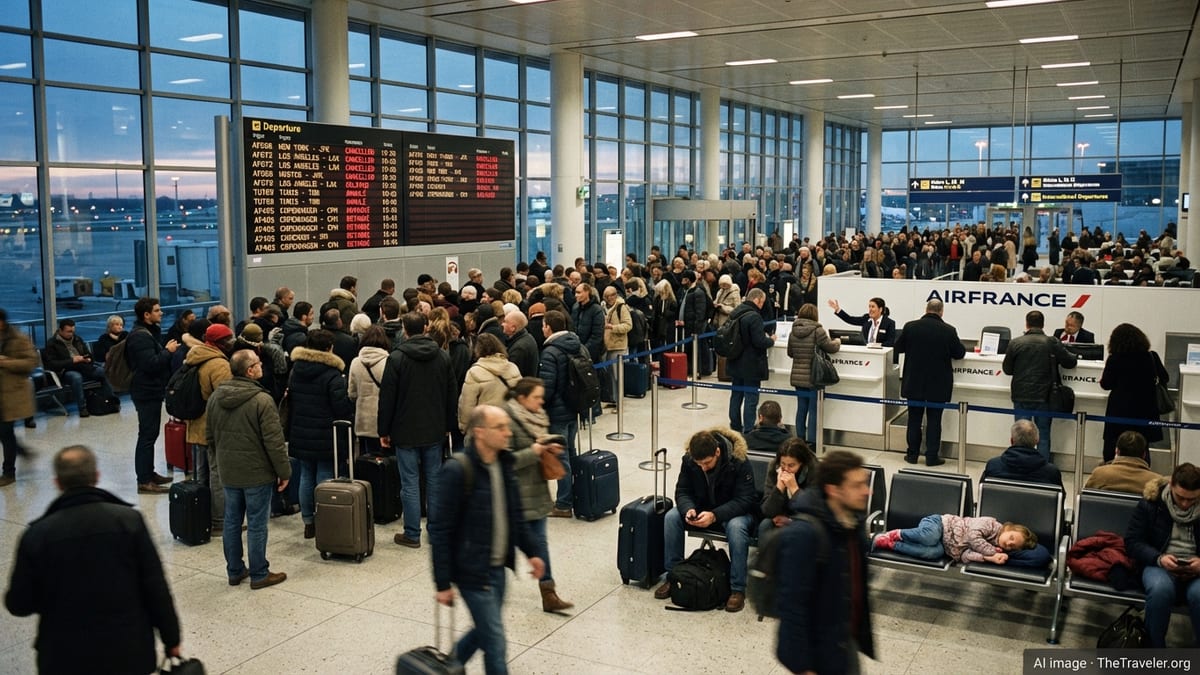
Major Operational Disruption at Spain’s Busiest Hub
The disruption unfolded over the course of Thursday as Madrid Barajas, Spain’s primary international gateway, struggled to keep flight movements running to schedule during one of the peak travel periods of the spring shoulder season. Publicly available tracking data and airport information pages indicated a sharp build up of delayed departures and arrivals across terminals T1 to T4S, with knock on effects across the Iberian Peninsula and wider European network.
Reports from live flight tracking services showed wave after wave of departures from Madrid to key European capitals operating behind schedule, with some sectors pushed back by more than an hour. The impact was visible on high frequency shuttles such as Madrid to Barcelona, as well as Madrid services to London, Paris and Frankfurt, which feed onward long haul connections for multiple airline alliances.
While only four flights were confirmed canceled, the high number of delays created a similar experience for many travelers as passengers missed onward connections, faced extended waits at gates and in departure lounges, and scrambled to rebook itineraries. The pattern of disruption pointed to a systemic operational issue rather than isolated technical incidents involving single aircraft.
Adolfo Suárez Madrid Barajas typically handles hundreds of movements per day and serves as a major hub between Europe and Latin America in particular. When disruption strikes at this scale, the effects ripple quickly across carriers and alliances, with delays in one bank of departures feeding into later rotations and overnight positioning of aircraft.
Flag Carriers and Low Cost Operators Caught in the Snarl
The largest share of the disruption appeared to fall on Iberia and its regional and codeshare partners, which operate many of the Madrid to Barcelona, London, Paris and Frankfurt services that form the backbone of the airport’s short haul network. According to flight information displays and schedule data, a series of Iberia departures were pushed back from their scheduled slots, with subsequent rotations also operating late.
Air Europa, which maintains an extensive network from Madrid to European and long haul destinations, was also significantly affected, with delays reported on intra European sectors that are commonly used as feeders for evening departures to the Americas and the Caribbean. Publicly available information for some Air Europa departures from Madrid on Thursday showed revised timings and late operations, highlighting the vulnerability of hub and spoke systems when punctuality falters.
Vueling, a key player in the Spanish domestic and short haul European market, likewise saw delays on Madrid routes that complement its bases in Barcelona and other Spanish cities. With many flights shared through codeshare agreements between Iberia, Vueling and other partners, any disruption to one carrier’s operation can quickly cascade through alliance networks and appear simultaneously across multiple flight numbers for the same service.
Other European airlines serving Madrid, including traditional network carriers and low cost operators, were indirectly drawn into the disruption as arrival delays from Madrid affected subsequent departures out of their own hubs. For travelers, this meant that a late start from Madrid could turn into missed connections or late arrivals onward to secondary cities across Europe.
Key Routes to Barcelona, London, Paris, New York and Frankfurt Affected
The Madrid to Barcelona air shuttle remains one of Spain’s busiest corridors, and it was among the routes most visibly impacted, with multiple departures from the capital operating behind schedule. Travelers heading north for business and onward rail or air connections encountered longer than expected waits at Madrid Barajas, with some early wave flights already departing late and setting the tone for the day’s operations.
Flights from Madrid to London and Paris, two of Europe’s most important international gateways, were also reported delayed. These routes are critical not only for point to point travelers between Spain, the United Kingdom and France, but also for connecting passengers using British, French and Spanish hubs to reach destinations across North America, Africa and Asia. Even modest delays on these sectors can create missed minimum connection times and trigger a chain of rebookings.
Transatlantic services to New York were not spared. Madrid’s connections to New York play a central role in linking Spain with the northeastern United States and providing onward access to other North American cities. When departures on these long haul flights leave late, arriving passengers face increased risk of missing domestic connections in the United States, while aircraft and crew schedules for the return legs become more difficult to manage.
Frankfurt, one of Europe’s major transfer hubs and home to a large share of continental connecting traffic, also saw disruption in its Madrid services. A delayed Madrid Frankfurt rotation can feed directly into long haul departures to Asia, the Middle East and the Americas from Germany, meaning that issues originating in Spain may be felt by passengers thousands of kilometers away.
Stranded Passengers Confront Long Queues and Rebooking Challenges
For travelers on the ground at Madrid Barajas, the operational picture translated into crowded terminals, long customer service lines and uncertainty about onward journeys. Social media posts through the day described large numbers of passengers waiting at departure gates with limited information about revised timings, while others reported standing in queues to rebook missed connections or secure hotel vouchers.
Madrid Barajas is designed to handle heavy passenger flows, with shuttle buses, automated passport control gates and extensive retail and dining options. During significant disruptions, however, these facilities can quickly become congested as multiple delayed flights overlap in the same time window. Passengers attempting to transfer between terminals T4 and the satellite T4S in particular may find normal connection times insufficient when arriving flights are already late.
Under European Union air passenger regulations, travelers whose flights are significantly delayed or canceled under qualifying conditions may be entitled to care, assistance and in some cases financial compensation. Information screens and airline materials at Madrid Barajas direct passengers to published guidance on their rights, though the process of obtaining compensation or reimbursement often requires follow up after the journey is completed.
Families, business travelers and tourists caught in Thursday’s disruption faced difficult choices about whether to wait out long delays in the terminal, seek last minute alternatives on other carriers, or abandon complex itineraries altogether. For those traveling to events or with non refundable accommodation and tour bookings, the financial and practical impact of missed days can be considerable.
Ongoing Investigations and Outlook for Upcoming Travel Days
As of Thursday evening, there was no single publicly confirmed cause explaining the scale of the disruption, and information available to travelers pointed instead to a combination of factors. Recent performance reports for Madrid Barajas show that the airport has worked to reduce weather related delays, but hub operations remain sensitive to tight scheduling, high utilization of aircraft and crew, and knock on effects from earlier irregularities.
Aviation industry observers noted that spring is often a challenging period for European air traffic as demand ramps up ahead of the summer peak. Any mismatch between capacity, staffing and demand can quickly translate into widespread delays, particularly at major hubs such as Madrid that serve as transfer points between continents. If the disruption at Madrid Barajas is linked to broader issues in air traffic flow or resource allocation, travelers may see continued challenges in the coming days.
Travelers planning to pass through Madrid in the near term are being advised by publicly available guidance to monitor flight status closely, allow generous connection times where possible and check with airlines about rebooking options if schedules begin to slip. Those with non essential travel may also consider alternative routings through other European hubs if flexibility allows.
For now, the disruption underscores the vulnerability of complex hub systems and the importance for passengers of understanding both their rights and the practical steps they can take when significant delays arise. With the busy summer travel season approaching, the performance of Madrid Barajas will remain under close scrutiny from travelers, airlines and industry analysts alike.