


More news on this day
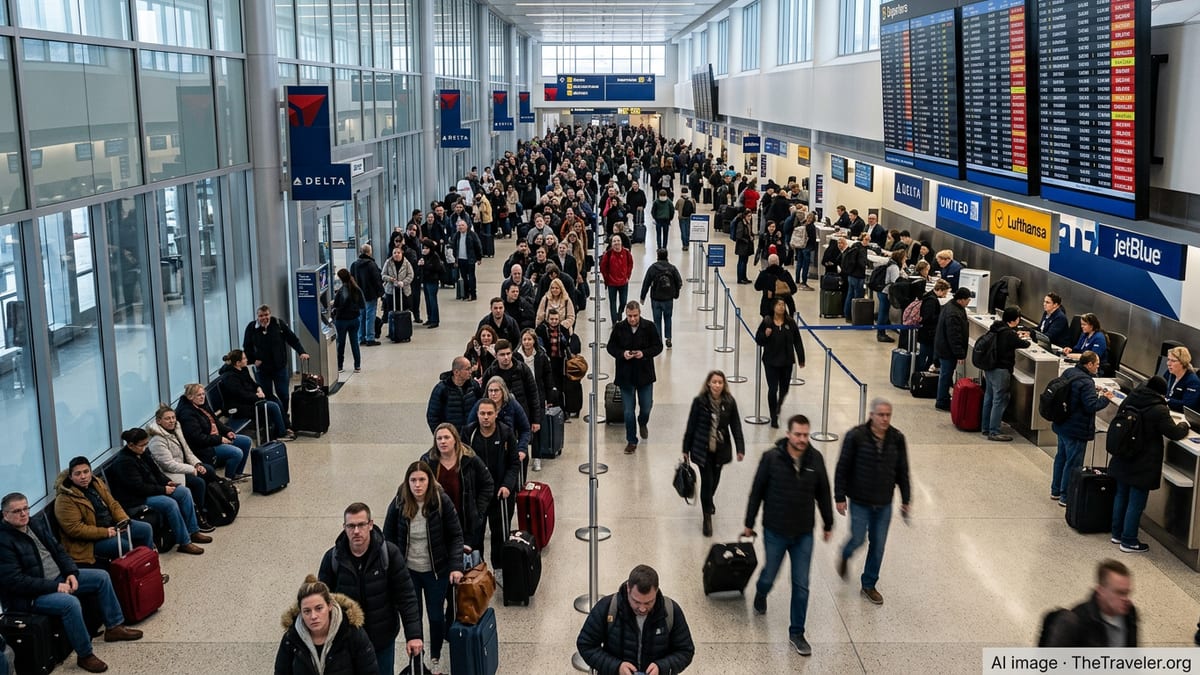
Hundreds of passengers at Budapest Ferenc Liszt International Airport in Hungary are facing long delays and disrupted journeys after a heavy day of schedule disruption that has seen more than 120 flights delayed and several canceled across European and Middle Eastern routes.
Get the latest news straight to your inbox!
Major Operational Disruption at a Key Central European Hub
Publicly available data for Budapest Ferenc Liszt International Airport shows an unusually high number of disrupted flights across both arrivals and departures, affecting full-service and low-cost carriers alike. One industry report indicates that the airport recorded 127 delayed services and eight cancellations in a single operational period, underscoring the scale of interruption at one of Central Europe’s busiest aviation gateways.
The disruption has affected a broad mix of airlines, including large low-cost operators such as Ryanair and Wizz Air as well as network carriers like Lufthansa, KLM, Air France and Turkish Airlines. Delays have been recorded on connections linking Budapest with major hubs including London, Paris, Frankfurt, Amsterdam, Istanbul, Rome and Dubai, causing missed onward connections and extended time in the terminal for many travelers.
Live tracking platforms show a patchwork of outcomes across the schedule, with some flights landing close to on time, others being pushed back significantly and a smaller number being canceled altogether. The pattern reflects how quickly congestion can cascade across an airport’s daily operations once rotations begin to slip, especially during busy summer travel periods.
Budapest Ferenc Liszt International Airport serves nearly 200 destinations in around 60 countries, according to airport statistics. With such a broad network concentrated into peak departure and arrival waves, even a limited number of off‑schedule flights can produce knock‑on disruption across multiple airlines and routes.
Ripple Effects for Ryanair, Wizz Air and Major Network Carriers
Among the airlines most prominently affected are Ryanair and Wizz Air, which together operate a large share of Budapest’s short‑haul leisure and city‑pair network. Flight status boards for the airport on Monday show a series of delayed or canceled flights involving these carriers, including services from key Mediterranean and Middle Eastern destinations as well as intra‑European city routes.
Network airlines have also been impacted. Lufthansa, KLM, Air France and Turkish Airlines all rely on Budapest as a feeder point into their respective hubs, where passengers connect onward to long‑haul services. When a Budapest departure leaves late or fails to operate, travelers may miss tightly timed connections in Frankfurt, Munich, Amsterdam, Paris or Istanbul, potentially requiring rebooking and overnight stays.
Examples from flight tracking services illustrate the strain on schedules. Some Lufthansa and other European flights operating into and out of Budapest on June 29 have recorded late departures and arrivals, while a number of services on other carriers have been flagged as delayed or canceled. These interruptions can quickly propagate across an airline’s network as aircraft and crew are displaced from their planned rotations.
For low‑cost carriers that run intensive daily utilization of aircraft, a delay of even 30 to 60 minutes early in the day can compound into multi‑hour disruptions by evening. For full‑service airlines, each missed connection at a hub may require reaccommodation on later services, adding pressure to already high summer load factors.
Passengers Confront Long Waits, Missed Connections and Rebookings
The immediate impact for travelers at Budapest has been extended waits at departure gates, uncertainty around revised departure times and, in some cases, the need to seek new itineraries. With numerous flights to and from major European capitals delayed, passengers heading toward London or other large hubs risk falling outside the minimum connecting times for onward journeys.
Travel‑rights organizations frequently highlight that under European Union air passenger regulations, travelers facing long delays or cancellations from Budapest may be entitled to assistance such as meals, refreshments and, where necessary, accommodation. Eligibility for financial compensation depends on factors including the length of delay, distance flown and the reasons for the disruption, which can range from airline operational issues to air traffic management constraints.
For those whose flights are canceled, airline policies and EU rules generally require that an alternative routing or a refund be offered. On busy summer travel days, however, finding spare seats on later flights can be difficult, particularly on routes with strong seasonal demand or limited daily frequencies. This can leave passengers with limited options besides accepting longer connections or travel on different days.
Families, business travelers and tourists transiting through Budapest onto other European or intercontinental flights face additional complications, including the need to rebook separate tickets, adjust hotel stays or rearrange tours and ground transport bookings at their final destinations.
Possible Causes: Congested Skies and Tight Summer Schedules
While a single, definitive cause for the latest wave of disruptions has not been clearly established in public reporting, the pattern matches broader pressures seen across European aviation this summer. Industry coverage points to a combination of factors that can include tight aircraft rotations, staffing constraints, weather variations and air traffic control restrictions in crowded European airspace.
Budapest’s role as a fast‑growing regional hub adds complexity. The airport has expanded its route network rapidly in recent years, attracting new services from low‑cost, charter and full‑service airlines. With peak travel demand stretching terminal and runway capacity, even localized thunderstorms, short‑term ground delays or slot restrictions at partner hubs can push aircraft off schedule and reduce the margin for recovery.
Operational documents and notices for Budapest indicate that the airport and national air navigation service provider regularly adjust procedures for special events and peak traffic days, illustrating how carefully movements must be choreographed to avoid bottlenecks. On days when inbound and outbound flows are already near capacity, any unexpected constraint can trigger multi‑hour queues in departure sequences and knock‑on delays throughout the day.
Across the wider region, recent reports of significant delays and cancellations at other major airports, including Vienna, suggest that interconnected networks and shared airspace mean problems rarely remain isolated to a single city. Disruptions at one hub can quickly impact aircraft and crews scheduled to serve Budapest later the same day.
What Travelers Can Do if Their Budapest Flight Is Affected
Air travel specialists advise that passengers facing disruption from Budapest first verify the latest status of their specific flight using airline apps or flight‑tracking tools, which tend to update more quickly than static timetables. Once a delay or cancellation is confirmed, travelers can usually manage rebooking, vouchers and, in some cases, hotel arrangements digitally without waiting in long airport queues.
Those flying on European carriers or departing from Budapest on any airline may wish to review their rights under EU air passenger regulations, particularly for delays beyond three hours or outright cancellations. Keeping receipts for meals, local transport and accommodation can assist with later reimbursement claims where policies and regulations allow.
Travel insurance providers may also offer coverage for missed connections, additional accommodation or alternative transport, depending on the policy. In complex cases involving separate tickets on different airlines, insurers can sometimes bridge gaps where airline responsibilities are limited.
As operations gradually normalize, industry observers expect that airlines serving Budapest Ferenc Liszt International Airport will adjust schedules, swap aircraft or add capacity where possible to clear backlogs. For now, however, travelers are being advised to allow extra time, monitor flight information closely and prepare for potential last‑minute changes when flying through the Hungarian capital.