


More news on this day
Hundreds of flights across Europe were cancelled or delayed this week, with Barcelona at the center of a fresh wave of disruption that saw 202 cancellations and 2,724 delays recorded in a single day across multiple airports.
Get the latest news straight to your inbox!
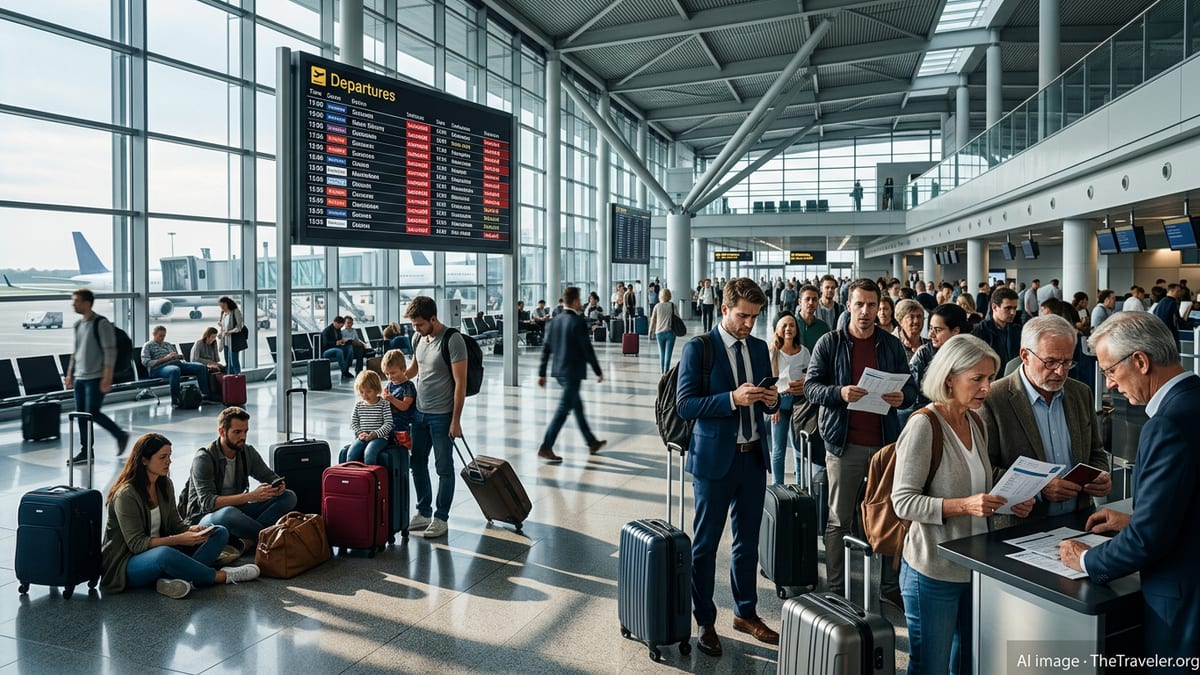
Industrial Action at Barcelona Ripples Across the Network
Published coverage from European aviation trackers and airline advisories indicates that an ongoing handling and ground-services dispute at Barcelona El Prat Airport has been a key trigger for the latest wave of disruption. Industrial action has reduced available staff for ramp operations, baggage handling and aircraft turnaround, creating bottlenecks even when weather and airspace conditions are otherwise manageable.
Travel waivers issued by several carriers in early August pointed specifically to “industrial action” in Barcelona, allowing passengers booked to or from the city to change dates without additional fees within a limited window. Publicly available information from airline alerts shows that the waivers covered flights over a span of several days, underlining expectations that the disruption would not be confined to a single 24 hour period.
Operational data compiled by independent flight-tracking platforms suggests that, on the worst affected day, 202 flights were cancelled and about 2,724 were delayed across European airports, with Barcelona among the hardest hit. While not all of these disruptions originated at El Prat, the concentration of cancellations and late departures in and out of the Catalan hub contributed to knock-on effects across airline networks.
The impact has extended beyond Spain, affecting connecting routes across France, Germany, Italy and the United Kingdom as aircraft and crews arrived late or were left out of position. As carriers attempted to reset schedules, additional tactical cancellations were introduced to prevent further cascading delays.
Weather, Capacity Constraints and a Peak Summer Squeeze
The latest disruption has unfolded during the busiest weeks of the European summer, when traffic normally peaks and even minor operational issues can quickly escalate. Eurocontrol’s recent network briefings highlight that several area control centers, including Barcelona’s, have been operating close to capacity, with limited flexibility to absorb additional stress.
Reports from European aviation organisations describe a familiar pattern for August: convective storms and heat-related weather events periodically reduce runway capacity and increase separation between aircraft, adding to delays. When weather-driven restrictions intersect with staffing issues or industrial action on the ground, turnaround times lengthen and departure slots are missed, forcing airlines to re-sequence flights or cancel departures altogether.
Historical punctuality data for Europe shows that Barcelona has been prone to weather and capacity-driven delays in previous summers, and this year’s combination of strikes and unsettled conditions has intensified that trend. As a result, some carriers have taken the step of trimming schedules in advance or consolidating lightly booked services in an effort to keep the remainder of their operations running on time.
Network managers have also warned that traffic growth compared with previous years has reduced the margin for error. Even with some overall improvement in average delay minutes year on year, a concentrated event such as the 202 cancellations and 2,724 delays reported this week can still cause severe localized disruption for passengers.
Passenger Experience: Long Queues, Misplaced Bags and Overnight Stays
Accounts shared on public forums by recent travelers to and from Barcelona describe long waits at baggage reclaim, missed connections and last minute changes to itineraries. Some passengers reported arriving to find that checked luggage had failed to make it onto their flight, or that bags remained at Barcelona while their owners continued journeys on rebooked services.
Others recounted overnight stays at or near airports after evening cancellations, in some cases when aircraft were held on the ground for extended periods before flights were eventually scrubbed. Several posts referenced confusion over whether disruptions were attributed to weather, industrial action or mechanical issues, a distinction that can affect entitlements to compensation under European Union rules.
Despite the disruption, not all flights have been affected equally. Reports from travelers indicate that some services have departed close to schedule, particularly early in the day, while later waves of flights experienced more extensive delays as the network absorbed the impact of missed slots and out-of-position aircraft. The mixed picture has added to uncertainty for passengers attempting to judge whether to rebook proactively or wait for airlines to adjust schedules.
Airports in other parts of Europe have also seen side effects. With Barcelona-based aircraft and crews delayed, connecting hubs such as Paris, Frankfurt and Amsterdam have reported additional late arrivals and missed onward connections, further complicating travel plans for passengers on multi-leg itineraries.
How Airlines and Airports Are Responding
According to operational updates shared on airline and airport information channels, carriers are using a mix of measures to manage the disruption. These include issuing travel waivers, prioritising flights with high numbers of connecting passengers, and substituting larger aircraft on selected routes to accommodate travelers from cancelled services.
Ground handling companies and airport managers in Barcelona have signaled through public statements and notices that contingency staffing plans are in place, though reduced capacity continues to limit how quickly aircraft can be turned around at peak times. Negotiations between unions and employers are reported to be ongoing, and the duration of the industrial dispute remains uncertain.
Across Europe, air navigation service providers and Eurocontrol are working with airlines to adjust flight plans and departure times in order to make more efficient use of available airspace and airport slots. In practice, however, high demand in mid August means that many flights have limited flexibility to move into less congested windows without significantly altering passengers’ travel times.
Some carriers have advised customers via their websites and social media channels to arrive at airports earlier than usual and to travel with carry on baggage only where possible. The guidance aims to reduce pressure on checked baggage systems that are already strained by staff shortages and off schedule operations.
What Travelers Should Watch in the Coming Days
With the peak holiday period continuing, publicly available forecasts from aviation agencies suggest that Europe’s air traffic will remain at or near seasonal highs in the days ahead. If industrial action in Barcelona persists or escalates, further rounds of delays and cancellations remain possible, particularly on routes that rely heavily on the airport as an origin or transit point.
Travel industry analysts note that airlines have little spare capacity to deploy additional aircraft or crews at this point in the summer. That limits their ability to recover quickly from shocks such as severe thunderstorms, technical issues with individual aircraft or additional staffing problems at key hubs.
Passengers planning to travel to or through Barcelona and other busy European airports are being encouraged, in publicly available advisories, to monitor flight status closely, check in online and allow extra time at the airport. Those with flexible schedules may benefit from moving flights to earlier in the day or to less congested dates, depending on the options offered by carriers under existing travel waivers.
While the figure of 202 cancellations and 2,724 delays stands out as a particularly difficult day for European aviation, the broader picture remains one of a system operating near maximum capacity under challenging conditions. How quickly operations stabilise will depend in large part on the resolution of industrial disputes and the cooperation of weather during the remainder of the summer peak.