


More news on this day
Hundreds of travelers were left waiting for hours at Geneva and Zurich airports on June 10 as operational disruptions led to 283 delayed flights and 8 cancellations, snarling schedules for SWISS, British Airways, Lufthansa, Air France, easyJet and other carriers on busy domestic and international routes to London, Paris, Frankfurt and beyond.
Get the latest news straight to your inbox!
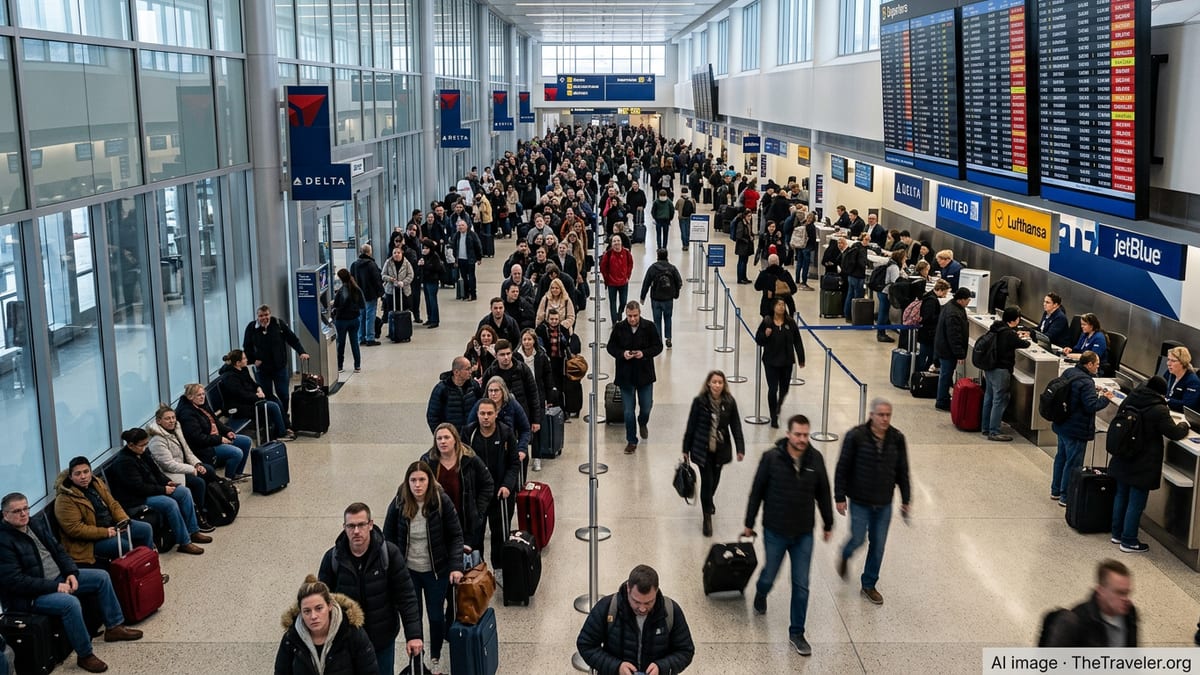
Swiss Hubs Hit by Wave of Flight Disruptions
Operational data compiled from real-time tracking platforms and airport information boards on June 10 indicate that Geneva Airport and Zurich Airport together recorded 283 delayed departures and arrivals, with eight flights canceled outright. The disruption affected morning and midday peaks in particular, when European business traffic and long-haul connections are typically heaviest.
SWISS, the largest operator at both airports, experienced rolling delays on several intra-European services and long-haul departures as aircraft and crews fell out of position. Other major carriers with a strong Swiss presence, including British Airways, Lufthansa, Air France and easyJet, also reported services running significantly behind schedule on routes linking Switzerland with hubs such as London Heathrow, Paris Charles de Gaulle and Frankfurt.
Published aviation statistics for spring 2026 already show rising average delays across European airspace, and the situation at Geneva and Zurich on June 10 reflects that broader trend. Sector-wide reporting from European air navigation organizations for March and April 2026 points to growing reactionary delays, where earlier late arrivals cascade through the day and across multiple airports.
Passengers connecting through Zurich, a key transfer hub for SWISS and Star Alliance partners, were particularly exposed. When early services from regional European cities arrived late, onward flights to North America, the Middle East and Asia were forced to hold departures or rebook passengers whose minimum connection times could no longer be met.
Routes to London, Paris and Frankfurt Among the Worst Affected
Among the most heavily disrupted services on June 10 were high-frequency European trunk routes linking Switzerland with the major hubs of London, Paris and Frankfurt. These short sectors are central to the networks of SWISS, British Airways, Lufthansa and Air France respectively, and any disruption quickly propagates through their wider schedules.
Tracking data from Geneva showed delays building on early departures to London and Paris, with subsequent rotations pushed back as ground handling teams and aircraft were reassigned. In Zurich, a similar pattern emerged on flights to Frankfurt and other German cities, where congestion in Central European airspace and tight turnaround windows left little buffer for recovery.
While most affected flights eventually departed, the cumulative impact of multiple 30 to 90 minute delays left evening services heavily burdened. Passengers with same-day onward travel, especially to destinations in North America and Asia, faced missed connections and overnight stays when alternative options were already heavily booked at the start of the summer season.
The disruption spilled into feeder routes as well, including services between Geneva and Zurich that are often used to position passengers for intercontinental departures. Even modest timetable slippages on these domestic links created knock-on effects for long-haul itineraries originally planned with tight but legal connection times.
New Border-Control System and Regional Factors Add Pressure
Publicly available information on recent changes at Swiss airports points to structural pressures that may have compounded the effects of June 10’s disruptions. Since late 2025, Geneva and Zurich have progressively implemented the European Union’s new Entry/Exit System for travelers from outside the Schengen area, requiring biometric registration and additional checks at border control for many non-EU passengers.
Coverage in Swiss media over the past week highlights that this new system has already led to longer processing times at Geneva and Zurich, especially during peak arrival and departure waves. Border-control authorities have advised travelers to allow extra time at the airport, warning that queues at passport control may be significantly longer than in previous summers as the system beds in.
At the same time, broader European operational challenges are feeding into Swiss schedules. Recently reported industrial actions in neighboring countries, weather-related restrictions at key hubs and intermittent technical issues at large airports have all contributed to delays that ripple across the continent. Airlines using Geneva and Zurich as spokes in their network must absorb these external shocks, and recovery can be slow when aircraft and crews are scattered across multiple jurisdictions.
The combination of longer ground processing times, increasingly tight turnarounds, and a busy early-summer traffic profile means Swiss airports are operating with limited resilience. When an incident such as an inbound delay, a temporary airspace constraint or a short-notice crew rotation occurs, it can more easily trigger the kind of widespread knock-on disruption seen on June 10.
Impact on Passengers and Options for Assistance
For passengers caught up in the delays at Geneva and Zurich, the most immediate impact has been extended waiting times in terminals and uncertainty over rebooking. Travelers reported via social media and aviation forums that departure boards on June 10 showed a dense concentration of delayed flights, many of them updated repeatedly in short increments, which made planning around connections and ground transport difficult.
Those whose flights were among the eight cancellations faced more complex arrangements, ranging from rerouting through alternative European hubs to overnight stays near the airports. Traveler accounts from recent months highlight that carriers operating in Switzerland typically provide accommodation and meal vouchers when itineraries are severely disrupted, particularly for passengers booked on a single through-ticket.
Compensation rules for delays and cancellations involving Swiss airports can be complex, especially because Switzerland applies European passenger rights regulations in a way that differs from some EU member states. Consumer advocates and specialist platforms suggest that travelers review the conditions of carriage for their specific airline, retain boarding passes and receipts, and check both Swiss and EU-level guidance on air passenger rights if they believe they may be entitled to reimbursement or compensation.
In the immediate term, airlines serving Geneva and Zurich are advising passengers to monitor their flight status closely through official channels and to arrive earlier than usual for international departures, given the possibility of longer queues and short-notice gate changes. With the summer travel season ramping up, the experience of June 10 underscores how quickly even routine operational strains can leave large numbers of travelers stranded across key European hubs.