


More news on this day
Thousands of travelers across the United States faced hours-long waits, missed connections, and abandoned itineraries as widespread disruptions delayed 5,766 flights and canceled 529 more at major hubs including Atlanta, Dallas, Chicago, Los Angeles, Las Vegas, Boston, Phoenix, and New York.
Get the latest news straight to your inbox!
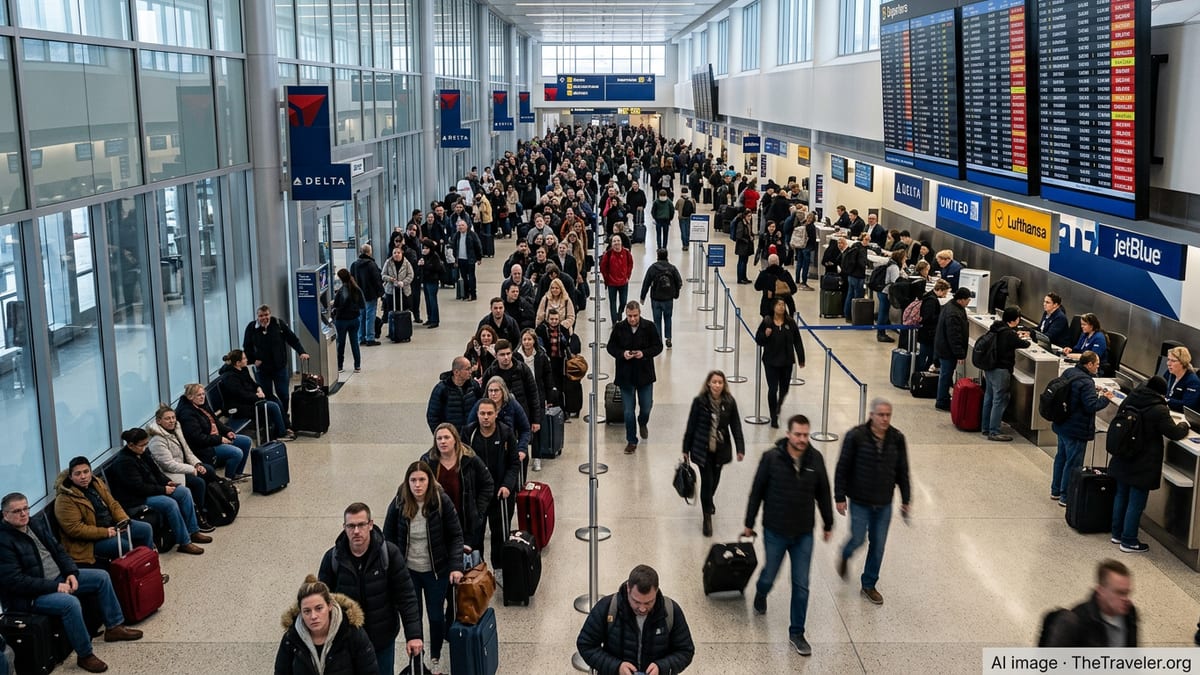
Nationwide Disruptions Hit Peak Summer Traffic
The latest wave of operational turmoil coincided with heavy early-summer demand, amplifying the impact of delays and cancellations across the national air network. Major carriers including Delta Air Lines, Southwest Airlines, Air Canada, American Airlines, and regional operator Republic Airways all appeared among the affected airlines, according to publicly available tracking data.
Reports indicate that bottlenecks at high-traffic hubs such as Atlanta, Dallas Fort Worth, Chicago O’Hare, Los Angeles International, Harry Reid International in Las Vegas, Boston Logan, Phoenix Sky Harbor, and the New York area airports created cascading knock-on effects throughout the day. With aircraft and crews out of position, delays spread to secondary and regional airports across the country.
Travel data providers show that disruptions were not confined to a single carrier or region, suggesting a combination of heavy volume, operational constraints, and localized weather or airspace challenges. Flights operated by legacy airlines, low-cost carriers, and code-share partners all appeared on delay and cancellation boards, leaving passengers to navigate crowded terminals and uncertain departure times.
The timing of the disruption, early in the June travel period, raised particular concerns for families and leisure travelers who often have limited flexibility in rebooking options, especially on popular routes already flying near capacity.
Major Hubs Struggle With Volume And Knock-On Effects
Atlanta, consistently one of the world’s busiest airports and a central hub for Delta Air Lines, once again emerged as a critical pressure point. When flights into or out of Atlanta are delayed, the effects ripple across Delta’s extensive domestic and international network, touching smaller cities that rely on timely connections.
Chicago, Dallas, Los Angeles, Las Vegas, Boston, Phoenix, and New York’s major airports also saw broad schedules pushed back, according to airport and flight-tracking boards. Departures to and from these hubs showed a mix of late pushes from the gate, extended holds before takeoff, and last-minute cancellations once delays became untenable.
With so many of the affected airports serving as key connection points, the disruption extended well beyond passengers starting or ending their journeys at those cities. Many travelers found themselves stranded mid-itinerary after missed connections, with full later flights limiting same-day alternatives.
Publicly available airport status tools showed intermittent ground delay and flow-control programs in parts of the national airspace, which can quickly overwhelm tightly timed schedules. Once those buffers are eroded, even minor operational issues can magnify into large-scale timetable disruptions.
Delta, Southwest, American, Air Canada And Regionals Under Strain
Among the airlines most visibly affected were Delta, Southwest, American, Air Canada, and regional operators such as Republic that fly under major-brand banners. Flight-status boards for these carriers showed a growing list of late and canceled services as the day progressed.
For Delta, delays at core hubs such as Atlanta and major coastal cities created compounding challenges. The airline already faces a complex summer schedule, including route adjustments and previously announced changes on certain long-haul services, which reduce flexibility when irregular operations occur.
Southwest, with its point-to-point network and dense presence at airports like Dallas Love Field, Phoenix, Las Vegas, and select California cities, was also exposed to rolling disruptions. When key aircraft rotations are delayed on such a network, aircraft and crew availability can deteriorate quickly, particularly on shorter-haul, high-frequency routes.
American and its regional partners, along with Air Canada’s cross-border operations, similarly contended with crew duty-time limits and aircraft positioning constraints. Once cancellations mounted, later flights filled rapidly, forcing some travelers to accept next-day or multi-stop routings to reach their destinations.
Passengers Confront Long Lines, Rebooking Challenges
For travelers on the ground, the statistics translated into crowded terminals, long queues at service counters, and tense waits at departure gates. Many passengers found themselves refreshing airline apps and airport displays in search of updated departure times or alternative routing options as schedules shifted repeatedly.
Publicly available guidance from consumer-rights groups notes that within the United States, airlines are generally expected to offer a refund when a flight is canceled and the traveler chooses not to be rebooked. Rebooking on the same airline is common when seats are available, but options can be limited during peak periods when most flights are already heavily booked.
Some international passengers and those connecting to or from Canada may have additional protections under foreign or cross-border regulations, but the patchwork of rules can be confusing. Travelers often must navigate separate policies for delays versus outright cancellations, and compensation rules can differ significantly depending on the origin and destination of the flight.
As delays accumulated, anecdotal reports from airports across the network pointed to overwhelmed customer-service channels, with travelers turning to a mix of self-service tools, mobile apps, and in-person assistance to manage last-minute itinerary changes.
What Travelers Can Do As Summer Disruptions Mount
With early-summer disruption already affecting thousands of itineraries, travel experts and consumer advocates emphasize preparation and flexibility. Public information from travel-assistance organizations suggests booking the first flight of the day when possible, as early departures are statistically less likely to suffer from cascading delays.
Passengers are also encouraged to monitor flight status frequently in the 24 hours before departure, use airline mobile apps to receive push notifications, and check aircraft arrival status from the incoming leg to anticipate potential problems. Keeping essential items and a change of clothes in carry-on baggage can help mitigate the impact of unexpected overnight stays.
For those already affected by the latest wave of delays and cancellations, documenting disruption times, boarding passes, and receipts can assist later if they seek refunds or reimbursement for extra expenses under airline policies. Some travelers may additionally turn to third-party assistance or travel insurance to pursue compensation where available.
With demand expected to remain strong throughout June and July, observers warn that the recent day of 5,766 delays and 529 cancellations may not be an isolated event. Unless airlines and the broader air traffic system can rebuild more operational slack into schedules, passengers may face a turbulent summer of travel across America’s busiest hubs.