


More news on this day
Miami International Airport is enduring a fresh wave of flight disruptions, with aviation tracking data showing 11 cancellations and 163 delays rippling across major carriers including American Airlines, Delta Air Lines, Air France, Envoy, Southwest and LATAM Colombia and affecting routes that link the United States with Brazil, France, Mexico and several other international destinations.
Get the latest news straight to your inbox!
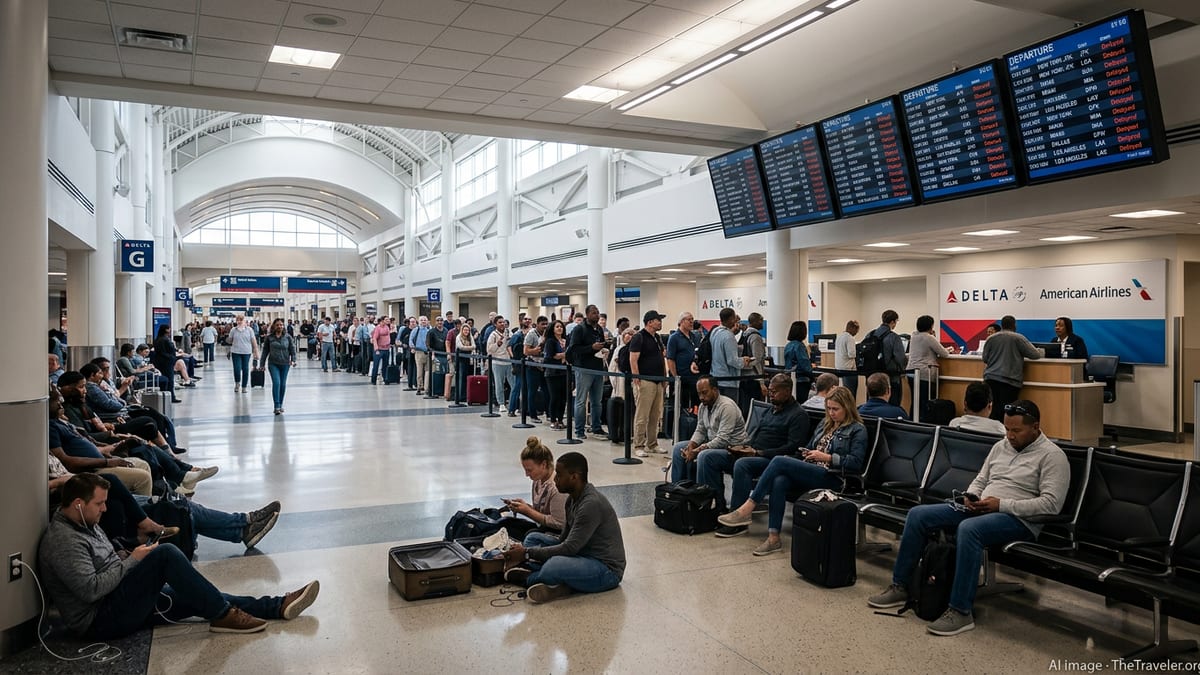
Operational Snarls Create Long Lines and Missed Connections
The elevated number of delayed and cancelled flights at Miami International Airport is creating significant congestion throughout the terminals. Travelers arriving for early morning and evening departures are encountering long check in queues, crowded security lanes and gate areas filled with passengers waiting for aircraft and crew to become available.
Publicly available tracking boards indicate that the disruptions are spread throughout the day rather than confined to a single peak period. That pattern typically points to a mix of upstream issues, such as late arriving aircraft from other cities, crew scheduling complications and minor technical checks that cascade into longer waits. For passengers, the practical impact is a higher risk of missed connections onto domestic and international services.
Miami’s role as a primary gateway between North America and Latin America means that even a relatively small cluster of 11 cancellations can have an outsized effect. Many flights from secondary U.S. cities funnel through the hub before continuing to major capitals and leisure destinations in Brazil, Mexico and across the Caribbean, so a missed link in Miami can easily strand travelers far from their final stop.
Reports from aviation analytics platforms show that some of the most significant knock on effects are appearing on evening long haul services, where a delayed inbound aircraft may lead to re timed departures to South America and Europe, further stretching crew duty limits and aircraft rotations.
Major Carriers Bear the Brunt of Miami Disruptions
American Airlines, the dominant carrier at Miami International Airport, appears to account for a substantial share of the delayed flights. The airline operates an extensive network from the hub, ranging from short haul domestic hops to transcontinental and transatlantic services, so any schedule irregularity can quickly spread across its operation.
Delta Air Lines, which runs a growing schedule through Miami to complement its Atlanta, New York and other hubs, is also experiencing delays on several key domestic and connecting routes. Regional affiliate flights that operate under the Envoy brand, feeding American’s larger network, show similar strains, suggesting that tight turnarounds and high summer demand are leaving limited room to recover when problems arise.
Internationally branded partners such as Air France and LATAM Colombia are part of the disruption picture as well. Shared code and alliance arrangements mean that delayed U.S. domestic legs into Miami can cause late departures or missed connections onto long haul flights bound for Paris, Sao Paulo, Bogota, Mexico City and other global cities.
Southwest Airlines, which operates a smaller but significant schedule at Miami, is another carrier listed among the affected airlines. Even a handful of delayed or cancelled point to point flights can limit options for passengers trying to reroute at short notice, particularly when other airlines are facing similar capacity constraints.
Impact on Key International Corridors
Routes connecting Miami to Brazil are among those feeling the strain from the current disruption cycle. Flights into Sao Paulo, Rio de Janeiro and other Brazilian gateways often rely on tight banks of connections from across the United States, so a delayed departure from an origin city can quickly cause misaligned schedules once passengers reach Miami.
Services to and from France, including transatlantic flights that carry both local Miami origin traffic and connecting travelers from Latin America, are also vulnerable. When Miami departures push back later than planned, arrival times into Europe may slip beyond early morning slots, limiting onward connecting options and increasing the likelihood that passengers will need hotel stays or rebooked itineraries.
Mexico bound flights from Miami, including services to large hubs and resort destinations, play a critical role for both leisure and business travelers. With limited spare capacity during peak travel days, even short delays can place additional pressure on available seats, leaving rebooking options scattered across less convenient times or routings through alternate airports.
Beyond those marquee markets, flight data shows that disruptions are touching a broader network of destinations in Central America and the Caribbean. These routes are vital for visiting friends and relatives traffic and for tourism dependent economies that rely heavily on predictable air service from Miami.
Weather, Congestion and Network Complexity Behind the Numbers
Recent patterns across the national airspace system suggest that the situation in Miami is part of a wider web of congestion. When air traffic control programs or weather events occur at major hubs elsewhere in the United States, aircraft and crews can arrive late into Miami, limiting the ability of airlines to keep subsequent departures on time.
Industry observers note that modern hub and spoke networks are particularly sensitive to small disruptions, as aircraft are scheduled to fly multiple legs per day with limited slack time. If a single early flight encounters a weather reroute, mechanical inspection or crew scheduling complication, that delay can propagate across several later flights touching Miami.
Published statistics from airport operators in the region show that Miami International Airport handles tens of millions of passengers annually and serves as a primary connecting point across the Americas and transatlantic markets. With such volume, any day featuring more than a hundred delays risks creating bottlenecks at immigration, customs and baggage claim as planeloads of travelers arrive in rapid succession rather than in evenly spaced waves.
While there are no indications of a single system wide meltdown, the combination of high demand, tightly packed schedules and intermittent weather or traffic restrictions elsewhere appears sufficient to generate the 11 cancellations and 163 delays currently recorded at the airport.
What Travelers Can Do Amid Continued Irregular Operations
For passengers set to fly through Miami International Airport over the coming days, airline and airport data suggest a cautious approach to planning. Longer connection times, where possible, provide a buffer against late arrivals and may reduce the risk of misconnecting onto international departures.
Travelers with essential same day engagements at their destination may benefit from selecting earlier flights, even if that means spending more time at the airport, in order to preserve backup options later in the day if disruptions continue. In many cases, rebooking becomes more difficult as evening banks of flights fill up with displaced passengers.
Publicly available tools from airlines and aviation tracking services can help travelers monitor the status of aircraft operating their flights, offering early warning signs if an inbound leg is significantly delayed. Monitoring conditions at other major hubs that feed traffic into Miami can also provide useful context for whether problems are likely to ease or intensify.
With multiple major airlines affected simultaneously and 11 cancellations already recorded amid 163 delays, conditions at Miami International Airport remain fluid. Passengers are being advised by travel experts to remain flexible, stay informed through official airline channels and allow additional time for every stage of their journey through one of the busiest gateways in the Americas.