


More news on this day
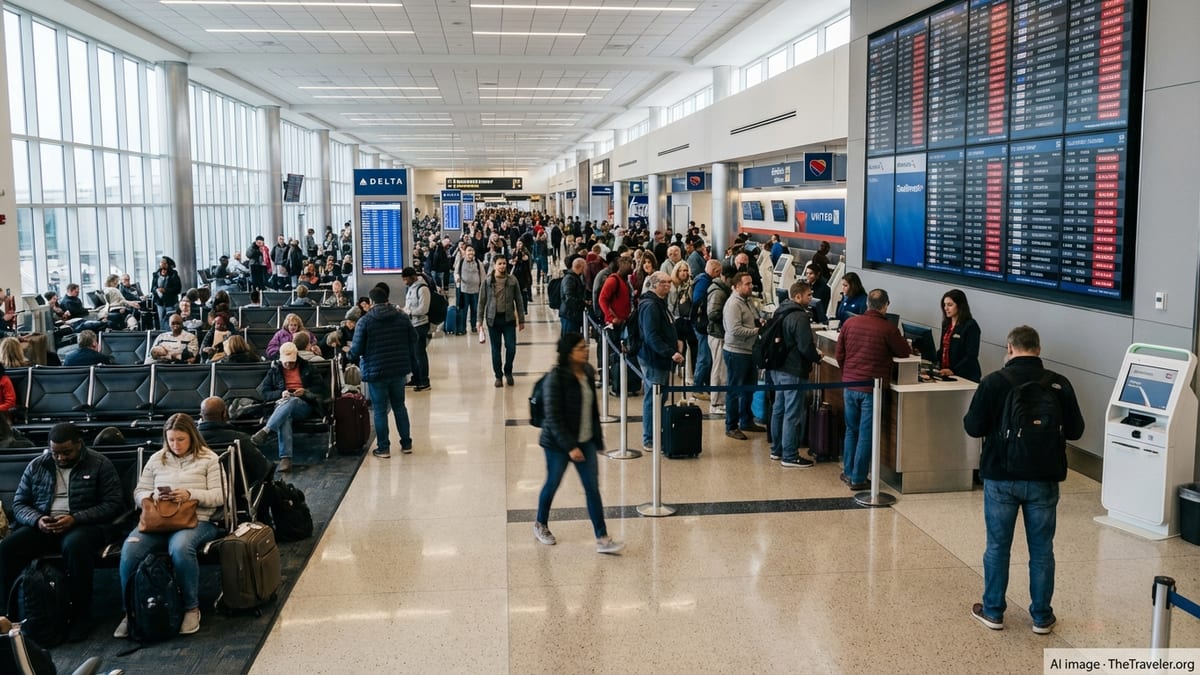
Travelers at Nashville International Airport in Tennessee faced major disruption on Tuesday as 265 flights were reported delayed and 11 canceled, stranding passengers and affecting operations for Southwest Airlines, American Airlines, Delta Air Lines and other carriers on busy domestic and international routes.
Get the latest news straight to your inbox!
Wide Impact Across Major Airlines and Routes
According to publicly available flight-tracking data, the disruption at Nashville International Airport involved a broad mix of airlines, with Southwest, American and Delta among the most affected carriers. Southwest, which operates the largest share of daily departures at the airport, saw a series of schedule changes that rippled across its network.
The delays and cancellations affected a range of key domestic routes linking Nashville with hubs including New York, Chicago, Atlanta and Los Angeles. Passengers reported missed connections and extended waits in terminal areas as departure boards filled with rolling delay notices. Some international services were also affected where they depended on inbound aircraft and crew arriving late into Nashville.
Airport performance statistics show that Nashville typically enjoys a high on-time departure rate, so a surge to more than 260 delayed flights represents a sharp deviation from normal patterns. With a cancellation rate that usually stays relatively low, the 11 scrubbed flights added an additional layer of complexity for airlines seeking to rebook travelers and reposition aircraft.
Although operations gradually adjusted as the day progressed, the schedule changes created a knock-on effect across evening departures and inbound flights, leaving some travelers facing overnight stays or significant re-routing to reach their final destinations.
Operational Strain at a Rapidly Growing Hub
Nashville International Airport has expanded rapidly in recent years, with overall traffic and daily operations rising as the city has grown into a major leisure and business destination. Southwest has significantly increased its presence, while American, Delta, United and other carriers maintain substantial schedules, turning the airport into a busy mid-continent connecting point.
Published airport data shows that Southwest accounts for a large portion of total daily flights at Nashville, with American and Delta also operating dozens of departures each day. That mix of high-frequency domestic services means that any concentrated period of disruption can quickly affect thousands of passengers, particularly when several large carriers are impacted at the same time.
The scale of Tuesday’s delays highlights how sensitive such a hub can be to operational stress, whether caused by congestion, airline staffing issues or disruptions in other parts of the national air traffic system. When so many flights are pushed back from their scheduled departure times, even a relatively short delay can create extended queues at check-in counters, security lanes and boarding gates.
Recent planning documents for the airport emphasize ongoing terminal upgrades and airfield improvements designed to handle rising passenger numbers. Events like this disruption underscore the pressure on both infrastructure and airline operations as Nashville’s air traffic continues to grow.
Traveler Experience: Long Waits and Missed Connections
Reports from passengers at the airport described crowded concourses, long customer-service lines and uncertainty over revised departure times. With more than 260 delayed flights, many travelers attempting to connect via major hubs such as Atlanta, Chicago and New York faced the additional risk of missed onward flights and rebooked itineraries.
For those on international journeys, delays on domestic legs into hub airports created concerns about tight connection windows to long-haul services. In some cases, passengers reported having to accept next-day departures or rerouting through alternative cities when original connections became unworkable.
Standard airline responses during such events typically include rolling updates via mobile apps and departure boards, meal vouchers in certain circumstances and rebooking options when flights are canceled. However, when disruption spans multiple carriers at a single airport, the surge in demand for assistance can quickly outstrip available ground staff, leaving many travelers waiting in line at service desks while also trying to manage changes online.
Families with young children, passengers with mobility needs and travelers on tight business schedules are often among the hardest hit in prolonged disruption, with extended waits in seating areas and limited flexibility on alternative flights.
What Is Known About the Causes
Publicly available information did not pinpoint a single, clear cause behind the combination of 265 delayed and 11 canceled flights at Nashville International Airport. Recent coverage of operations at the airport has highlighted several recurring factors that can lead to significant disruption, including air traffic control staffing constraints, weather patterns in connected hub cities and crew scheduling challenges across airline networks.
In earlier episodes affecting Nashville, published reports have noted that staffing shortages in air traffic control can trigger ground delay programs that slow the rate of arrivals into the airport, creating a backlog of aircraft and subsequent departure delays. Airline-specific issues such as crew misalignment, aircraft maintenance needs and late inbound planes can then compound the impact on the schedule.
Weather remains a pivotal variable. Even when local conditions over Nashville are relatively stable, storms or low visibility in major hubs like Chicago, New York or Atlanta can cause cascading delays along entire route networks. When those hubs are also the primary points of connection for Nashville passengers, disruptions can spread rapidly.
Analysts observing the industry note that the broader U.S. air travel system continues to operate with limited slack, meaning that any significant imbalance in one part of the network can leave airlines with little room to absorb disruption without resorting to prolonged delays or targeted cancellations.
Advice for Passengers Navigating the Disruption
Travel and aviation specialists generally advise passengers to adopt a multi-channel approach during large disruption events, using airline mobile apps, text alerts and airport departure boards in tandem to track evolving flight information. When many flights are delayed at once, automated notifications can sometimes update more quickly than staffed counters, though in-person assistance remains important for complex rebookings.
For travelers still due to depart from Nashville or connect through the airport after the day of disruption, monitoring flight status frequently in the 24 hours before departure can help identify emerging issues earlier. Where possible, opting for earlier flights in the day or allowing longer layovers at key hubs can provide a buffer in case of additional delays.
Passengers whose flights are canceled or significantly delayed may qualify for assistance such as meal vouchers, hotel accommodations or rebooking at no extra cost, depending on airline policies and the cause of the disruption. Consumer advocates often recommend documenting expenses and keeping records of all communications with airlines in case travelers wish to pursue reimbursement or file complaints later.
As Nashville International Airport continues to grow, travel experts expect occasional days of acute disruption to remain a reality, particularly during peak seasons and severe weather periods. For passengers, understanding how delays cascade through airline networks and planning extra time around critical journeys can help reduce the stress when large-scale operational problems arise.