


More news on this day
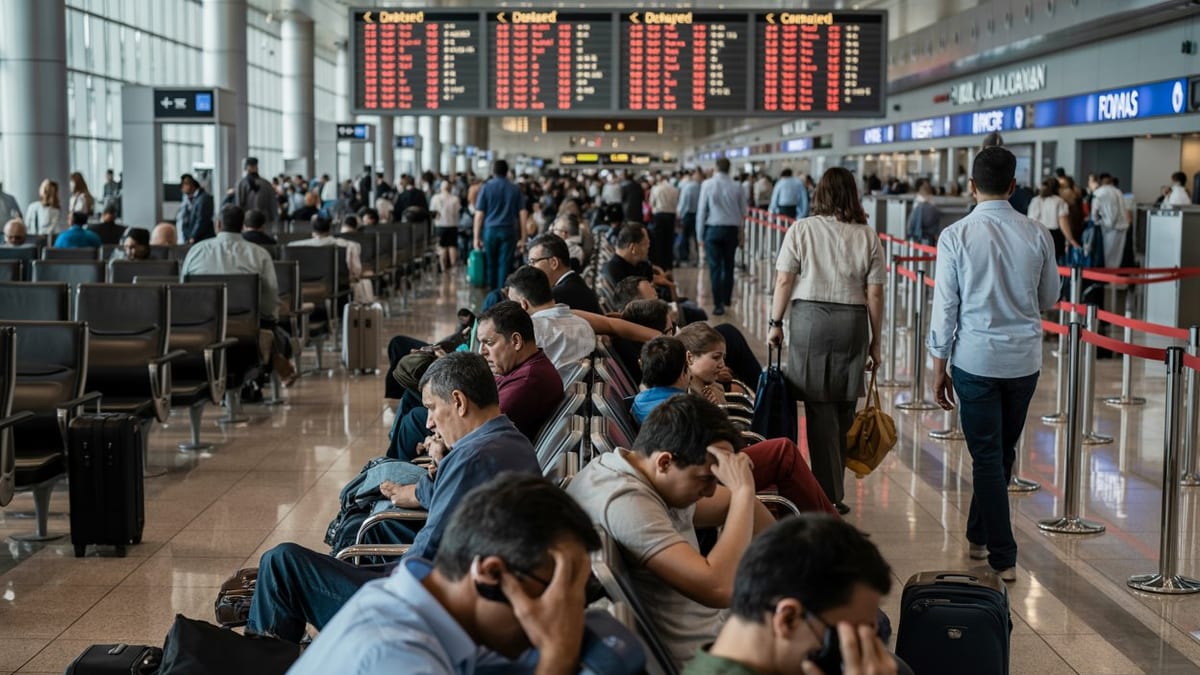
Travelers moving through Des Moines International Airport on Tuesday faced a sharp breakdown in regional air service as publicly available tracking data showed at least 22 delays and seven cancellations on flights operated by American Airlines and its regional partners Envoy, SkyWest and Endeavor, disrupting key routes to and from Dallas Fort Worth, Houston, Detroit and New York.
Get the latest news straight to your inbox!
Wave of Disruptions Hits a Midwestern Connector
While national attention often focuses on operational problems at the country’s largest hubs, the latest disruption in Des Moines underscores how quickly a relatively small airport can become a choke point in the U.S. aviation system. Flight status boards on widely used tracking platforms showed a dense cluster of late departures and arrivals across American-branded services and partner-operated regional jets serving major connection points.
Most of the affected flights linked Des Moines with Dallas Fort Worth and Houston to the south and Detroit and New York to the east, creating cascading problems for passengers attempting to connect to long haul and transcontinental services. Even a limited number of cancellations can rapidly erode available options at a mid-sized airport, and the seven flights removed from the schedule left some travelers with no same day alternatives.
Reports from travel industry monitoring sites indicate that the pattern in Des Moines mirrors broader turbulence across the network, in which a combination of localized weather constraints, tight aircraft rotations and crew availability can produce pockets of severe disruption far from the storm’s apparent center. Once rotations begin to slip, regional operators such as Envoy, SkyWest and Endeavor have limited spare capacity to absorb additional delays.
Des Moines International typically functions as a spoke airport feeding larger hubs rather than as a primary origin or destination. When multiple spokes experience similar strain, missed connections ripple outward, amplifying the impact on passengers who may never pass through the Midwestern airport itself but rely on its punctuality for smooth transfers.
American and Regional Partners Under Pressure
The disruptions in Des Moines highlight the complex web of relationships between major carriers and the regional airlines that fly many of their shorter routes. American Airlines controls the overall schedule and sells tickets under its brand, but a significant share of flights into Des Moines are physically operated by partner companies such as Envoy and SkyWest using smaller regional jets.
Endeavor, which flies for Delta Air Lines, also features in Des Moines operations through connections to Detroit and other Delta hubs, meaning that multiple major airline networks can be affected when regional carriers run into operational constraints. Public data from government on time performance reports has long shown that these regional operators play an outsized role in feeding traffic into the largest airports, while also being especially vulnerable to crew imbalances and weather related constraints.
On the day of the Des Moines disruption, the tight coupling between mainline and regional schedules appears to have compounded delays. A late arriving aircraft on a Detroit or New York run can leave the next departure waiting at the gate, with crews quickly approaching duty time limits. If that aircraft or crew was scheduled for a later Dallas Fort Worth or Houston departure, subsequent flights may be pushed back or canceled outright.
Industry analyses note that regional fleets have been operating with little slack following several years of pilot shortages and aircraft retirements. When problems arise, airlines often need to triage which routes to preserve, and lightly served spokes frequently see the deepest cuts, as appears to have been the case in Des Moines.
Stranded Passengers Face Limited Options
For travelers caught in the Des Moines disruption, the immediate challenge was finding a way out of the bottleneck. With only a handful of daily departures to each major hub, a single cancellation can remove a large share of that day’s available seats, and rebooking possibilities are often constrained by already full flights during peak travel periods.
Reports from aviation tracking and consumer travel platforms suggest that some passengers bound for Dallas Fort Worth, Houston, Detroit and New York were forced to accept overnight stays or multi stop itineraries through alternate hubs. In some cases, travelers attempting to reach smaller final destinations beyond those hubs saw trips extended by a full day or more as missed connections compounded the initial delay.
Guidance commonly published by airlines and travel media advises stranded passengers to work multiple channels at once, using airline apps to search for open seats while also queueing for airport service counters or calling customer service. At mid sized airports such as Des Moines, however, staffing levels at ticket desks and the limited number of alternative flights can still leave many customers waiting for extended periods for a firm new itinerary.
The experience can be especially difficult for travelers without flexible schedules, including those heading to time sensitive events or returning from critical business trips. When disruption spreads across several hubs simultaneously, hotel rooms and rental cars can also become scarce, adding cost and stress to already frayed travel plans.
Ripple Effects Across the National Network
The turbulence at Des Moines International did not occur in isolation. On the same day, national statistics from flight tracking services showed elevated levels of delays and cancellations at major U.S. hubs, including Dallas Fort Worth and airports serving the New York and Detroit metropolitan areas. When hubs experience volume or weather constraints, spoke airports feeding those hubs often record secondary disruptions hours later.
American Airlines and its partners Envoy and SkyWest feature prominently in these patterns due to their large presence in key connecting markets such as Dallas Fort Worth and Houston. Endeavor’s role in feeding Detroit and New York for Delta adds another set of moving parts to an already complex picture, increasing the number of itineraries that can be affected when conditions tighten.
Observers of the aviation system note that the national network now operates with a level of efficiency that leaves limited room for error. Schedule planning aims to keep aircraft and crews in near constant motion, which improves utilization in normal conditions but can magnify the effects of any single disruption. A delay or cancellation in one city can propagate through several others over the course of a single day.
Des Moines, along with other mid sized airports, sits squarely within this web. The latest episode of delays and cancellations illustrates how quickly an operational issue elsewhere can turn into a local crisis, even when skies over Iowa appear relatively calm.
What Travelers Can Do When Meltdowns Hit
As incidents like the Des Moines disruption become more visible through real time tracking tools, travel experts have increasingly emphasized proactive strategies for passengers. Publicly available guidance from consumer advocates recommends booking earlier departures when possible, allowing wider connection windows and favoring hubs with multiple daily frequencies to a given destination.
When disruptions occur, travelers are often advised to move quickly to secure options, since open seats tend to vanish as delay and cancellation counts mount. Using mobile apps to request rerouting, standing by for earlier flights, or accepting rebookings through secondary hubs can sometimes preserve same day arrivals even when the original routing collapses.
Published advice also suggests keeping documentation of expenses such as hotels, meals and ground transportation, as airline policies, travel insurance plans and certain credit card benefits may reimburse some out of pocket costs after widespread disruptions. Understanding these terms before travel can reduce uncertainty during a stressful situation at the airport.
The episode at Des Moines International serves as another reminder that even seemingly routine regional flights can be integral links in a much larger chain. When that chain weakens, passengers bound to and from major hubs like Dallas Fort Worth, Houston, Detroit and New York may find their journeys unexpectedly and severely reshaped.