


Landing in Mauritius for the first time is an exciting moment. Sir Seewoosagur Ramgoolam International Airport, often simply called Mauritius Airport or MRU, is compact and relatively easy to navigate, but the experience is smoother when you know what to expect. From immigration lines and baggage reclaim to taxis, buses, SIM cards and money exchange, a bit of preparation will help you reach your resort faster and start enjoying the island.
Get the latest updates straight to your inbox!
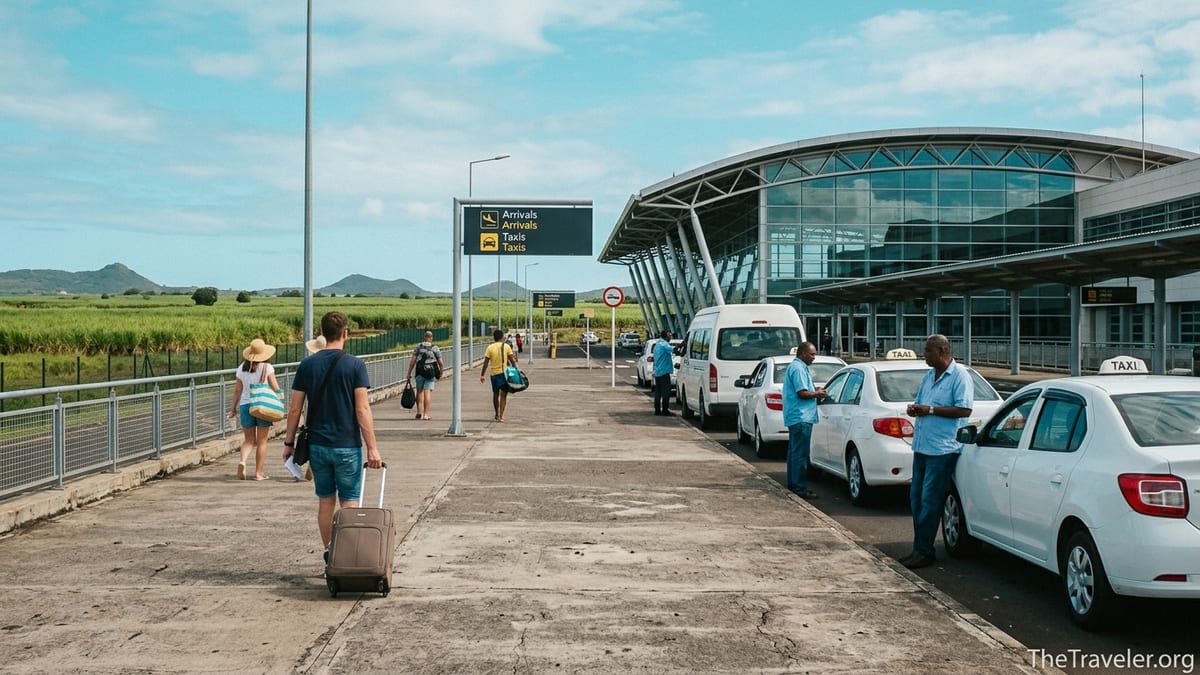
Arriving at Sir Seewoosagur Ramgoolam International Airport (MRU)
Sir Seewoosagur Ramgoolam International Airport sits in the south of Mauritius near the village of Plaine Magnien, roughly 45 to 60 minutes by road from the capital Port Louis depending on traffic. The single main terminal handles almost all international flights, including services from major hubs such as Dubai, Paris, London, Johannesburg and Mumbai. After disembarking, you will first pass through a short corridor and then into the immigration hall, where queues can build at peak times when several widebody aircraft land close together.
Most travelers receive an arrival form on the plane, but airlines sometimes run out, so it is sensible to carry a pen and be ready to complete the form quickly at the counters in the hall. Immigration officers typically ask for your return or onward ticket, the address of your accommodation and sometimes proof of sufficient funds. If you are staying in a well known resort such as Lux Belle Mare or Sugar Beach, having your booking confirmation open on your phone can speed up questions.
Once you clear passport control, you pass through a duty free area and then reach baggage reclaim. Baggage carts are usually free and plentiful, but at busy times you may need to look further along the carousel line. It is worth double checking the baggage screens because flights from similar regions sometimes use adjacent belts. Customs checks are usually light, but random inspections do occur, particularly for travelers bringing in large amounts of alcohol or tobacco or carrying bulky boxes.
As you exit customs into the public arrivals hall, you will see hotel and tour desks, car rental counters and meeting areas for pre-booked transfers. The hall is not large, so it can feel crowded when several flights arrive together, but signage is clear and there are staff and security personnel who can guide you toward taxis, buses or your tour representative.
Taxis, private transfers and ride logistics
The simplest way to leave MRU is by taxi or pre-booked private transfer. Official airport taxis line up outside the arrivals area and there is usually a dedicated counter or dispatcher inside the hall where you can confirm an approximate fare before you step outside. Prices are generally fixed by region rather than by meter, although some vehicles also have meters installed. As a broad idea, a one way taxi from the airport to the west coast resort strip around Flic en Flac might cost in the region of 1,800 to 2,200 Mauritian rupees, while the shorter journey to nearby Mahebourg is significantly cheaper.
If you prefer to arrange everything in advance, many travelers use local transfer companies or book through their hotel. For example, a large resort on the east coast such as Constance Belle Mare Plage might quote a private sedan for two people at a slightly higher price than the taxi rank, but you gain the reassurance that a driver will meet you with a sign, help with bags and know your exact accommodation. Families or groups often book minibuses that can take up to eight passengers plus luggage, which can work out more economical per person than multiple taxis.
While ride hailing as it exists in some countries is limited, a few local apps offer pre-booked cars, and some taxi cooperatives accept reservations via messaging services. These are more commonly used once you are settled at your hotel rather than straight from the airport. For your very first arrival, it is usually easiest either to walk to the official taxi rank, to the pre-arranged transfer desk indicated in your booking, or to follow the signposted path to the public bus stops if you are on a strict budget and traveling light.
Whichever option you choose, keep your accommodation address written out clearly. Many smaller guesthouses share similar names and a printed voucher showing “Hotel XYZ, Trou aux Biches, Coastal Road” or “Airbnb apartment, Grand Baie, near Super U supermarket” helps avoid confusion, especially at night or in heavy rain.
Taking buses and public transport from MRU
Public buses are the most economical way to travel from the airport, and they also offer a glimpse of everyday Mauritian life. Several routes stop at or pass through the airport area, including services bound for Mahebourg, Curepipe and the capital Port Louis. For example, route 198 is a well known line running between Mahebourg and Port Louis that calls at the airport on its journey, while other routes such as those historically numbered 9 or 10 focus more on connections in the south and southeast of the island.
The bus stops for airport services are typically located a short walk from the main terminal, along a designated roadside area. After exiting arrivals, follow signs for public transport or ask a staff member where to catch the bus to your intended destination. Fares are usually paid in cash directly to the conductor on board. They tend to be very affordable compared with taxis; a one hour ride to Port Louis might cost only a small fraction of a taxi fare, though exact amounts can change with official tariffs.
Buses are best suited to solo travelers or couples carrying backpacks or small suitcases and with a relaxed arrival schedule. They can be crowded at commuter times and may not have dedicated luggage space beyond a small rack or floor area near the front. For instance, if you are staying in the budget guesthouses of Mahebourg or Blue Bay and land in daylight, the bus can be a good option. On the other hand, if you are heading to a luxury resort on the north coast, such as Royal Palm or one of the big properties in Grand Baie, you would need to change buses along the way, which can be tiring after a long overnight flight.
Timetables are not always displayed clearly at the airport itself, and schedules can be affected by traffic or weather. If you plan to rely on buses, it helps to note typical first and last departure times for your route before you travel and to have some local cash ready in small denominations. Always keep your valuables close and avoid placing passports or phones on seats or in open pockets, just as you would on any busy bus system.
Car rental, driving routes and resort directions
For travelers who want maximum flexibility, renting a car at MRU is a popular choice. Inside the arrivals hall you will find desks for major international brands such as Avis, Europcar, Hertz and Sixt, alongside established local providers including ABC Car Rental and OLA Mauritius. Some companies operate directly from counters in the public hall, while others have small offices just outside and bring the car to a nearby parking area after you sign the paperwork.
Cars are typically manual transmission, though automatics are increasingly available if reserved in advance. Mauritians drive on the left, similar to the United Kingdom and South Africa, and roads range from the modern M1 motorway that links the airport with Port Louis, to narrow coastal roads threaded through villages. A compact car is usually sufficient for most visitors; couples driving from MRU to Flic en Flac, for example, can expect a journey of around one hour using the M2 and coastal connectors, while those heading to the north coast resorts like Grand Baie or Trou aux Biches generally take between 75 and 90 minutes depending on traffic.
Navigation is straightforward if you use an offline map app or a mobile data connection. Many resorts and hotels can be found by searching their name directly. A typical route from the airport to Belle Mare on the east coast might involve taking the main highway toward Flacq and then turning onto smaller coastal roads with cane fields on either side. Road signage is generally in English and drivers are usually courteous, but you should take extra care at roundabouts and avoid night driving on unfamiliar country roads where street lighting can be limited.
When budgeting, factor in the cost of fuel and any security deposit or excess insurance. Some local companies offer full cover packages that reduce your liability for damage, which can be reassuring if you are not used to driving on the left or parking in tight hotel lots. Always inspect the car carefully before signing the rental agreement and note existing scratches or dents on the form, ideally taking timestamped photos for your records.
SIM cards, mobile data and staying connected
Staying online in Mauritius is relatively straightforward, and buying a local SIM card at MRU is one of the easiest options for first time visitors. The country’s main mobile operators are my.t (Mauritius Telecom), Emtel and Chili. All three operate on the island, but my.t and Emtel are the best known among tourists for strong overall coverage in resort areas, while Chili markets value focused tourist packages. Dedicated counters for these providers, or for their partners, are typically located in or near the arrivals hall so that you can sort your phone out before leaving the airport.
Tourist SIM packs change from time to time, but as of 2026 it is common to find packages priced in the region of 1,500 Mauritian rupees for around 30 days of service, often including large data allowances, local SMS and a small amount of call credit. Emtel, for instance, advertises a tourist SIM that includes unlimited mobile data on its 5G network for a 30 day period, plus local text messages and a small bundle of airtime. My.t promotes its own tourist SIM and eSIM offers that can be reserved online and picked up at a Telecom Shop or digital kiosk at the airport, which is convenient if you prefer not to queue after a long flight.
Chili also targets visitors with tourist SIM and eSIM offers that bundle high data volumes and local usage over 30 days. Their literature mentions counters at the airport, although in practice availability can vary, and many travelers focus on my.t and Emtel because they are widely recommended by hotels and local residents. If your device supports eSIM, it can be particularly handy to activate a Mauritian profile while keeping your home number reachable over Wi-Fi for banking codes and messaging.
To register a SIM you will be asked for your passport and sometimes proof of your local address, such as a hotel booking confirmation. Registration is quick and staff usually help configure your phone’s APN settings. If you are staying for several weeks and do not need unlimited data, another strategy is to buy a basic prepaid starter SIM from a town showroom like an Emtel or my.t shop in Mahebourg or Port Louis and then add a separate data pack, which can sometimes work out cheaper than the dedicated tourist bundles. Whichever route you choose, having local data is extremely useful in Mauritius for maps, restaurant lookups, translation and messaging taxi drivers.
Money exchange, ATMs and practical airport services
Mauritius uses the Mauritian rupee. Upon arrival at MRU, you will find bank exchange counters and currency booths in the arrivals hall as well as a selection of ATMs operated by major local banks. Airport exchange offices offer the convenience of walking out with cash immediately, but their rates are often less favorable than in town. Many visitors therefore change a modest amount at the airport, perhaps enough for a taxi, snacks and the first day, and then use ATMs or hotel exchange desks for the bulk of their spending.
ATMs accept most international Visa and Mastercard cards, though withdrawal fees will depend on your own bank. Machines sometimes impose their own fixed charge, and you should decline any “dynamic currency conversion” offers that attempt to lock in a rate in your home currency at the point of withdrawal. Instead, opt to be charged in Mauritian rupees and let your bank handle the conversion. A practical pattern is to withdraw cash once you have decided roughly how much you plan to spend on incidentals beyond any all inclusive resort package.
Beyond money and SIM cards, the airport offers a range of basic services. There are small cafes and snack bars where you can buy coffee, sandwiches and local snacks while waiting for your transfer. Restrooms are available on both sides of security, and there are water fountains in some sections of the terminal. The arrivals hall has information desks where you can ask about tourist maps, upcoming events or island attractions such as the Seven Coloured Earths at Chamarel, the botanical gardens at Pamplemousses or catamaran trips to Île aux Cerfs.
If your flight arrives early and your room will not be ready for several hours, some travelers choose to have a relaxed breakfast in nearby Mahebourg or at one of the beach cafes in Blue Bay before heading on to their resort. In that case, having a small day bag with swimwear and essentials separate from your main suitcase can make life a lot easier.
First-time routes to key resort areas
Mauritius is relatively small, but journey times add up because most accommodation clusters are spread along the coast rather than in a single urban center. From MRU, the routes to the island’s most popular resort zones share the first section out of the airport before branching toward different coasts. Understanding these typical routes helps you sense-check any quoted transfer times and prices.
To the southeast, the closest area is Blue Bay and Mahebourg, reachable in under 20 minutes by taxi along local roads. This region is convenient for short stays and offers easy access to the marine park. Turning west, transfers to the popular west coast strip around Flic en Flac and Wolmar generally use a combination of highway and coastal road and take around one hour in light traffic. Many travelers on all inclusive packages at resorts such as Sugar Beach or La Pirogue pre-book shuttle buses that collect small groups of guests and make two or three stops along the coast.
The north coast around Grand Baie, Pereybere and Trou aux Biches is further away. Standard taxi or private car transfers from MRU to these areas typically take between 75 and 90 minutes, using the island’s main motorways and then dropping down to the coastal road. If you land in the late afternoon, allow for potential slowdowns near the capital at commuter time. On the east coast, where resorts such as Lux Belle Mare and Constance Belle Mare Plage overlook long sandy beaches and lagoons, the transfer time from MRU is usually between 50 and 70 minutes, depending on the exact location and whether you stop along the way.
Whichever coast you choose, it is wise to keep hand luggage minimal and to have drinking water handy for the drive, especially if you are traveling with children. Air conditioning is standard in private cars and resort shuttles, but buses can be warm and crowded at peak hours. If you are prone to motion sickness, consider sitting near the front of the vehicle on the winding stretches of coastal road and avoiding heavy meals just before departure.
First-time Mauritius tips for a smooth start
For many visitors, Mauritius is a once in a lifetime trip, so it pays to smooth out the small logistical snags. One practical step is to keep all your key documents together in a slim folder or dedicated app, including hotel addresses, transfer confirmations and travel insurance details. Airport Wi-Fi is sometimes patchy or congested around arrivals, so you should not rely on constantly being connected until you have your local SIM set up. A printed copy of your first hotel booking can be invaluable if your phone battery is low or your airline misplaces a bag and needs a delivery address.
Clothing for arrival should strike a balance between comfort and climate. The terminal is air conditioned, but once you step outside into the Mauritian humidity the contrast can be strong, particularly in summer. Lightweight layers work best: for example, wear long trousers and a T-shirt on the plane with a light shirt or cardigan that you can remove when you step into the tropical air. Pack sunscreen and a hat in your carry on if you expect to wait outdoors for a bus or shared shuttle, and remember that the sun in the Indian Ocean can be intense even when there is cloud.
Another tip is to think ahead about tipping and small cash. While service charges are often included at larger resorts, it is still thoughtful to have modest notes and coins ready for porters, drivers and cafe staff. Giving a driver a small additional amount for help with luggage or for a quick supermarket stop on the way to your hotel is common. At the same time, there is no expectation of extravagant tipping, and Mauritians generally appreciate politeness and patience more than large gestures.
Finally, remember that Mauritius is an island with a relaxed pace. Processes at the airport occasionally feel slower than in large hubs, especially at immigration when several flights arrive close together. Accepting this rhythm from the start makes the experience less stressful. Use the time in line to hydrate, stretch after the flight or simply enjoy the fact that your holiday has begun. Once you step out of the terminal and see the surrounding sugar cane fields and glimpses of the sea, the minor waits at the airport will quickly fade.
FAQ
Q1. How long does it usually take to get through Mauritius Airport on arrival?
In normal conditions many travelers clear immigration, baggage and customs in 45 to 75 minutes, but at busy times, such as weekend mornings when several long haul flights land close together, it can take longer.
Q2. Should I pre-book a transfer from MRU or just take a taxi on arrival?
If you like certainty or are arriving late at night, pre-booking a transfer or hotel shuttle is sensible. If your arrival is during the day and you are comfortable agreeing a fare at the airport taxi counter, taking an official taxi on the spot is usually straightforward.
Q3. Are taxis at Mauritius Airport metered or fixed price?
Many airport taxis work on fixed prices based on zones rather than metered fares, although some cars do have meters. It is best to confirm the approximate cost to your destination with the dispatcher or driver before you set off.
Q4. Can I take a public bus from the airport to my hotel?
Yes, several public buses serve the airport and nearby areas such as Mahebourg and Port Louis, but they are most practical if you travel light and your accommodation is close to a bus route. Reaching remote resorts or arriving late at night is usually easier by taxi or private transfer.
Q5. Is it easy to buy a SIM card at MRU on arrival?
Yes, you will usually find counters or kiosks for operators like my.t, Emtel and sometimes Chili in or near the arrivals hall. Staff will register the SIM with your passport and help set up data on your phone.
Q6. What is better for first-time visitors: renting a car or using taxis?
Renting a car is ideal if you are comfortable driving on the left and want to explore beaches, viewpoints and villages independently. If you mainly plan to stay at your resort and take a few organized excursions, taxis and hotel transfers are often simpler.
Q7. Do I need to change money at the airport or can I use cards?
It is useful to change a small amount or withdraw cash from an ATM at the airport for incidentals and tips. Many hotels, larger restaurants and supermarkets accept cards, but small shops, markets and buses often prefer cash.
Q8. How long is the drive from MRU to popular resort areas?
As a guide, allow around 20 minutes to Blue Bay and Mahebourg, 50 to 70 minutes to the east coast resorts at Belle Mare, about one hour to Flic en Flac on the west coast, and roughly 75 to 90 minutes to the north coast towns around Grand Baie.
Q9. Is Mauritius Airport safe for solo travelers at night?
The airport is generally considered safe, with visible security and staff present, but as anywhere you should keep an eye on your belongings, use official taxis or pre-booked transfers and avoid accepting unsolicited offers from unofficial drivers.
Q10. What should I do if my luggage is delayed or lost at MRU?
Report the issue immediately at your airline’s baggage desk in the arrivals area, keeping your baggage tags handy. Provide your accommodation address and local contact number, then inform your hotel so they can help coordinate delivery once the bags arrive.