


More news on this day
Extensive rail engineering works scheduled for the early and late May bank holidays in 2026 are set to disrupt journeys on several of Great Britain’s busiest routes, as infrastructure managers concentrate major projects into the spring long weekends.
Get the latest news straight to your inbox!
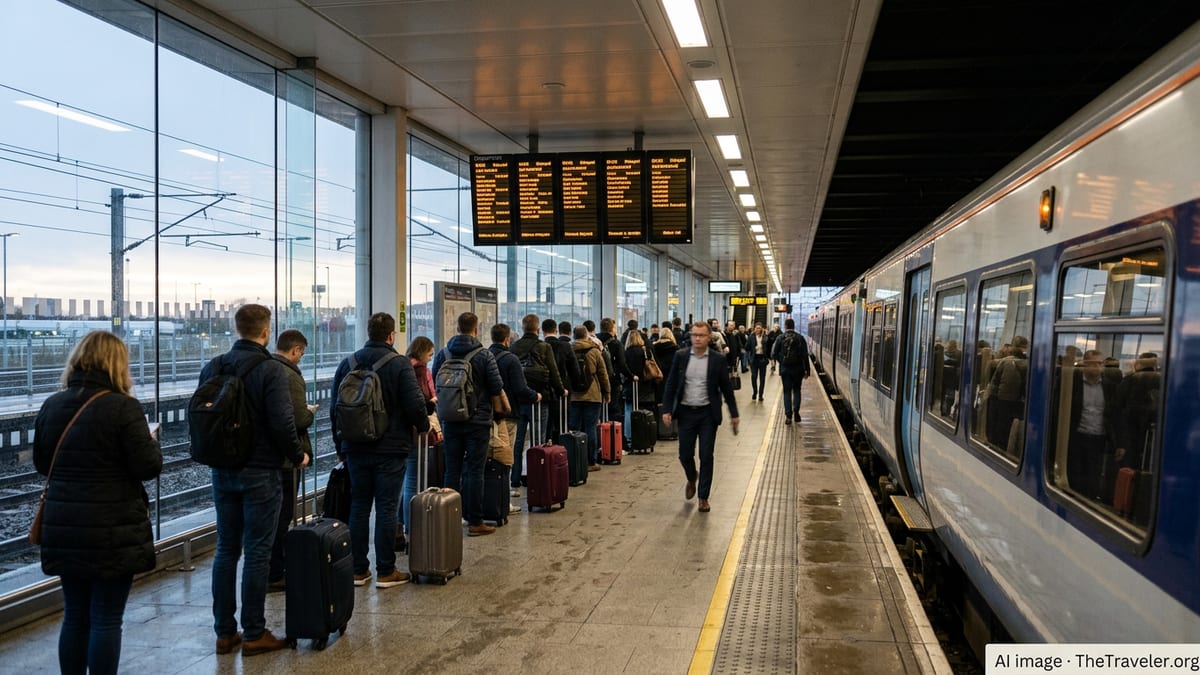
Concentrated Investment Across Two Long Weekends
Publicly available information indicates that Network Rail is delivering a programme of works worth more than £140 million across the two May bank holiday weekends, focusing disruptive activity into short blockades to reduce weekday impact on commuters. The approach follows a long-standing strategy of scheduling the most intensive projects when regular commuter demand is lower and more access can be secured to the tracks.
The early May bank holiday in 2026 falls from Saturday 2 May to Monday 4 May, while the spring bank holiday weekend runs from Saturday 23 May to Monday 25 May. Calendar data published by railway planning documents shows that these dates define the primary access windows for the current tranche of work, covering both route renewals and major signalling and power projects.
Guidance from rail industry portals notes that the “vast majority” of Britain’s railway will remain open with amended timetables, but multiple key intercity and regional corridors will see reduced frequencies, diversionary routings or replacement buses. Travellers are being advised by operators and industry-facing news outlets to check journey planners carefully before committing to long-distance trips over either weekend.
Industry briefings suggest that detailed amended timetables are typically finalised and published a few weeks before the works begin, although outline plans have been available for some months through specialist engineering works summaries and operator planning tools.
Impacts on Major Intercity Corridors
Reports from rail business news platforms point to significant works on the West Coast Main Line serving London Euston, where track renewals and associated upgrades around the Willesden South and Primrose Hill areas are scheduled over the early May bank holiday. While long-distance trains are expected to continue running, reduced timetables and longer journey times are anticipated on some services linking the capital with the Midlands and North West.
Further north, the East Coast Main Line is facing notable constraints around York across both May bank holidays. Local and regional media in Yorkshire describe a programme of upgrades that will affect services to and from York during the weekends of 2 to 4 May and 23 to 25 May, with some trains diverted or terminating short of their usual destinations. Passengers travelling between London, the North East and Scotland may encounter extended journey times or need to change onto alternative services.
Additional disruption is flagged for routes associated with the Transpennine Route Upgrade between Leeds and Huddersfield. Community and regional transport coverage highlights that bank holiday work forms part of a longer period of blockades in April, May and June, turning Brighouse into a temporary interchange where rail services connect with replacement buses. This pattern is expected to continue through the May weekends as teams advance what is described as a once-in-a-generation modernisation of the trans-Pennine corridor.
On Great Western routes, operator-focused guides for 2026 indicate a mix of early-morning and late-night possessions affecting services in and out of London Paddington and along the Thames Valley. While many daytime trains are expected to operate, some smaller stations are due to rely on rail replacement buses at the beginning and end of service, particularly around key commuter stops west of the capital.
Regional Networks Brace for Localised Disruption
A series of operator-specific engineering calendars for 2026 shows that regional and commuter networks across England are also using the May bank holidays for concentrated works. Guides covering South Western Railway, Northern, Chiltern and Great Northern services list multiple closures or timetable changes over the early and late May weekends, generally focused on short sections of line where access for crews is most constrained during the normal working week.
On Northern’s network, information made available through journey-planning and rail guide sites indicates early and late May works between Halifax and Todmorden, affecting travel across parts of West Yorkshire and Lancashire. Similar documentation points to reduced Sunday and bank holiday services elsewhere on the Northern map, reflecting a combination of engineering access and standard holiday timetables.
For Great Northern and Thameslink, consumer rail guidance notes a number of track upgrades over the early May bank holiday, with particular emphasis on routes into and out of London via the East Coast Main Line approaches. Although most core services are expected to run, the guidance highlights changes to stopping patterns and early-morning or late-night closures that could catch out less frequent travellers.
Chiltern and South Western Railway are also flagged as having targeted works, with some branches and suburban corridors seeing amended services or bus replacements. Travel-planning sites stress that full network shutdowns remain rare, but that short-notice timetable changes are more common on bank holiday Sundays and Mondays than during regular weekdays.
Why Bank Holidays Are Favoured for Engineering Access
Network Rail’s own explanatory material on engineering access notes that the national network carries trains 24 hours a day throughout the year, leaving relatively little time for maintenance without closing lines. The organisation highlights that major works requiring extended access to tracks, tunnels and signalling assets are most efficient when bundled into bank holiday windows, when commuter volumes are lower and broader possessions can be agreed with operators.
Technical summaries of the May programme describe more than 500 individual projects being delivered across Great Britain over the two long weekends, ranging from ballast and track renewals to bridge works, signalling replacements and power upgrades. The investment is presented as a way to reduce future unplanned disruption by tackling life-expired assets in a controlled and predictable manner.
Industry analysis also points out that combining smaller jobs into a single prolonged closure can in some cases shorten the total length of disruption compared with carrying out each intervention overnight or on standard weekends. However, critics in consumer-facing forums argue that concentrating works into popular leisure travel weekends can displace a different group of passengers, particularly families and tourists planning short breaks.
Rail-focused publications broadly characterise the May 2026 programme as part of a rolling effort to modernise key corridors, including the Transpennine Route Upgrade and capacity-boosting schemes on intercity main lines. Observers suggest that similar patterns of bank holiday work are likely to continue for several years as long-term infrastructure strategies progress.
What May Bank Holiday Travellers Should Expect
Transport and motoring organisations are forecasting busy roads and pressure on alternative routes as the May bank holiday getaway overlaps with rail works. Recent coverage of previous holiday periods notes that when sections of main lines are closed or limited, travellers often switch to cars or coaches, leading to congestion around key motorway corridors, ports and coastal destinations.
Rail planners advise that services which do run during engineering works can be busier than usual, particularly at times when frequencies are reduced or replacement buses are in operation. Longer interchange times, extended journey durations and the need to transfer between train and bus are all highlighted as likely features of trips affected by the May projects.
Passenger information channels emphasise the importance of checking for updates close to the time of travel, as some details, such as platform allocations or bus departure points, may change at short notice. Travellers are also being encouraged to allow additional time for connections, especially at hubs like York, Leeds, Manchester, Birmingham, London Euston and London Paddington where bank holiday works intersect with regular long-distance flows.
For leisure travellers planning city breaks, coastal visits or countryside escapes over the early or late May bank holidays, the current guidance from operators, industry outlets and journey-planning services is consistent: trains will continue to run on most routes, but journeys may not be as fast or as straightforward as on a normal spring weekend.