


More news on this day
Austria’s next-generation Nightjet sleeper trains are moving from factory halls to test tracks, as the first complete trainsets of the Siemens-built fleet begin intensive trials ahead of broader introduction on key European night routes.
Get the latest news straight to your inbox!
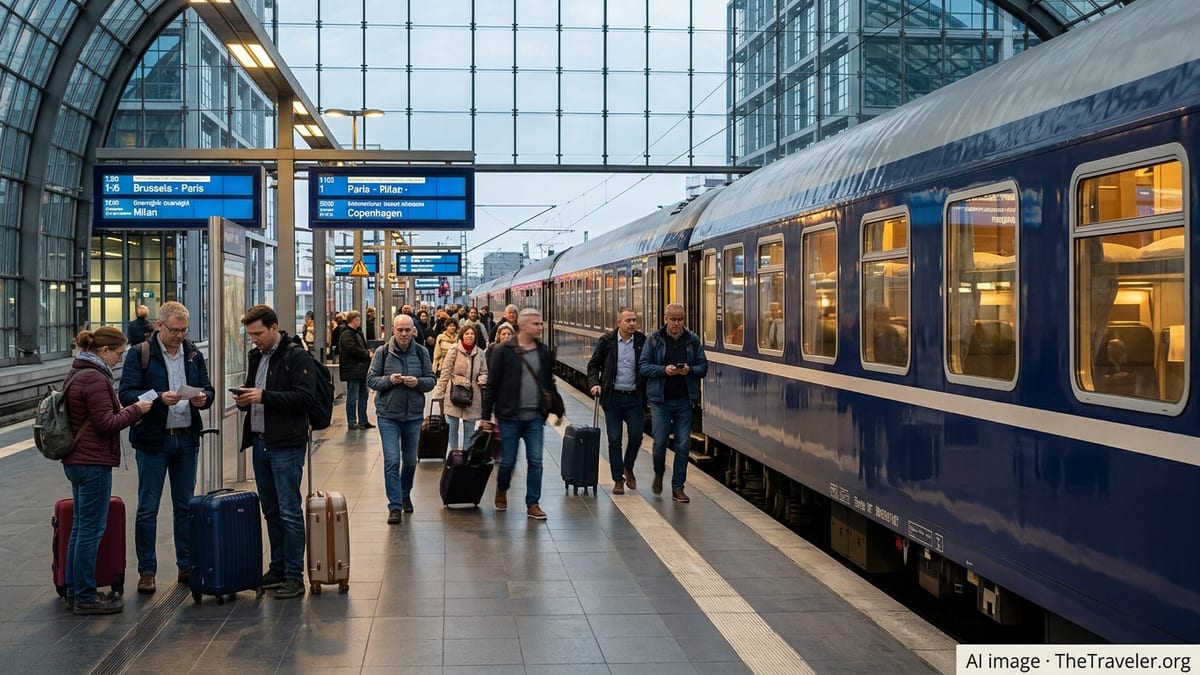
From Design to Test Tracks for ÖBB’s Flagship Night Trains
The latest phase in the Nightjet renewal program sees the first full train formations of the Viaggio Next Level design prepared for systematic testing. Publicly available information indicates that these new seven-car sets, developed by Siemens Mobility for Austrian Federal Railways (ÖBB), are now undergoing test and validation runs after initial assembly and static checks.
The new stock is intended to replace older couchette and sleeping cars that have formed the backbone of the Nightjet network for years. According to published coverage and technical documentation, the program originally covered 33 next-generation Nightjet trainsets, with the first trains entering passenger service in late 2023 on routes linking Austria and Germany. The current test program focuses on additional completed sets and on fine-tuning systems before wider rollout.
Industry reports describe a structured test regime that includes high-speed and endurance runs, braking and safety-system checks, and compatibility assessments with existing infrastructure in Austria and neighboring countries. These procedures are largely carried out at dedicated test centers and on selected main lines, allowing engineers to verify performance under realistic operating conditions without disrupting regular services.
Testing of the first new stock marks a visible milestone in a multi-year investment plan aimed at maintaining ÖBB’s leading position in the European night train market. With passenger demand for overnight services steadily rebounding, the operator views the modernized fleet as essential to sustaining and expanding cross-border connections.
What Sets the New Nightjet Fleet Apart
The next-generation Nightjet stock is designed to offer a noticeable step up in comfort and privacy compared with earlier rolling stock. According to technical presentations and operator information, the trains feature a mix of classic sleeping compartments, upgraded couchette spaces, and innovative “mini cabins” intended for solo travelers who want more privacy than a conventional berth in a shared compartment.
Reports highlight a focus on hotel-style amenities, such as integrated reading lights, power outlets and USB ports at every berth, and improved climate control. Noise insulation and ride quality have also been prioritized, with the new car bodies and bogies engineered to provide a calmer experience on overnight journeys that can last 10 hours or more.
The design places strong emphasis on accessibility, with low-floor entry in selected cars and spaces configured for passengers with reduced mobility. Bicycle storage areas and generous luggage space are also part of the concept, reflecting growing demand from leisure travelers who use night trains as an alternative to short-haul flights.
Digital connectivity is another focus area. The new Nightjet stock is being delivered with enhanced onboard information systems and improved mobile reception, supported by modern communication equipment. While final service configurations may vary by route, the goal is to provide a more seamless environment for both work and relaxation during overnight trips.
Revised Delivery Plan and Network Implications
The move into intensive testing comes against the backdrop of an adjusted fleet plan. Trade press reports note that ÖBB has revised its original rolling stock contract, reducing the total number of new-generation Nightjet sets and shifting some investment toward new daytime Railjet trains, which use a related platform.
According to industry coverage, 24 Nightjet trainsets from the new generation are now expected to be delivered by the middle of 2026, rather than the full 33 units initially foreseen. At the same time, ÖBB is expanding its order for the latest Railjet stock to increase capacity on high-demand daytime corridors, responding to strong passenger growth in recent years.
Despite the scaled-back order, the new Nightjet vehicles entering testing are set to play a central role on core overnight routes linking Austria with Germany, Italy, and other neighboring markets. Services between Vienna or Innsbruck and Hamburg were among the first to see the new stock in regular operation, and additional routes are expected to follow as more trainsets complete testing and acceptance.
Rail analysts suggest that the combination of new Nightjet and Railjet fleets will allow ÖBB to fine-tune its mix of night and day services, focusing high-comfort rolling stock on routes where rail can most effectively compete with air travel. The testing phase of the first new Nightjet sets is therefore being closely watched as an indicator of how quickly the broader network modernization can progress.
What Travelers Can Expect Once Testing Concludes
For travelers, the testing of the first new Nightjet stock is an early sign of practical changes they will see onboard over the next few years. Once the current round of trials and approvals is complete, more routes should progressively receive the new trains, leading to a patchwork of upgraded and legacy stock before the modern fleet becomes standard.
Feedback from early passengers on routes already served by the new-generation Nightjet indicates that the private mini cabins and redesigned sleeping compartments are among the most noticeable upgrades. As additional trainsets are accepted into service, operators are expected to refine details such as onboard catering concepts, luggage-handling routines, and cleaning processes to match the higher design standards.
Timelines for the full deployment of the new stock remain tied to the outcome of testing, regulatory approvals, and production capacity. However, with complete trainsets now on test tracks, the transition from prototype to everyday service is clearly underway. For many travelers across Central Europe, that means overnight rail journeys are set to become more comfortable, more private, and more competitive with short-haul flights in the years ahead.