


Choosing an inland base in Mexico’s Yucatán Peninsula usually comes down to a single big decision: Mérida or Valladolid. Both are colonial cities with colorful facades, excellent regional food and easy access to ruins and cenotes, yet the experience they deliver is very different. Mérida feels like a cultured, confident state capital; Valladolid feels like a small-town gateway to jungle cenotes and Chichén Itzá. The right choice depends less on which is “better” and more on what kind of trip you want.
Get the latest updates straight to your inbox!
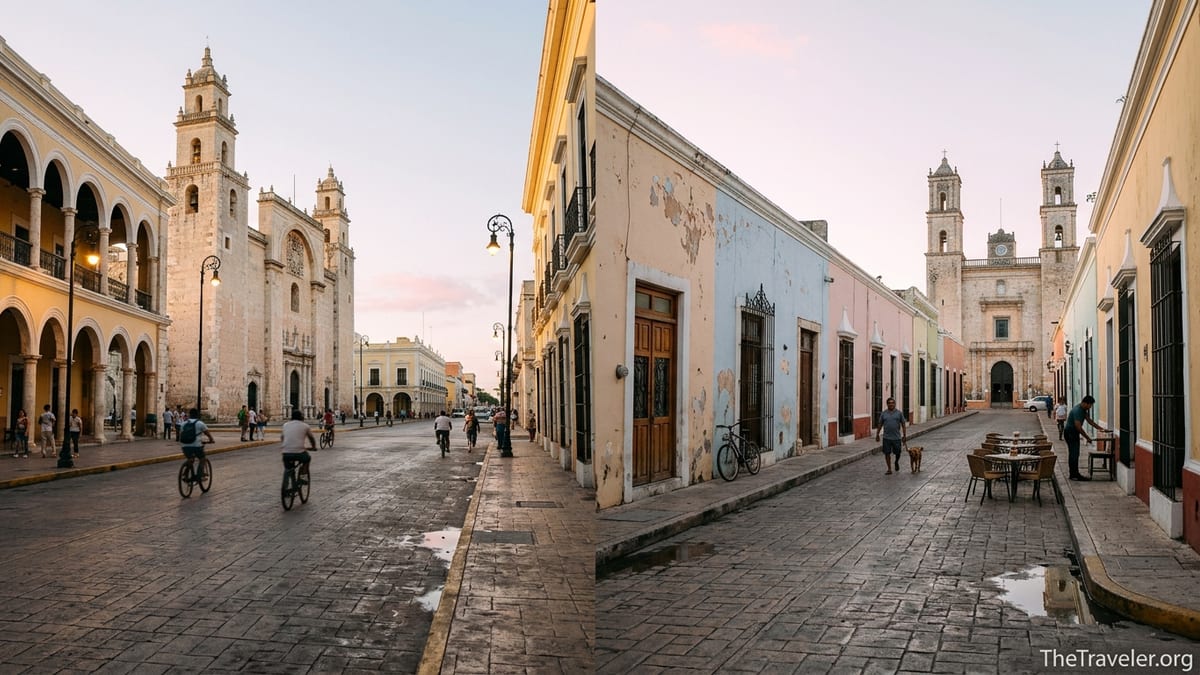
Overall Vibe: Big-city Mérida vs Small-town Valladolid
Mérida is a genuine city, home to around a million people in its wider metro area, with a dense colonial core wrapped in sprawling modern neighborhoods. Around Plaza Grande you get grand 16th century architecture, museums and nightly cultural events; a few minutes away along Paseo de Montejo you find leafy mansions, contemporary restaurants and boutique hotels. It feels busy and lived-in: rush hour traffic on narrow streets, students in uniforms, families heading out for marquesitas at night. Travelers who enjoy urban energy, museum-hopping and a wide choice of restaurants typically lean toward Mérida as a base.
Valladolid, by contrast, is a compact town of roughly 50,000 people, and you feel that difference the moment you step into the main square. Parroquia de San Servacio dominates a low-rise skyline, and many streets are still quiet enough that you can hear birds and bicycle bells. Most visitor activity is concentrated within a few blocks of the plaza and Calzada de los Frailes, the cobblestone street lined with pastel houses, cafes and small hotels. It is relaxed and easygoing, with many visitors back at their guesthouses by 10 pm after a day of cenotes and ruins.
Your preference here is simple: if you want a place that can fill three or four evenings with different neighborhoods, events and food experiences, Mérida fits better. If you want a slow-paced town where you can walk everywhere in ten minutes, swim in a cenote after breakfast and be asleep before midnight, Valladolid may feel ideal.
Colonial Character and Cultural Life
Mérida’s historic center is one of the most intact colonial cores in Mexico, covering about four square kilometers around Plaza Grande with landmarks such as the Catedral de San Ildefonso, Casa de Montejo and a string of restored mansions that now host cultural institutions. On any given week you might stumble into a free trova concert in the square, a traditional Yucatecan jarana dance performance, or a contemporary art opening in one of the galleries near Parque Santa Lucía. The Gran Museo del Mundo Maya on the northern side of the city adds a serious museum option if you want deeper context before visiting ruins.
Because Mérida is the state capital, you get a full calendar of events: classical concerts in Teatro Peón Contreras, temporary exhibits at the Palacio de la Música, and regular street closures for evening festivals. If your ideal inland base includes a strong dose of culture and nightlife that goes beyond bars, Mérida has a clear edge.
Valladolid’s colonial core is smaller but very atmospheric. The main square is anchored by the church and flanked by arcaded buildings, while Calzada de los Frailes connects the center with the former convent of San Bernardino. You will find plenty of Instagram-ready corners, from bougainvillea-draped facades to hammocks hanging in interior courtyards. Cultural offerings are simpler: a guided tour of Casa de los Venados private folk art collection, occasional events at the convent and small-scale music performances in restaurants. Evenings are more about strolling the plaza with an ice cream than attending a concert.
For many travelers, a good compromise is to use Mérida for museum visits and organized cultural events, then enjoy Valladolid for its quiet, small-town colonial feel once you have had your big-city culture fix.
Food Scenes: Street Eats, Cantinas and Yucatecan Specialties
Both cities are excellent places to explore Yucatecan cuisine, though Mérida offers notably more range. In Mérida’s center you can start at the Lucas de Gálvez market with cochinita pibil tortas for breakfast, grab a bowl of sopa de lima at a simple comedor at lunchtime, then book a table at a contemporary spot on Paseo de Montejo in the evening for refined versions of the same dishes. Traditional cantinas in neighborhoods like Santiago and Santa Ana still serve complimentary botanas with drinks, while newer cocktail bars near Parque Santa Lucía pour mezcal and regional spirits in a more polished setting.
You can also find a wider assortment of non-Mexican food in Mérida, from Japanese and Thai to vegetarian cafes and specialty coffee shops. If you are spending a week or more and know you will eventually want sushi or a good flat white instead of another taco, Mérida is the safer bet.
Valladolid’s food scene is smaller but has improved noticeably in recent years. Around the main square and Calzada de los Frailes you will find casual restaurants serving classics like lomitos de Valladolid, longaniza from nearby towns, and cochinita from local family recipes. There are a few stylish cafes in restored colonial houses that serve quality espresso and light brunch, plus paleterías selling fruit popsicles and sorbets to cool down after the midday heat.
Prices in Valladolid for basic meals are often a bit lower than in Mérida’s trendiest areas, though high-end dining is limited. If your priority is to eat regional dishes, snack at markets and keep things simple, Valladolid is more than enough. If you are a serious foodie who wants to mix markets with fine dining and international flavors, Mérida aligns better with those expectations.
Cenote Access: Valladolid’s Backyard vs Mérida’s Day Trips
For cenote enthusiasts, Valladolid clearly wins on convenience. Cenote Zací, an open cenote with dramatic overhanging rock and turquoise water, sits right in town, only a few blocks from the main square. Within roughly a 15 to 30 minute drive or taxi ride you can reach photogenic spots like Cenote Suytun with its famous light beam, the twin cave cenotes of Samulá and X’kekén near Dzitnup, and larger adventure-style complexes such as Hacienda Selva Maya or Hacienda Chukum that bundle zip lines, rappelling and buffet lunches.
Because so many cenotes cluster around Valladolid, it is easy to design low-stress days: breakfast in town, a short taxi ride to a cenote for a couple of hours of swimming, then back for a late lunch. Many visitors do not rent a car and instead rely on taxis, colectivo vans and occasional bike rentals, keeping logistics simple. Entrance fees vary widely but are often in the range that feels affordable for most travelers, especially at more basic community-run cenotes.
Mérida also has excellent cenotes within reach, but they demand more planning. Popular clusters around Homún and Cuzamá are roughly an hour to an hour and a half away by car or tour, and visiting usually means committing most of the day. The payoff is significant: you can string together three or four cenotes in one route, from crystal-clear pools with ladders and lifejackets to deep cave systems lit by shafts of sunlight. Many travelers hire a driver, join a small-group tour from Mérida or rent a car for the day to reach them.
If swimming in different cenotes several times in a week is a central reason for coming to Yucatán, basing in Valladolid for at least a few nights is very practical. If cenotes are just one item among many and you are already leaning toward Mérida for city life and Uxmal, you can comfortably cover a cenote day trip from there.
Ruins Access: Chichén Itzá vs Uxmal and Beyond
Valladolid is the classic inland base for Chichén Itzá and nearby ruins. Chichén Itzá lies roughly 45 minutes to an hour away by car or bus, so it is realistic to leave before dawn, arrive near opening time and visit before the heat and tour crowds peak. Many organized tours from the Riviera Maya stop here, but starting from Valladolid gives you a calmer, shorter journey and more flexibility to add a cenote swim on the way back. The less-visited site of Ek Balam is also nearby, often within a half-hour drive, offering a jungle-wrapped alternative to Chichén with fewer people.
Mérida is better positioned for Uxmal and the Puuc Route sites such as Kabah, Sayil and Labná. Uxmal is roughly an hour and a half away by car, and regional buses continue to serve the route. A common pattern is to take an early Sur or ADO-affiliated bus from Mérida, spend several hours exploring Uxmal and possibly one additional site, then return in the late afternoon. Because the Puuc sites attract fewer visitors than Chichén Itzá, the experience often feels quieter and more contemplative, with more shade and opportunities to linger without crowds.
In broad strokes, Chichén Itzá sits between Mérida and Valladolid, so both cities can work as bases if your priority is this one marquee site. However, Valladolid offers the shortest travel time to Chichén and Ek Balam, while Mérida is the logical base if you also want Uxmal, Celestún’s flamingos, the “Yellow Town” of Izamal by modern train or road, and potentially even an overnight trip to Campeche along the new transport routes.
For travelers with a week or more, splitting time can be ideal: start with two or three nights in Valladolid to focus on Chichén Itzá, Ek Balam and cenotes, then move to Mérida for Uxmal, additional ruins and broader regional excursions.
Safety, Practicalities and Walkability
Mérida consistently ranks as one of the safest cities in Mexico and the wider Americas, and visitors notice that in everyday details: families strolling Plaza Grande at night, people checking their phones on the street, runners and cyclists using major avenues at dawn. The most common issues for travelers are petty concerns like bag snatching in crowded buses or leaving valuables unattended, rather than serious violent crime. Normal big-city precautions still apply, but the overall atmosphere feels significantly calmer than in many other Mexican cities of similar size.
Valladolid also enjoys a reputation for being safe, especially in the central tourist area around the main square and Calzada de los Frailes. Its small scale and early-to-bed rhythm mean that late-night street life is limited, which many travelers interpret as an extra layer of comfort. As in any town, it is sensible to stay aware of your surroundings, stick to lit streets at night and use official taxis or reputable drivers when returning from out-of-town cenotes after dark.
Both cities are highly walkable within their central cores. In Mérida, you can spend entire days on foot moving between Plaza Grande, Parque Santa Lucía, Santiago and Santa Ana, with frequent shade and plenty of places to sit. Traffic can feel intense on some streets and sidewalks can be narrow in sections, so crossing with care and keeping children close to hand is wise. Valladolid’s center is gentler: traffic is lighter, distances are shorter and reaching most central sights rarely takes more than a 10 or 15 minute walk, though midday heat can make even short distances feel longer.
Public transport is better developed in Mérida, where the modern Va y Ven bus system is gradually replacing older buses and connects the center with outlying neighborhoods, malls and the airport. Taxis and ride-hailing options fill in the gaps. Valladolid’s public transport is simpler, relying on colectivos and short taxi rides, but for most visitors staying near the center, daily needs are easily met on foot without navigating complex networks.
Hotels, Budgets and Length of Stay
Mérida offers greater variety in accommodation, from restored mansions converted into boutique hotels with leafy courtyards and pools to modern business hotels, guesthouses and budget hostels. In the historic center you will find mid-range hotels in the blocks around Plaza Grande and Santa Lucía that balance character and convenience, while more upscale properties line Paseo de Montejo. Prices cover a broad spectrum, meaning you can choose between a simple room that is affordable for longer stays or a splurge-worthy suite with rooftop pool and in-house restaurant.
Valladolid’s hotel scene is smaller but has grown quickly. Many properties occupy colonial houses around the center and Calzada de los Frailes, where you might find rooms with high ceilings, colorful tiles and hammocks strung across the room. There are also modern roadside hotels on the approaches to town that cater to drivers looking for easy parking and quick highway access. Boutique properties with a few dozen rooms and a central pool are common; huge resort-style hotels are rare, which suits travelers seeking quieter, more personal places to stay.
In terms of budgets, Valladolid often comes out a bit cheaper for comparable central accommodation and food, though high-demand dates tied to holidays or major events can push prices up in both cities. For many travelers, three to four nights in Valladolid feel sufficient to see the major nearby sights and cenotes. Mérida can easily absorb a week or more, especially if you are using it as a base for Uxmal, day trips to the coast, and multiple museum and food days.
If you plan to work remotely, Mérida’s larger selection of long-stay apartments, coworking spaces and cafes with reliable Wi-Fi makes it more practical. Valladolid has a growing remote-worker scene but is still better suited to shorter stays and more vacation-focused trips.
Should You Stay in Both Mérida and Valladolid?
For many itineraries, the best answer is not Mérida or Valladolid but Mérida and Valladolid. Because they sit around two hours apart by road, it is easy to divide your inland time between them without losing an entire day to transit. Buses and shuttles connect the two cities regularly, and the road is a straightforward drive if you have a rental car.
A common pattern on a one-week trip is to start with two or three nights in Valladolid after flying into Cancún or arriving from the Riviera Maya. You can reach Valladolid in roughly two hours from Cancún Airport, settle into a small hotel near the square and focus on Chichén Itzá, Ek Balam and a cluster of cenotes like Zací, Suytun and Samulá or X’kekén. With early starts, you can see world-famous ruins before the worst of the crowds, cool off in the water and still have quiet evenings in town.
From there, travelers often continue by bus or car to Mérida for three to five nights. This segment can revolve around Uxmal and the Puuc Route, a day in the Homún or Cuzamá cenotes, time in museums and markets and perhaps a quick side trip to Izamal or the coast at Progreso. Even if you keep a relaxed pace, this combination gives you both the small-town charm and cenote access of Valladolid and the cultural depth and dining variety of Mérida.
Where time is short, choices become more pointed. With only three full days inland, it usually makes sense to commit to one base rather than splitting: Valladolid if Chichén Itzá and cenotes are absolute priorities and you prefer a calmer stay, Mérida if you care more about Uxmal, a city atmosphere and broader food and culture. Once you reach five to seven days, splitting time between both starts to feel less like compromise and more like a well-rounded plan.
The Takeaway
Choosing between Mérida and Valladolid as your inland base in Yucatán is less about finding a winner and more about aligning a city with your travel style. Mérida offers the feel of a safe, cultured capital with a deep colonial core, strong food scene and easy access to Uxmal, Homún’s cenotes and coastal day trips. It works particularly well for travelers who want a week or more in one place with varied restaurants, events and day-trip options.
Valladolid is compact, quiet and unusually well placed for cenote-hopping and visiting Chichén Itzá and Ek Balam. It suits travelers who prioritize swimming in cenotes, starting ruin visits early and ending days on a peaceful plaza rather than in a bustling downtown. Its smaller selection of hotels and restaurants is part of the charm for visitors who find large cities overwhelming.
If your schedule allows, staying in both is often the ideal solution: a few nights in Valladolid for ruins and cenotes close at hand, followed by several nights in Mérida for museums, broader dining and excursions in multiple directions. Either way, both cities showcase different faces of Yucatán’s inland life, and choosing one as your base means you are already well on your way to a rewarding trip.
FAQ
Q1. Is Mérida or Valladolid better for first-time visitors to Yucatán?
For a first trip, Mérida is usually better if you want a mix of culture, food and several kinds of day trips, while Valladolid is better if your focus is Chichén Itzá and cenotes.
Q2. Can I visit both Mérida and Valladolid in one week?
Yes. Many travelers spend two or three nights in Valladolid for Chichén Itzá, Ek Balam and nearby cenotes, then three to five nights in Mérida for Uxmal, city life and additional excursions.
Q3. Do I need a rental car to enjoy cenotes around Valladolid and Mérida?
You can reach several cenotes around Valladolid by taxi, colectivo or bicycle, so a car is optional there. Around Mérida, cenote clusters like Homún are farther, so renting a car, hiring a driver or joining a tour is often more convenient.
Q4. Which city is safer for solo travelers?
Both cities are considered among the safer places to visit in Mexico, with Mérida in particular often cited as one of the safest large cities in the country. In both, basic precautions such as avoiding very dark streets late at night and keeping valuables secure are still recommended.
Q5. How many days should I spend in Valladolid?
Two to four nights is enough for most visitors to see Chichén Itzá, visit at least one other ruin such as Ek Balam and swim in several nearby cenotes without rushing.
Q6. How many days should I spend in Mérida?
Three to five full days works well, allowing one day for Uxmal and nearby sites, one for cenotes, one for the city itself and optional extra days for side trips or relaxed exploration.
Q7. Is it easy to get from Mérida to Valladolid without a car?
Yes. Regular buses and shuttles run between the two cities, and the journey typically takes around two hours, making it straightforward to move between them even on a short trip.
Q8. Which city has better nightlife?
Mérida has more nightlife, including bars, music venues and cultural events that run into the evening. Valladolid’s nightlife is quieter and centers on plaza strolls and relaxed dinners rather than late-night clubs.
Q9. Are hotels more expensive in Mérida or Valladolid?
Average nightly rates in Mérida cover a wider range, from budget hostels to upscale boutique hotels, while Valladolid’s options tend to be more mid-range. For similar standards, Valladolid is often slightly cheaper, though prices vary by season and location.
Q10. If I have to choose only one, should I base in Mérida or Valladolid?
If you prioritize Uxmal, varied food and a city atmosphere, choose Mérida. If your top goals are Chichén Itzá, Ek Balam and frequent cenote visits in a smaller town setting, choose Valladolid.