


More news on this day
Ten more United States aerial refueling jets are being positioned at Israel’s Ben Gurion Airport, a move expected to further strain the country’s main civilian gateway and trigger additional delays for commercial passengers already facing a disrupted flight schedule.
Get the latest news straight to your inbox!
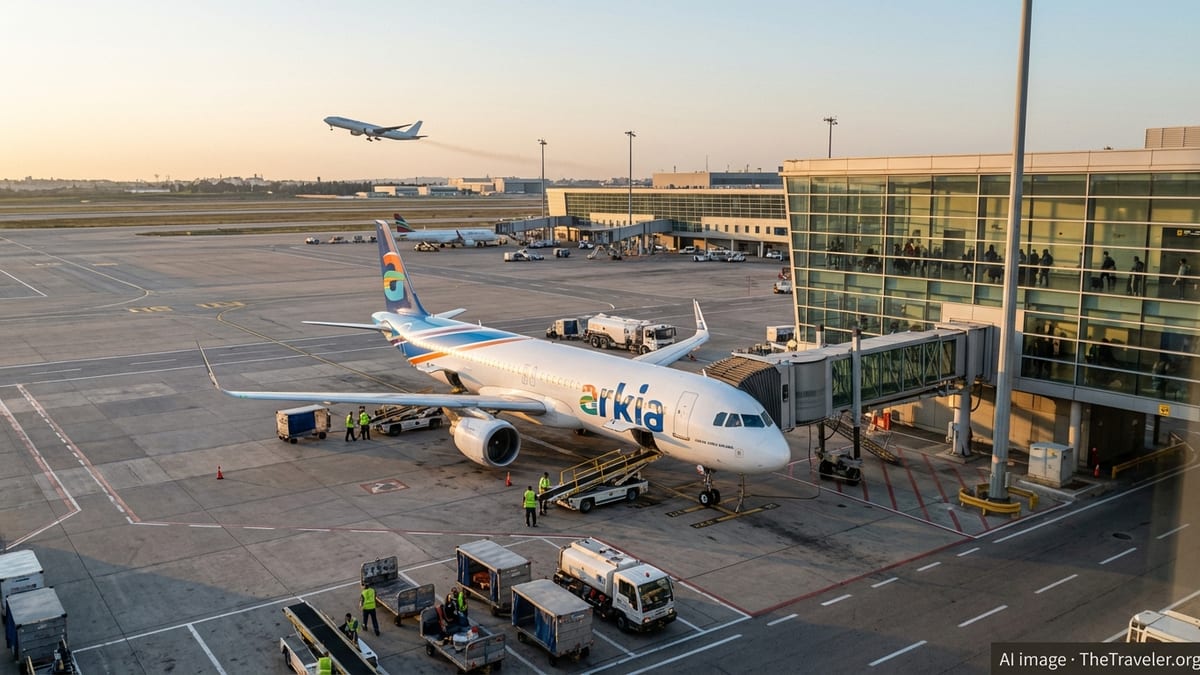
Military buildup deepens at Israel’s main civilian hub
Publicly available flight-tracking data and recent defense coverage indicate that the United States has steadily expanded its fleet of KC-135 and KC-46 aerial refueling aircraft operating from Ben Gurion Airport since early 2026, as part of a broader regional buildup linked to tensions with Iran. Earlier reports described a presence of around four refueling tankers on the ground; subsequent deployments brought that number to roughly fourteen, transforming the airport into a key logistics node for long-range missions.
Travel and aviation forums, along with regional news summaries, now point to a further wave of inbound tankers, with ten additional aircraft expected to join the rotation at Ben Gurion in the coming days. This would lift the total number of US refueling jets using the airport as a staging point to the mid-twenties, not including other support aircraft and cargo flights that also compete for limited space and ground services.
Ben Gurion, Israel’s busiest airport and the primary international gateway for leisure and business travelers, was already operating in a more constrained mode due to the regional security situation, missile alerts and shifting airline schedules. The arrival of more large military aircraft is adding a new layer of operational complexity at an airfield designed first and foremost for dense civilian traffic.
According to open-source accounts, several of the arriving tankers are slated to fly frequent long-endurance sorties over Saudi and Iraqi airspace, supporting US and allied combat jets. Even when they are not airborne, however, their presence on the ground occupies parking stands, taxi lanes and maintenance resources that would otherwise serve passenger airlines.
Parking stands, taxiways and runway time under pressure
Ben Gurion’s layout relies heavily on a finite number of wide-body parking stands and remote positions that can handle large aircraft. With a growing line of US tankers based on-site, a portion of those stands is effectively being converted into a semi-permanent military ramp, according to airport-focused discussion boards and recent satellite imagery analyses. For airlines trying to rebuild capacity after months of instability, this translates directly into tighter margins for aircraft turnaround.
When large tankers remain parked for extended periods, arriving passenger flights are more likely to be assigned remote stands or to wait for a free gate, which can lengthen taxi times, boarding by bus and baggage handling. Ground-handling unions and travel agents cited in local coverage have described crews working around clusters of military aircraft, a configuration that can slow down routine operations such as catering, fueling and pushback.
Runway slots are also becoming more competitive. Although refueling missions typically follow preplanned windows that can be deconflicted with peak civilian waves, additional tanker launches and recoveries still occupy takeoff and landing slots. Aviation analysts note that even a handful of extra military movements during busy banks of departures can produce a ripple of minor delays that propagate through the daily schedule, especially when weather or security alerts are already constraining capacity.
Industry research on delay propagation in interconnected air networks shows how small disruptions at a single hub tend to cascade through connecting flights and onward rotations. In Ben Gurion’s case, where many carriers are operating with leaner fleets and tight turnaround times, any incremental constraint on runway access or gate availability increases the likelihood of missed slots and rolling delays across the day.
Airlines trim schedules as passengers face longer travel days
Several international airlines had already reduced or reshaped their Israel services over the past two years due to security concerns and fluctuating demand. Recent travel-industry reporting and airline advisories now indicate that some carriers are cutting further frequencies, consolidating departures into fewer daily flights and lengthening scheduled ground times at Ben Gurion to absorb expected congestion.
For passengers, this is translating into a mix of schedule changes, earlier check-in recommendations and growing uncertainty about arrival times. Travel agents in key outbound markets such as the United States and Europe are advising clients to leave longer buffers for connections when routing through Tel Aviv, and to expect possible last-minute retimings as military activity intensifies.
Local media coverage and social media posts from Israeli travelers describe a rise in anecdotal reports of missed connections, overnight layovers and rebookings, particularly on flights connecting through European hubs. While many of these disruptions are still attributable to the broader regional security climate, the additional load on Ben Gurion’s infrastructure from US refueling fleets appears to be a contributing factor.
Industry observers highlight that airlines have limited tools to respond in the short term. Options range from temporarily switching to smaller aircraft that can more easily be accommodated at remaining stands to shifting some operations to secondary airports within Israel. Each of these measures, however, comes with trade-offs in capacity, cost and passenger convenience.
Policy tensions over how many tankers Ben Gurion can host
The growing military footprint at Ben Gurion has also sharpened a policy debate inside Israel over how extensively the country’s main civilian hub should be used as a base for foreign refueling fleets. Reports in Israeli and international media describe ongoing discussions between defense planners, aviation regulators and transportation officials about where to draw the line between strategic necessity and the need to preserve airport capacity for commercial use.
According to recent coverage, Israeli transportation authorities have raised concerns about the number of tankers occupying scarce apron space and have floated informal ceilings on how many could remain at Ben Gurion at any one time. At the same time, defense commentators argue that the airport’s existing infrastructure, proximity to maintenance facilities and direct access to high-capacity runways make it uniquely suited to sustaining high-tempo aerial operations.
Alternative basing options do exist, including military facilities in southern Israel and regional air bases used by US forces. However, diverting additional refueling jets away from Ben Gurion would likely require expanded infrastructure, new command arrangements and more complex logistics chains. In the near term, publicly available information suggests that policymakers are accepting continued pressure on the civilian hub as the price of maintaining rapid-response capacity against potential threats.
The tension between these priorities is likely to remain a live issue as long as regional frictions persist. Each new tranche of arriving tankers, including the ten now reportedly inbound, effectively tests how much additional military traffic the airport can absorb before commercial operations suffer further degradation.
What travelers should expect in the weeks ahead
For travelers planning trips to or from Israel in the coming weeks, the buildup of US refueling jets at Ben Gurion adds another variable to an already complicated environment. Aviation consultants and travel-industry briefings suggest that while outright airport closures are not anticipated, periods of heightened military activity could coincide with delays, extended security checks and occasional temporary ground stops.
Airlines are expected to continue adjusting schedules in response to both demand and operational constraints, which may mean retimed departures, route changes or use of alternative airports where feasible. Passengers are being encouraged by carriers and booking platforms to monitor their flight status closely, allow extra time at the airport and keep flexible options for connections or overnight stays where possible.
Travel insurers and consumer advocates note that policies covering missed connections and significant delays can be valuable in this context, particularly for itineraries involving multiple legs or nonrefundable hotel and tour bookings. As with previous periods of disruption in the region, the impact is likely to be uneven, with some days proceeding relatively smoothly and others marked by sudden schedule reshuffles tied to security or operational developments.
With additional refueling jets on the way and no immediate sign of a broader de-escalation, Ben Gurion’s dual role as both a frontline logistics hub and a civilian airport is expected to keep shaping the travel experience for anyone passing through Israel’s primary international gateway.