

More news on this day
Mexico is entering 2026 with an expanded focus on sustainable travel, spotlighting secluded coastlines, low-impact eco tourism and community-led cultural experiences as alternatives to its busiest resort corridors.
Get the latest news straight to your inbox!
National Push to Green Coastal Tourism
Publicly available information shows that Mexican environment and tourism agencies are aligning around a national model that prioritizes beach conservation, biodiversity and social responsibility. A recent coastal forum held in Bahías de Huatulco in early February 2026 focused on how to manage visitor numbers, restore fragile ecosystems and finance cleaner tourism infrastructure along the country’s shores.
According to published coverage of the forum, one flagship policy is the National Strategy for Beach and Coastal Cleaning and Conservation 2025–2030, which seeks to remove plastic waste from beaches and coastal zones by the end of the decade. The program encourages destinations to pair routine cleanups with better land-use planning and restrictions on new construction in highly sensitive dune, mangrove and reef areas.
Mexico’s Caribbean coast is simultaneously stepping up its response to sargassum, the brown seaweed that periodically blankets beaches. Government data and regional reporting point to multimillion-dollar investments in barriers, specialized vessels and coordinated beach crews aimed at intercepting seaweed offshore and protecting both tourism and marine life.
Industry initiatives are complementing official strategies. Recent announcements from cruise and hospitality brands describe expanded seaweed-cleanup partnerships in Costa Maya and the wider Quintana Roo coast, along with commitments to renewable energy, water-saving technologies and local food sourcing at resort properties.
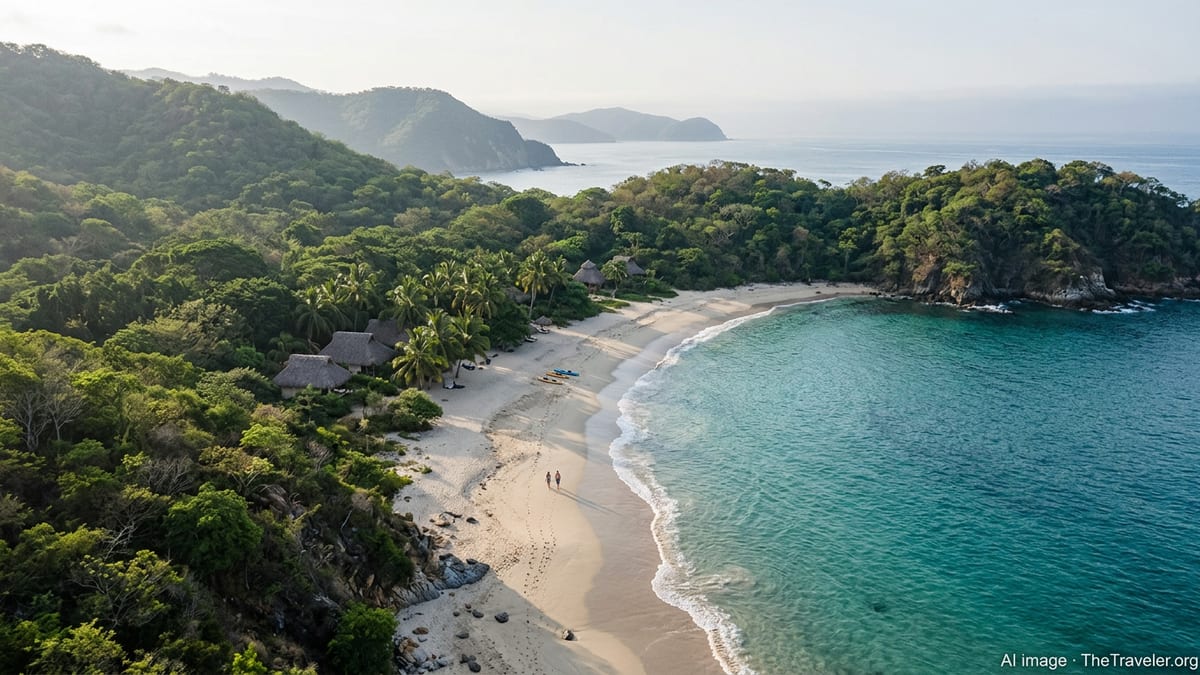
Secluded Pacific Beaches Step Into the Spotlight
While the Riviera Maya continues to draw large numbers of international visitors, quieter Pacific destinations are increasingly framed as sustainable alternatives for 2026. Travel trend reporting highlights lesser-known stretches of coastline in states such as Oaxaca, Nayarit and Jalisco, where smaller-scale development and rugged terrain have naturally limited mass tourism.
South of Puerto Vallarta, coves along the Costalegre and fishing villages on the Jalisco and Colima coasts are attracting travelers seeking uncrowded sands, turtle nesting sites and marine reserves. Public information on local zoning plans indicates that several municipalities are restricting high-rise construction and encouraging low-density ecolodges that blend into forest and mangrove backdrops.
In Nayarit, access-controlled protected areas such as the Marietas Islands National Park continue to cap daily visitor numbers to sensitive secluded beaches. Regulations there require permits and certified operators, a model that conservation groups cite as a way to balance bucket-list experiences with strict controls on snorkeling, boating and wildlife viewing.
Further south, communities near Huatulco are promoting lesser-known bays outside the main hotel zone, pairing boat access with guidelines on reef-safe sunscreen, waste reduction and community-based guiding. These Pacific projects are frequently presented as examples of how Mexico can diversify beyond its most crowded resort strips while keeping beach ecosystems intact.
Eco Tourism Grows Around Forests, Reefs and Wetlands
Beyond the shoreline, eco tourism circuits connecting reefs, wetlands and tropical forest reserves are gaining prominence in Mexico’s 2026 travel agenda. Conservation announcements in recent months describe new and expanded protected corridors, including a tri-national initiative in the Mayan jungle that brings together southern Mexico, Guatemala and Belize across more than 14 million acres of tropical forest.
Within Mexico, coastal wetlands and mangrove systems along the Gulf and Caribbean coasts are being promoted as low-impact destinations for birdwatching, kayaking and guided natural history tours. Recent reporting from Veracruz, for example, highlights mangrove routes near Tecolutla that emphasize close observation of herons, pelicans and other native wildlife under strict speed and group-size limits.
On the Caribbean side, nonprofit-led projects in the Riviera Maya are piloting ways to turn environmental challenges into new forms of eco tourism. One initiative supported by international sustainability organizations is testing the reuse of collected sargassum as compost and material for local agriculture, while also funding training for women-led farms that supply produce to participating hotels.
Coral restoration, seagrass protection and “living shoreline” experiments are also becoming part of the eco tourism narrative. Environmental organizations and academic partners are working with coastal resorts to rebuild dunes, plant native vegetation and design visitor education programs that explain how these systems protect communities from storms while supporting snorkeling and diving experiences.
Authentic Cultural Experiences Beyond Major Resorts
Alongside environmental initiatives, Mexico is placing renewed emphasis on cultural immersion away from large-scale resort complexes. Tourism reporting for 2025 and early 2026 notes rising interest in Indigenous-led tours, artisan workshops and overnight stays in smaller communities linked to the country’s Pueblos Mágicos program.
In the Gulf state of Veracruz, historic towns near lesser-known beaches such as Chachalacas are marketing combined itineraries that link dune landscapes with archaeological zones and traditional cuisine. Public information from cultural agencies points to new signage, restored plazas and event calendars designed to disperse visitors more evenly through the year.
In the south, communities across Oaxaca and Chiapas are expanding community-based tourism offerings tied to coffee production, weaving, regional markets and traditional festivals. These programs typically favor homestays or family-run guesthouses over large hotels, channeling spending directly to local hosts while limiting the physical footprint of tourism.
Urban destinations are also contributing to the shift. Projects such as the ecological park under development on the former Lake Texcoco basin near Mexico City are framed as regenerative public spaces that blend recreation, environmental education and cultural programming. Although not a beach destination, this large-scale park is frequently cited as part of a nationwide pivot toward more climate-conscious, locally grounded experiences.
Balancing Visitor Growth With Long-Term Resilience
Mexico remains one of the world’s busiest tourism markets, with federal data indicating record international arrivals and tourism revenue in 2025. Analysts note that this rapid growth has sharpened the focus on how destinations can keep expanding without overwhelming local infrastructure, ecosystems and communities.
New financing tools, such as the Avanzamos por México program launched in Puerto Vallarta ahead of the 2026 FIFA World Cup, are designed to help small and medium-sized tourism businesses adapt. Public descriptions of the initiative highlight training in digitalization, financial resilience and sustainability practices so that local operators can participate in growth while meeting higher environmental and social expectations.
Observers point out that success will depend on how consistently policies are enforced at the local level, especially in coastal zones where pressures from real estate development remain strong. Environmental organizations continue to call for tighter controls on construction near dunes, wetlands and coral reefs, along with transparent monitoring of seaweed management, water quality and habitat restoration.
For travelers planning 2026 trips, the direction of travel is clear. From secluded Pacific coves and mangrove-lined Gulf estuaries to community tourism in mountain villages, Mexico is broadening its offer beyond traditional sun-and-sand packages, positioning sustainable, lower-impact experiences as a defining feature of its next tourism chapter.