


More news on this day
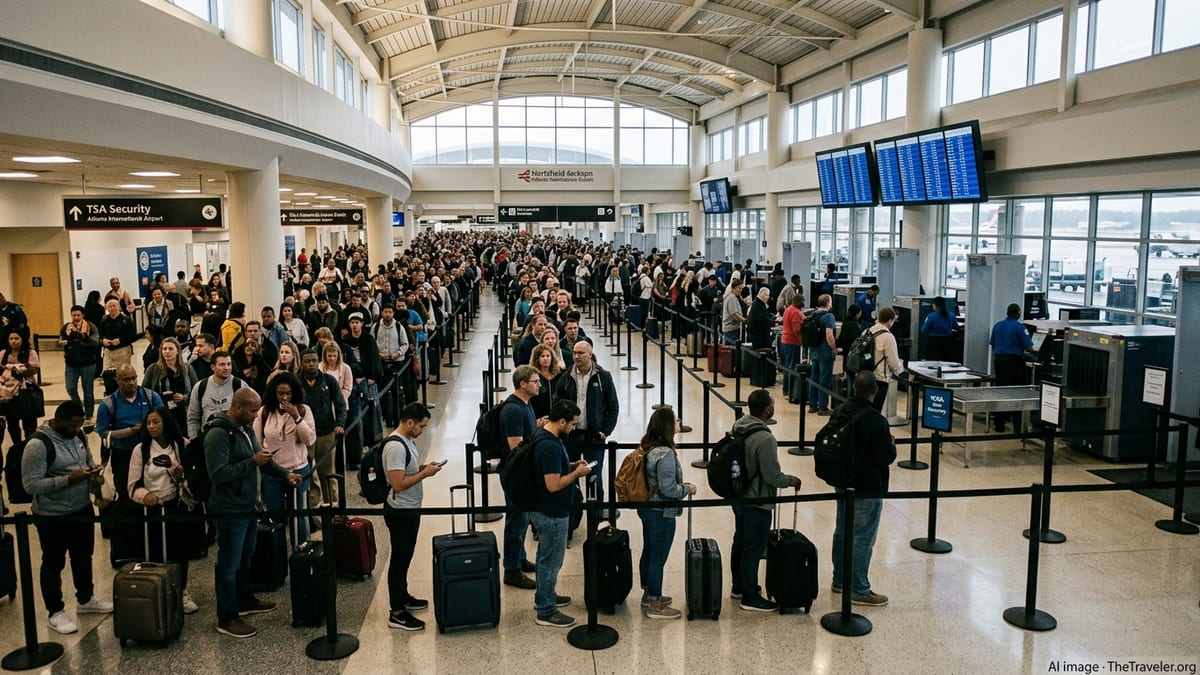
A significant information-technology outage affecting Transportation Security Administration screening systems at a major U.S. airport has led to hour-long waits at checkpoints, disrupting passenger flows and forcing airlines to delay multiple departures as peak summer travel continues.
Get the latest news straight to your inbox!
Outage Hits Screening Systems During Peak Morning Rush
According to early reports from airport and airline operations summaries, the disruption began in the early morning when TSA screening systems experienced a sudden loss of connectivity. Checkpoint lanes continued to operate on a limited basis, but automated document readers, some credential authentication technology, and parts of the baggage screening network went offline, sharply reducing throughput.
The outage coincided with the morning departure bank, when passenger volumes are typically at their highest. With electronic systems intermittently unavailable, TSA personnel shifted to more manual screening procedures, slowing the pace at which travelers could be processed. Publicly available flight-tracking data showed a rapid buildup of departure delays that grew to more than an hour for many flights as aircraft waited for late-arriving passengers.
By midmorning, airport social media advisories and local broadcast coverage were warning travelers to arrive significantly earlier than usual and to expect extended waits at security. Images shared by passengers showed queues snaking through terminal corridors and, in some cases, reaching back toward check-in areas.
While full details of the technical failure have not yet been published, initial statements from federal briefings cited a network-related issue affecting the airport’s connection to central screening and vetting systems. There were no indications that the disruption was related to a cybersecurity incident, and aviation authorities continued to emphasize that security protocols remained in place, albeit at a slower pace.
Passengers Face Missed Flights and Rebooked Itineraries
The most immediate impact of the outage fell on travelers caught in the bottleneck. Reports from airline customer channels and airport operations logs indicated a spike in missed connections and same-day rebookings as passengers struggled to clear security in time for scheduled departures.
Families traveling with children, infrequent flyers unfamiliar with alternative checkpoints, and passengers without TSA PreCheck were particularly affected. With standard screening operating well below normal capacity, even PreCheck lanes saw longer-than-usual waits as airport teams tried to balance resources across all queues.
Travelers reported standing in line for 60 to 90 minutes, with some facing even longer waits as the morning peak extended into midday. Airline agents at departure gates were observed holding doors as long as possible for passengers running from security, while others were rebooked on later flights when they arrived too late to board.
Airport concessions and lounges also experienced crowding as delayed travelers waited for new departure times. Some business travelers turned to remote work from gate areas, while leisure travelers sought out charging stations and seating wherever it could be found in already busy terminals.
Operational Recovery and Contingency Measures
As IT teams moved to restore full connectivity, airport operations shifted into a recovery posture. According to publicly available operations plans and delay summaries, airlines temporarily padded turnaround times and adjusted departure sequences to accommodate late-arriving passengers and crews.
Checkpoint throughput gradually improved once core screening systems were brought back online, allowing additional lanes to reopen and automated document readers to resume service. Even after the technical fault was resolved, however, departure banks later in the day continued to experience residual delays as aircraft and crews remained out of their planned positions.
The event highlighted the layered contingency playbooks developed in recent years in response to other disruptions from staffing shortages, severe weather and equipment failures. These plans typically include rerouting passengers to less crowded checkpoints, using nearby terminals where layouts permit, and coordinating with the Federal Aviation Administration’s traffic management units to help absorb schedule pressure during recovery.
Industry analyses published this year have noted that even short-lived interruptions at a large hub can produce knock-on effects across the wider network, as late aircraft and crews ripple through subsequent flights. The outage underscored how dependent modern security screening has become on stable IT infrastructure and real-time data flows between local airports and national systems.
Broader Context of Strain on U.S. Airport Security
The IT failure comes amid a period of sustained strain on the United States aviation security system, with summer travel volumes running at or near record levels and TSA already managing higher call-out rates, training pipelines and modernization projects. Recent congressional testimony and industry letters have pointed to aging technology and complex staffing demands as factors that can amplify the impact of any operational disruption.
Travel advocacy groups have warned that the cumulative effect of staffing gaps, budget uncertainty and surging passenger demand leaves little margin for error when technical incidents occur. When a key node such as screening IT suffers an outage, the system has limited spare capacity to absorb the shock without visible effects for travelers.
Recent advisories from travel organizations have urged passengers to treat headline-grabbing delays as a reminder to build extra time into airport arrivals, particularly at large hubs and during busy seasons. The latest outage reinforces that advice, suggesting that even travelers with trusted traveler status or early morning departures can face unexpected slowdowns if a critical system falters.
Security experts and industry analysts have also pointed to ongoing efforts to upgrade screening technology and introduce more resilient architectures, including cloud-based systems and improved redundancy. While these projects aim to reduce the likelihood and duration of future outages, they are being implemented in an environment where airports must continue to move millions of passengers every week.
What Travelers Can Expect in the Coming Days
Following the outage, there were indications that airport and airline partners were reviewing the incident to determine whether additional safeguards or backup procedures could reduce the risk of similar disruptions. Such assessments commonly examine how quickly alternative screening configurations can be activated and how effectively passengers are informed during fast-moving events.
In the short term, travelers using the affected airport have been advised through public channels to allow extra time for check-in and security while operations normalize and any backlog in equipment maintenance or system checks is cleared. Even after normal wait times return, the episode is likely to shape traveler behavior, with more passengers arriving earlier and paying closer attention to airport and airline alerts.
For frequent travelers, the incident may reinforce the value of strategies that can help navigate future disruptions, such as monitoring security wait-time tools, traveling with carry-on luggage that is easy to screen, and being flexible about flight times during peak travel periods. While these steps cannot prevent an IT outage, they can make it easier to adapt when lines suddenly lengthen.
More broadly, the outage highlights how critical digital infrastructure has become to the travel experience. From identity verification to baggage screening, much of what happens at the checkpoint now depends on complex systems operating behind the scenes. When those systems falter, even briefly, the impact is measured in longer lines, missed flights and a more stressful journey for passengers already contending with a busy summer travel season.