


More news on this day
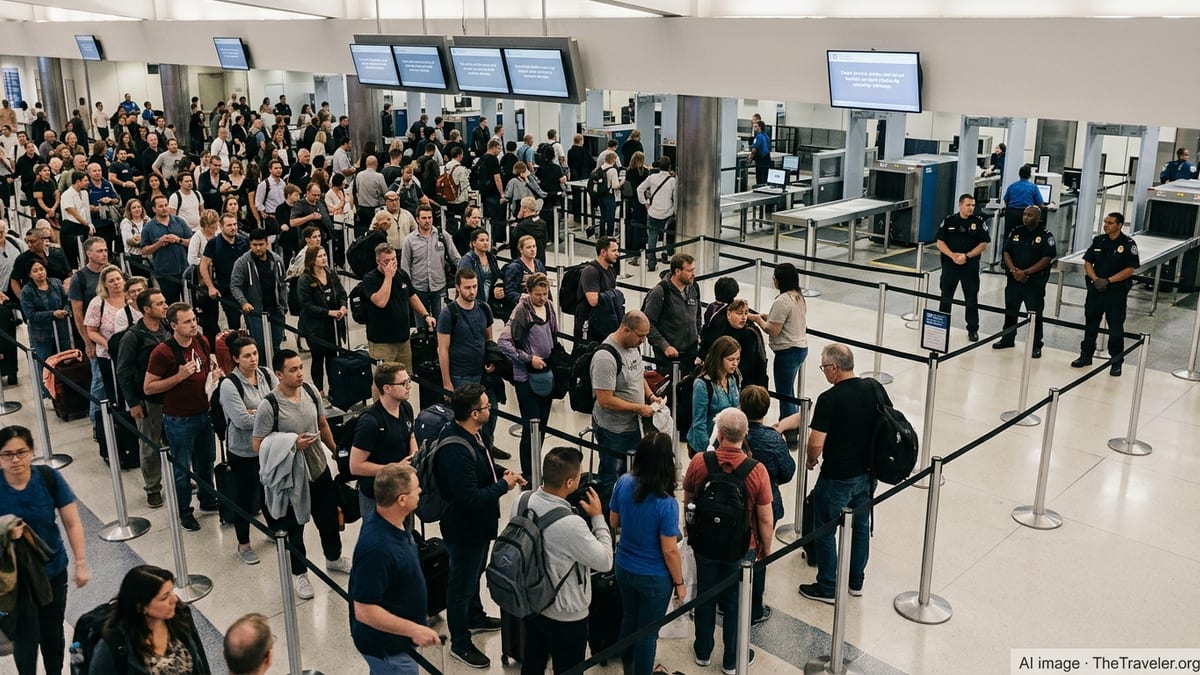
Security screening wait times at Raleigh–Durham International Airport’s Terminal 2 have returned to more typical levels after recent reports of unusually long lines at the Transportation Security Administration checkpoint.
Get the latest news straight to your inbox!
From peak disruption to routine delays
In recent days, travelers at Raleigh–Durham International Airport (RDU) reported significant backups at the Terminal 2 security checkpoint, with lines stretching well beyond the usual queuing area during peak departure periods. Social media posts and local discussion forums described early morning waits that far exceeded the airport’s typical throughput, particularly for standard screening.
By Thursday, publicly available accounts suggested that those bottlenecks had eased. Morning travelers described passing through Terminal 2 security in time frames more consistent with historic experience at RDU, with many citing waits in the range of 15 to 25 minutes during the early rush and substantially shorter lines outside of peak hours.
These conditions align with longer-term observations that RDU, while increasingly busy, usually maintains comparatively efficient checkpoint operations. Terminal 2 handles most of the airport’s major domestic and international carriers, concentrating demand but also staffing and screening capacity.
The recent fluctuations appear to reflect a temporary imbalance between passenger surges and checkpoint resources rather than a persistent structural change in security operations at the airport.
Understanding current wait-time patterns
Recent traveler reports indicate that security conditions in Terminal 2 have reverted to recognizable patterns: the busiest windows generally occur in the early morning, roughly aligned with a cluster of departures between about 5 a.m. and 7 a.m., and again in the late afternoon and early evening when business and connecting traffic peaks. Outside those periods, many passengers describe moving through the checkpoint in under 15 minutes.
Standard screening lines tend to experience the most volatility, particularly when large numbers of leisure travelers arrive well ahead of departure. By contrast, those using expedited screening options such as TSA PreCheck often report more predictable experiences, even on mornings when standard lines lengthen across the ticketing hall.
Despite the recent disruption, there are multiple indications that Terminal 2’s checkpoint is once again processing passengers at a rate consistent with its design capacity. Accounts from the past several days point to a full complement of active lanes during busier periods and relatively quick clearing of any sudden surges in foot traffic.
For most travelers, the practical effect is that RDU is back to requiring the same level of advance arrival that has been customary in recent years, rather than the extended buffers some passengers adopted during the height of the delays.
Tools travelers are using to track live conditions
The recent episode of longer lines has prompted renewed interest in tools that allow passengers to check live or near real-time wait times before heading to the airport. Flyer discussions highlight a mix of official and third-party resources that aggregate user reports, historical patterns, and, in some cases, sensor-based estimates of checkpoint congestion.
Mobile applications that incorporate RDU security data are being used to gauge the likely conditions at Terminal 2 at specific hours of the day. Users note that some platforms rely heavily on crowd-sourced information and can lag during periods of rapid change, while others blend predictive modeling with live inputs to provide a more dynamic forecast of delays.
These tools are not a guarantee of exact wait times, but they offer a reference point that many passengers used this week to decide whether to arrive significantly earlier than usual. As reports of normal throughput have increased, the same resources are now reinforcing a message that conditions have stabilized, with only routine spikes around the busiest departure banks.
Travelers are also drawing on shared firsthand accounts from local forums to refine their expectations, comparing experiences from different days and time bands to decide how much cushion to build into their own itineraries.
Growth pressures at a fast-expanding hub
The return to normal wait times at Terminal 2 comes against the backdrop of sustained growth at RDU. The airport has expanded its route network and passenger volumes in recent years, particularly through carriers operating from Terminal 2, which serves many of the largest domestic airlines along with several international partners.
Published information on RDU’s terminal configuration shows that Terminal 2 hosts a dense mix of legacy and foreign carriers, concentrating long-haul and high-demand routes on one side of the airport. As schedules have become more ambitious, particularly in peak travel seasons, that concentration can occasionally strain curbside, check-in, and security areas when multiple departures cluster in short windows.
Industry research on airport operations highlights how even modest disruptions in staffing or equipment availability at security checkpoints can quickly translate into noticeable queueing during high-demand periods. When combined with seasonal surges, irregular operations at other airports, or changes in traveler behavior, these factors can temporarily push wait times above the expected range.
RDU’s recent experience in Terminal 2 reflects these broader dynamics: a busy, growing airport periodically encountering pressure points, but generally able to restore normal throughput once staffing and passenger flows realign.
What travelers should expect in the coming weeks
With Terminal 2 wait times back to typical levels, travelers using RDU can expect conditions similar to those that prevailed before the latest wave of delays. Early morning and late afternoon departures will likely remain the most time-sensitive, with standard screening lines building quickly when several flights depart within a short window.
For most passengers, current patterns suggest that arriving within the commonly recommended window for domestic flights should again be sufficient on ordinary travel days, particularly outside holiday periods and peak summer weekends. Those connecting to international services or traveling in larger groups may still choose to build in extra time, especially for early departures from Terminal 2.
Observers note that the recent episode has underscored the value of checking live or forecast wait information on the day of travel and monitoring local traveler reports when possible. While RDU’s checkpoint operations have stabilized, wait times at connecting airports across the country can still fluctuate due to national security staffing and policy factors.
For now, however, publicly available information and firsthand accounts converge on a consistent picture at Raleigh–Durham International Airport: after a period of disruption in Terminal 2, security screening has largely returned to the steady, moderate wait times that frequent flyers associate with the region’s primary air gateway.