


More news on this day
Traffic on the New Jersey Turnpike near Newark Liberty International Airport was severely disrupted after two trucks overturned and shut several lanes, creating extended delays for drivers and airport-area travelers.
Get the latest news straight to your inbox!
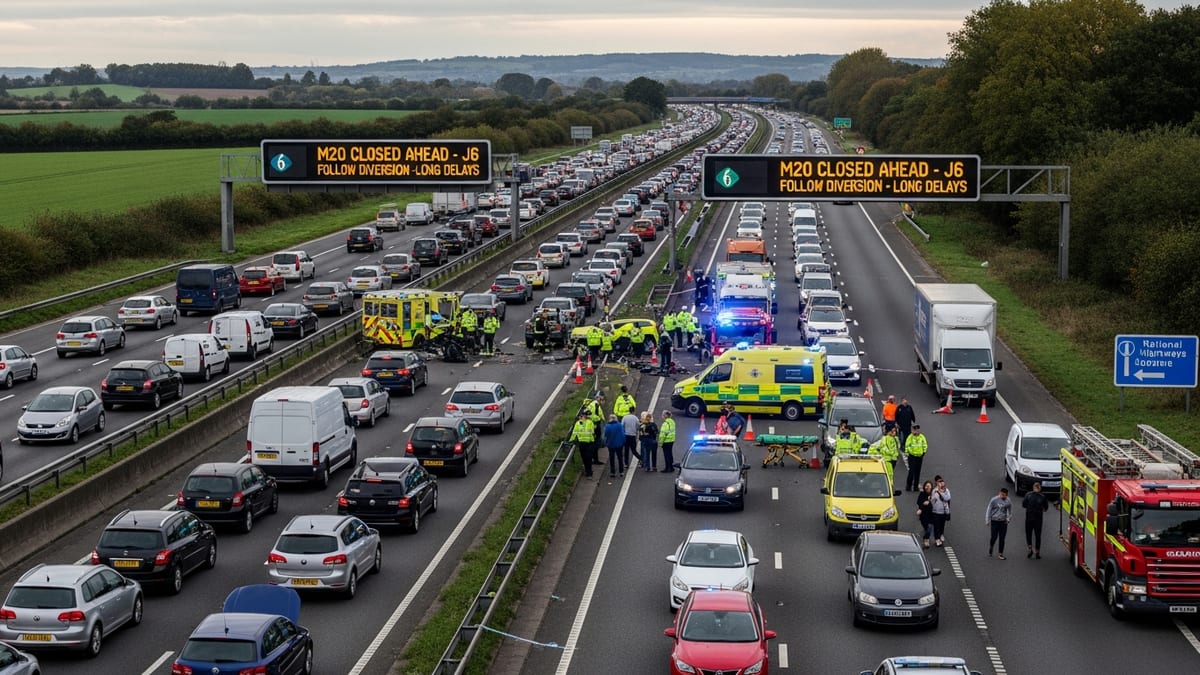
Crash Near Major Airport Interchange Stalls Regional Traffic
The incident occurred in the busy stretch of the New Jersey Turnpike that skirts Newark Liberty International Airport, a corridor that carries a high volume of trucks, commuters, and airport-bound traffic. Publicly available traffic alerts and early media summaries indicate that two separate tractor-trailers overturned in close proximity, leading to lane closures and congestion that rippled across nearby routes.
The affected section sits near the complex Newark Airport Interchange, where the mainline Turnpike, its Newark Bay Extension, and connections to Routes 1 and 9 and Interstate 78 converge. This junction is frequently cited as one of the state’s most heavily traveled highway knots, making any blockage particularly disruptive for both local drivers and through traffic.
Initial reports describe crash debris and disabled vehicles blocking multiple lanes, with emergency responders and tow operations occupying additional space as recovery work began. The combination of the overturned trucks, response vehicles, and rubbernecking delays rapidly slowed traffic to a crawl in both directions.
The incident comes against the backdrop of long-standing concerns about congestion and safety in the narrow stretch of roadway that runs between the airport perimeter, Port Newark–Elizabeth Marine Terminal, and nearby industrial facilities. Even routine breakdowns in this corridor can trigger miles of backups; an event involving two overturned trucks significantly magnified those impacts.
Lane Closures, Diversions, and Lengthy Delays
According to traffic monitoring services and regional travel advisories, multiple lanes on the affected carriageway of the Turnpike were closed for an extended period while crews worked to stabilize and upright the trucks. Some ramps feeding the highway near the airport were partially restricted, adding to confusion for drivers trying to navigate to Newark Liberty’s terminals or to connecting highways.
Motorists reported heavy delays in the vicinity of the Southern Mixing Bowl, the section where the Turnpike’s eastern and western spurs split and the Newark Bay Extension merges in. With key lanes shut, vehicles were funneled into fewer open lanes, creating bottlenecks that spread well beyond the immediate crash site.
Electronic message boards and navigation apps began advising drivers to seek alternate routes, including the Garden State Parkway, local stretches of Routes 1 and 9, and, where possible, earlier exits south of the airport. However, the unique role of the Turnpike as a primary north–south freight and commuter artery limited the effectiveness of diversions, and secondary roads near the airport quickly grew congested as well.
Travelers heading to Newark Liberty were urged, via publicly disseminated travel alerts, to allow significantly more time than usual, as traffic slowed approaching airport exits and terminal access roads. Ride-share drivers and airport shuttles were also caught in the delays, further complicating drop-offs and pick-ups during the disruption.
Impact on Freight, Commuters, and Airport Access
The overturned trucks underscored the sensitivity of the Newark airport–Turnpike corridor to any major incident involving large commercial vehicles. This section of highway is heavily used by freight haulers connecting port terminals, distribution centers, and airport cargo facilities, and disruptions can briefly slow the movement of goods along one of the East Coast’s key logistics chains.
Commuters relying on the Turnpike’s truck and car lanes were similarly affected, with queues stretching back through adjacent interchanges. Some drivers attempting to bypass the congestion via alternate spurs or the Newark Bay Extension encountered secondary slowdowns as merging traffic overwhelmed the available capacity.
Passengers and workers heading to Newark Liberty International Airport faced particular challenges. The main highway approaches to both the terminal complex and nearby parking areas run parallel to or directly off the Turnpike and its associated ramps. According to travel alerts circulated by traffic services, delays accessing the airport were significant during the height of the incident, with some reports describing creeping traffic in the final approach to terminal exits.
As recovery progressed and lanes gradually reopened, conditions began to improve, but residual delays persisted while traffic volumes normalized. For part of the day, the incident served as a reminder of how tightly integrated the region’s highway, port, and airport systems are, and how quickly a single disruption can affect multiple layers of mobility.
Safety Concerns on a High-Volume Corridor
While full details on the cause of the overturns were not immediately available in early public reporting, the episode has again drawn attention to safety in one of New Jersey’s most demanding driving environments. The Turnpike near Newark Liberty features a mix of heavy trucks, buses, and passenger vehicles, with frequent lane changes required for drivers navigating between the airport, local exits, and long-distance routes.
Transportation observers frequently note that the corridor’s tight curves, short weaving segments, and dense merging points can increase the risk of incidents, especially when combined with high speeds and variable weather. The close proximity of airport structures, rail lines, and port facilities leaves little margin for additional roadway space or easy detours when something goes wrong.
In recent years, planning documents and infrastructure discussions have highlighted the area’s vulnerability to gridlock and the potential benefits of incremental safety and capacity improvements. Events involving multiple heavy vehicles, such as the two overturned trucks in this case, are often cited in debates about how best to balance freight efficiency, commuter reliability, and roadway safety.
Travel advocates suggest that drivers passing through the Newark airport segment of the Turnpike remain particularly alert at all times, maintaining safe following distances and anticipating sudden slowdowns. The latest disruption, while eventually resolved, illustrates the outsized impact that a single incident can have in this intricate and heavily traveled piece of New Jersey’s highway network.