


More news on this day
As record-breaking wildfires flare across southern Europe for another summer, scenes of smoke-filled beaches, hurried evacuations and shuttered campsites are forcing travelers to rethink what a "normal" July or August holiday on the continent now looks like.
Get the latest news straight to your inbox!
Another fierce fire season in a warming Europe
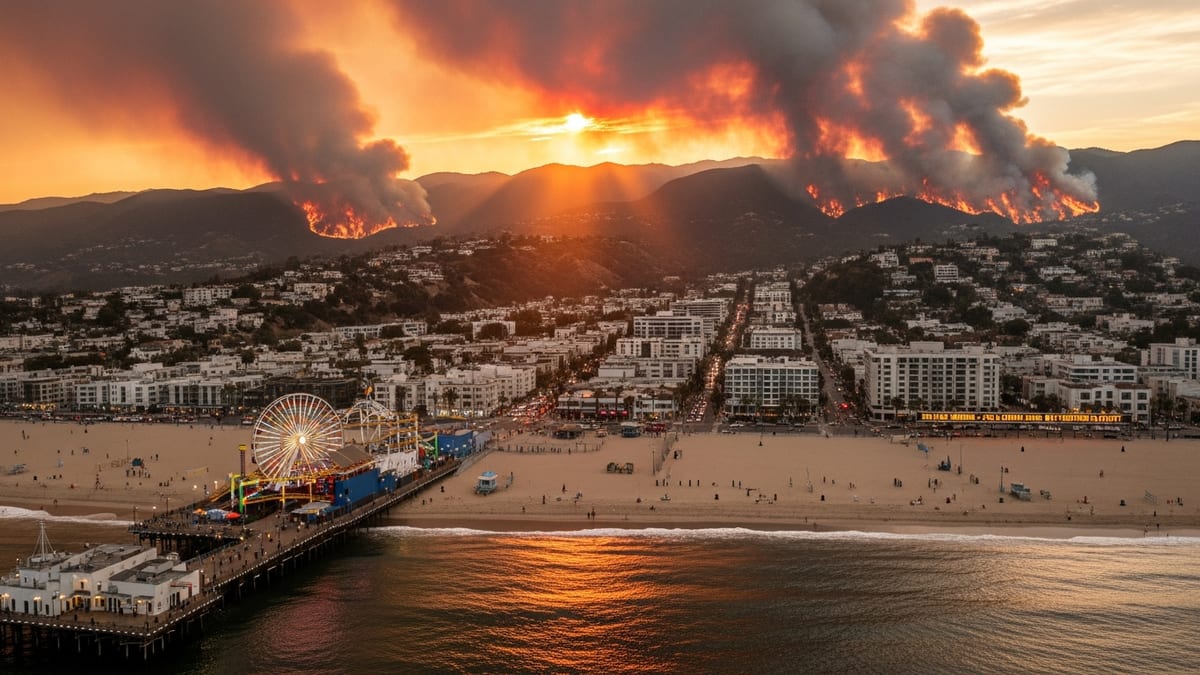
Large wildfires have again broken out across parts of southern Europe in July 2026, following two back-to-back record seasons in 2024 and 2025. Recent reports describe extensive blazes in southwest France, including a fire west of Bordeaux that has grown to several times the size of Paris and triggered large-scale evacuations from coastal resort areas during the peak holiday period. In Spain, fires in central and eastern regions have also displaced tens of thousands of residents and visitors.
These events come after the European Commission’s Joint Research Centre reported that 2025 was the European Union’s most destructive wildfire year on record, with more than one million hectares burned across member states, much of it in Mediterranean destinations popular with summer tourists. Climate monitoring services have repeatedly highlighted that Europe is the world’s fastest-warming continent, with hotter, drier summers increasing both the likelihood and intensity of fire weather conditions.
The pattern is particularly acute along the Mediterranean arc, from Portugal and Spain through southern France and Italy to Greece and Cyprus. Scientific studies focused on tourism regions indicate that many of these coastal and island destinations now sit in zones of high or rising fire hazard, especially during late July and August. For travelers, that means the combination of extreme heat and wildfire smoke is no longer an occasional anomaly but a growing seasonal feature.
What travelers can realistically expect on the ground
For most visitors, the immediate question is whether holidays are being canceled outright. Publicly available information from tourism bodies and travel industry updates indicate that, so far, the majority of Europe’s resort areas remain open and operating, even in countries battling major fires. Airports, ferry terminals and most rail lines in Spain, France, Italy and Greece have continued to function, with only short-lived disruptions near active fire fronts or during periods of heavy smoke.
However, localized evacuations have become more common. Recent coverage from France and Spain describes entire seaside campsites, children’s holiday camps and clusters of coastal villages cleared as a precaution when fires approached. Travelers booked into forested or rural accommodations, such as campgrounds, holiday parks or remote villas, are more likely to face temporary closures or last-minute relocations than those staying in large hotels in urban or well-serviced coastal areas.
Even where fires are distant, heat and smoke can shape the daily experience. Heatwave conditions across the Mediterranean have pushed daytime highs well above 35 degrees Celsius in some regions, prompting local restrictions on hiking, access to forested national parks and outdoor work. On certain days, air quality has deteriorated in cities and coastal resorts downwind of major burn areas, with health agencies advising children, older people and those with respiratory conditions to limit strenuous outdoor activity.
Travelers should therefore be prepared for fast-changing local guidance, from beach closures due to poor air quality to bans on barbecues, outdoor fires and off-road driving in high-risk zones. Flexibility in daily plans, and a willingness to adapt activities to cooler times of day or indoor attractions, is increasingly part of a resilient Mediterranean holiday.
How wildfires are reshaping costs, cover and choice
The financial implications of repeated fire and heat emergencies are beginning to ripple through the travel market. European data show that climate-related disasters, including wildfires, have generated tens of billions of euros in losses in recent years, affecting sectors such as agriculture, housing and tourism. Insurers and tour operators are responding by reassessing risk in some coastal and rural areas where infrastructure and evacuation routes have been repeatedly tested.
Industry briefings and consumer advisories indicate that some travel insurance policies now treat wildfire-related disruption similarly to other natural hazards, with coverage sometimes limited to cases in which authorities formally close a resort or declare an emergency. Travelers may find that voluntary cancellations, based on personal risk perception rather than official restrictions, are treated differently to trips that become impossible due to evacuations or transport shutdowns.
At the same time, the pattern of demand is subtly shifting. Tourism data from Eurostat and independent analysis show that while traditional hotspots such as France, Spain, Italy and Greece still dominate in total visitor nights, there has been growing interest in alternative regions including the Balkans, the northern Adriatic and higher-altitude destinations. Cooler coastal stretches in northern Spain, Atlantic France, the Netherlands and the Baltic, as well as mountain resorts in the Alps and central Europe, are increasingly marketed as lower-heat options during late summer.
Travel economists note that these shifts are gradual rather than dramatic. Overall tourism numbers in the European Union continue to reach or exceed pre-pandemic records, suggesting that travelers are modifying when and where they travel, rather than abandoning European summers altogether. Yet recurring wildfire headlines are accelerating conversations about spreading demand more evenly across seasons and regions.
How destinations are adapting for a hotter, riskier season
European institutions and national governments have begun scaling up wildfire preparedness with direct relevance for visitors. The European Union expanded its shared firefighting fleet for the 2026 season, with additional water-bombing aircraft and helicopters positioned to support member states under pressure during severe fire outbreaks. Civil protection mechanisms have been activated repeatedly in recent years, allowing equipment and crews to move quickly between countries such as Spain, France, Portugal, Italy and Greece.
Local authorities and tourism boards are also adapting. In high-risk areas near forests, new firebreaks, evacuation routes and early warning systems have been rolled out, often accompanied by multilingual public information materials in airports, ports and hotels. Some municipalities now publish seasonal fire danger ratings and heat alerts through official apps and social media channels, enabling visitors to monitor conditions and follow guidance on restricted areas or activities.
Urban and resort planners are beginning to integrate climate adaptation into long-term tourism strategies. This includes reconsidering building materials in fire-prone zones, investing in shaded public spaces and cooling infrastructure, and diversifying attractions away from solely beach-focused products. Studies on tourism and climate adaptation in the Mediterranean highlight that destinations heavily dependent on peak-summer heat are exploring year-round offers built around culture, gastronomy, wellness and nature tourism during cooler months.
These measures do not remove the risk of disruptive fire events, but they are intended to reduce the likelihood that a single blaze will paralyze an entire region or leave visitors without clear information. For travelers, visible preparedness can provide reassurance, even as hazard levels rise.
Planning a European summer with wildfire risk in mind
For anyone booking a European summer holiday in 2026, the emerging message is not necessarily to avoid fire-prone countries but to plan with risk awareness. That starts with timing: heat and fire activity in recent years has often peaked from late July through the second half of August, suggesting that early summer or shoulder seasons may offer milder conditions in Mediterranean regions while still providing beach weather.
Destination choice also matters. Travelers particularly concerned about wildfire exposure may opt for coastal cities with robust infrastructure, islands with clear evacuation routes, or northern and Atlantic coasts that have historically faced lower fire risk. Within a chosen country, selecting accommodations closer to urban centers or main transport corridors can reduce the chances of being affected by localized evacuations from remote, forest-adjacent properties.
On the practical side, experts in risk and climate adaptation recommend that travelers review policy wording carefully to understand how insurance treats wildfires and heat-related disruption, register contact details with their tour operator or accommodation provider, and keep important documents easily accessible in case a rapid move is needed. Simple steps such as monitoring local weather and civil protection channels during a stay, staying hydrated, and avoiding outdoor exertion during peak afternoon heat can also improve safety and comfort.
Most importantly, the recent fire seasons underline that Europe’s classic beach holiday is entering a new era shaped by climate change. For now, tourism to the Mediterranean remains robust, but each summer of extreme heat and smoke nudges both destinations and visitors toward a different way of thinking about where, when and how to enjoy the continent’s coasts.