


More news on this day
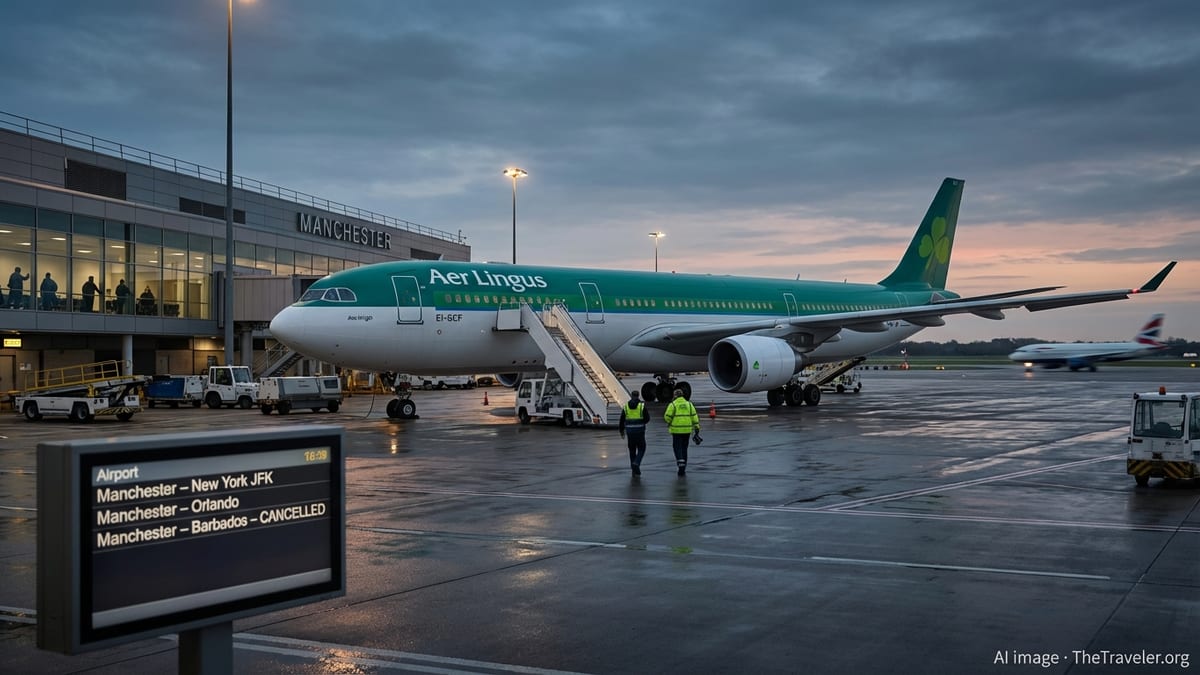
Passengers at Manchester Airport are facing another day of disruption as a series of delays and cancellations affects departures and arrivals across a range of European and domestic routes.
Get the latest news straight to your inbox!
Disruption builds across key routes
According to live flight information and published media coverage on 30 July 2026, Manchester Airport is seeing significant disruption across its morning and early afternoon schedule, particularly on short haul services into mainland Europe. Several flights to popular summer destinations, including Spain, Portugal and Greece, are either delayed by more than an hour or cancelled outright, with knock on effects for return legs later in the day.
Publicly available schedules indicate that low cost and leisure carriers are among the most affected, reflecting tight turnarounds at peak holiday season. When an outbound service departs late or is cancelled, the aircraft and crew for subsequent rotations are also thrown off schedule, contributing to a rolling pattern of disruption that can last for much of the operating day.
Operational data for the wider UK and European air traffic network suggests that weather related restrictions, air traffic control capacity issues and congested airspace over parts of western and southern Europe are combining to reduce punctuality. Once flow restrictions are in place, airports such as Manchester receive fewer landing and departure slots, and airlines must choose which flights to delay or cancel.
Today’s cancellations and heavily delayed flights
Based on Manchester Airport’s online departure and arrival boards on Thursday 30 July, the growing list of affected flights includes a cluster of early morning departures that either left significantly behind schedule or were removed from the programme. Cancellations are concentrated on certain sun routes, with some services to Spanish and Balearic airports, as well as a small number of domestic links, no longer operating as planned.
The arrivals board shows corresponding gaps where inbound aircraft have been cancelled at origin or diverted, alongside a series of services flagged with delays of 30 minutes to more than two hours. Some trans European flights that operated earlier in the morning are now arriving much later than timetabled, in turn delaying their next departures from Manchester.
A number of mid morning and lunchtime departures are posted with “delayed” status while airlines work through revised slot times allocated by air traffic control. In some cases, departure estimates have been revised multiple times, underscoring the fluid nature of the disruption and the difficulty for passengers trying to plan onward connections or ground transport.
Why Manchester is vulnerable to summer disruption
Manchester Airport’s own capacity and runway use documentation for the summer 2026 season shows that the airport runs a dense schedule in peak morning and evening periods, with high numbers of movements compressed into relatively short windows. Once a weather or air traffic control restriction is applied, there is little slack in the system to absorb delays without impacting a wide range of services.
Industry data compiled over recent seasons indicates that Manchester regularly features among the UK airports with higher average delay minutes, in part due to its role as a major base for several low cost and holiday airlines that concentrate departures at popular times of day. When fleets are tightly scheduled and aircraft operate multiple rotations per day, disruption early in the schedule can cascade through the network.
Air traffic management reports for Europe this summer highlight recurring bottlenecks over key hubs and busy airspace sectors, especially during spells of stormy or very hot weather. Even when conditions over Manchester itself remain relatively benign, restrictions placed on routes into Mediterranean airspace, or on approach paths to crowded southern European airports, can still trigger ground delays and cancellations for services originating in the northwest of England.
Advice for affected passengers
Consumer guidance from aviation regulators and travel bodies stresses that passengers flying from Manchester today should monitor their flight status closely through airline apps, text alerts and the airport’s own departure and arrival pages. Because estimated departure times can change at short notice, travellers are advised not to assume that an early delay estimate will remain accurate throughout the day.
For cancelled flights, travellers booked on services departing from or arriving into Manchester with UK or EU airlines may have entitlements to rerouting, refunds and, in some circumstances, compensation under air passenger rights rules. However, eligibility can depend on the stated cause of the disruption, and claims processes typically require passengers to retain booking confirmations and any written notifications issued by their airline.
Travel industry commentators also recommend allowing extra time for security, check in and baggage drop during periods of disruption, as queues can lengthen when multiple flights are retimed or consolidated. Passengers with tight connections at onward hubs are encouraged to speak directly with their airline’s customer service channels as early as possible to explore rebooking options if their Manchester departure is significantly delayed.
How long the disruption may last
Operational patterns at Manchester Airport in previous summers suggest that once a morning wave of delays and cancellations has taken hold, it can take much of the rest of the day for schedules to recover, particularly when aircraft and crew are out of position. Even if the immediate cause of the disruption, such as a weather system or temporary air traffic control restriction, is resolved, the logistical challenge of resetting rotations can extend well into the evening.
Published commentary from aviation analysts notes that airlines and airports across Europe are already operating near maximum capacity for the peak holiday period, leaving limited margin to add extra flights or spare aircraft to clear backlogs. As a result, passengers using Manchester over the coming days may continue to see higher than usual levels of late running, even if the number of outright cancellations falls.
Travellers due to fly later this week are being advised by travel agents and consumer groups to build flexibility into their plans where possible, including checking in early, ensuring that contact details with airlines are up to date, and considering travel insurance policies that cover missed connections and extended delays. While the full list of affected flights will continue to evolve throughout the day, it is clear that Manchester Airport is once again under pressure as the summer travel peak reaches its height.