


More news on this day
Passengers flying through Miami International Airport this week are contending with longer lines, rolling delays and scattered cancellations after an Amazon-branded cargo jet overran a runway on September 6, killing five people and briefly triggering a full ground stop.
Get the latest news straight to your inbox!
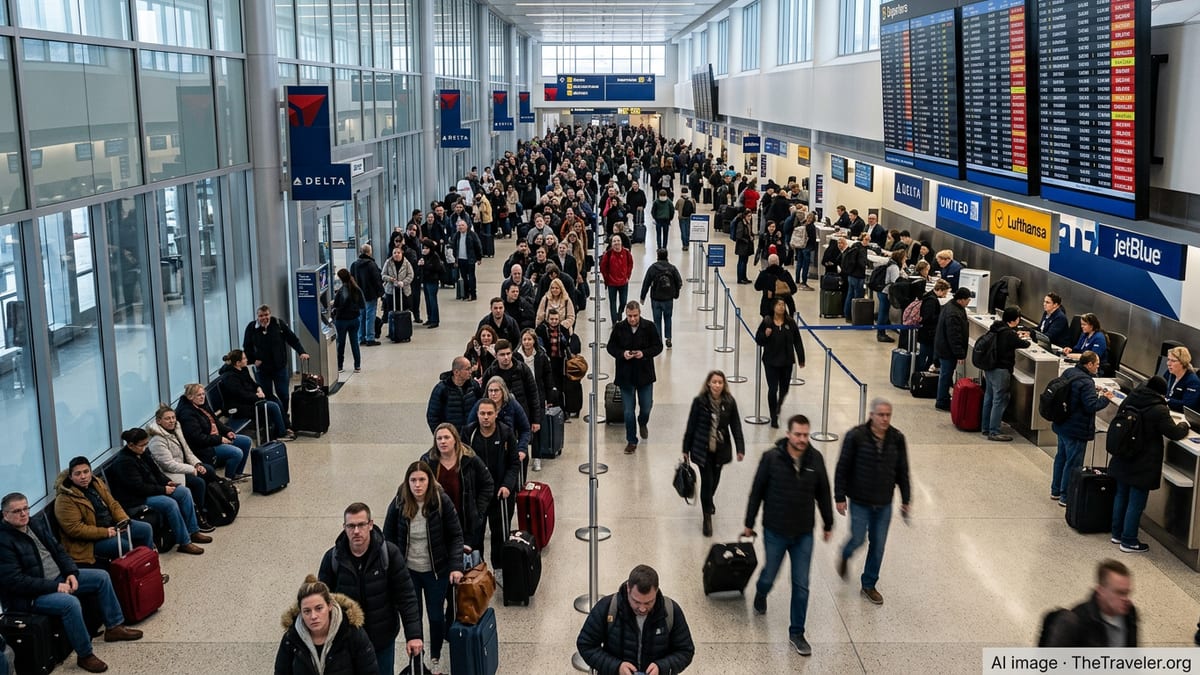
Runways restricted as investigators work crash site
The Boeing 767 freighter operating as a Prime Air flight overshot runway 30 at Miami International Airport on Sunday, September 6, and came to rest beyond airport property after striking vehicles near cargo and warehouse areas. Published accounts indicate five people in two vehicles were killed and several others were injured when the jet left the paved surface and caught fire at the edge of the airfield.
Initial reports describe the incident as a runway excursion that began during landing shortly before 2 p.m. local time. Airport activity was halted for a period as emergency crews responded and federal investigators arrived, creating a temporary ground stop that paused both departures and arrivals. Subsequent updates indicate that two of Miami’s four runways remained closed into early week while teams documented wreckage and assessed pavement and safety areas.
By Tuesday evening, publicly available information showed that a third runway had been returned to service, but the runway involved in the crash and adjacent safety zones remained restricted while the damaged aircraft and debris field stayed in place. That configuration has reduced Miami’s normal capacity at a time when the hub typically handles hundreds of daily flights across domestic and international networks.
The crash is one of the most serious cargo accidents at Miami International Airport in recent years, a facility that serves as a major freight gateway for Latin America and the Caribbean in addition to its role as a passenger megahub. With the investigation still in its early stages, travelers are feeling the impact most directly in the form of schedule disruptions and crowding.
Delays and cancellations ripple through passenger schedules
Local broadcast and national outlets report that hundreds of flights have been delayed or canceled since the crash, particularly on Monday and Tuesday as airlines adjusted to limited runway access and shifting departure slots. At one point early in the week, data cited in regional coverage showed more than 300 flights affected in a single day, including both departures from Miami and inbound flights forced into late arrivals or diversions.
Publicly available flight-tracking information indicates that average departure delays fluctuated through the day, with the heaviest congestion in the morning and early afternoon as overnight backlogs met reduced capacity. Some airlines consolidated frequencies on busy domestic routes, while others swapped to larger aircraft on fewer flights to move similar passenger totals using fewer takeoff and landing slots.
Travelers connecting through Miami reported on social media that same-day misconnects became more common, with tight connections particularly vulnerable when taxi-out times increased and arriving aircraft were held in sequencing patterns. Carriers have been rebooking affected passengers where possible, but high late-summer demand has limited open seats on alternative flights to popular destinations in the Caribbean, Central America and major U.S. hubs.
Although operations have improved compared with the immediate aftermath of the accident, disruption patterns continue to change throughout the day. Passengers booked through Miami over the coming days are being urged in public advisories and media coverage to monitor flight status frequently and to plan extra time for check-in, security and potential gate changes.
What connecting passengers should check before flying through Miami
For travelers with upcoming itineraries that pass through Miami, the most important step is to confirm flight status directly with their airline on the day of travel and again before heading to the airport. Same-day schedule changes, aircraft swaps and gate reassignment are more likely while one of the field’s main runways remains unusable and work continues near the crash site.
Published airport and airline guidance also highlights the value of allowing longer connection windows when options exist. Passengers who can choose later onward flights or accept slightly longer layovers may have a better chance of making their connections if departures from the origin airport are delayed by congested departure queues in Miami. Those starting trips at Miami are being advised to arrive earlier than usual, especially during peak morning and evening banks.
Travelers should also be prepared for changes at security checkpoints and curbside areas if airport authorities temporarily reroute foot and vehicle traffic around parts of the airfield and road network near the crash investigation. Even if terminal entrances remain open as usual, the combination of displaced vehicles, crowded check-in counters and rebooked passengers can slow movement through the building.
Passengers with tight schedules, such as cruise departures from nearby PortMiami or same-day business meetings, may want to build in additional buffers or consider whether alternative routings through other hubs are viable until Miami’s runway configuration returns fully to normal.
Why a cargo-plane accident disrupts passenger travel
Although the overrun involved a cargo aircraft, the effect on passenger operations stems from how much runway capacity Miami requires on a typical day. Miami International Airport regularly ranks among the busiest U.S. airports by passenger volume and is also a top cargo hub, meaning its four-runway configuration is heavily used during peak periods. When one runway is out of service and a second is partially restricted, air traffic controllers must meter departures and arrivals more conservatively.
Industry analyses note that runway excursions can leave debris, fuel residue and structural damage beyond the paved surface, which must be documented and eventually repaired before full use resumes. In Miami’s case, reports show that the 767 came to rest in a field beyond the end of the runway after crossing roads and fences, complicating the clean-up and forensic work required for a safety investigation.
Every takeoff and landing also needs spacing for wake turbulence and approach sequencing, leaving fewer available slots per hour when fewer runways are active. Even though cargo flights typically operate at off-peak times, removing a runway from service compresses traffic onto the remaining surfaces and can trigger cascading delays whenever storms, visibility issues or aircraft maintenance problems arise.
Miami’s role as a primary connecting point between North America and Latin America magnifies the effect. A delay on one morning departure can strand passengers trying to reach smaller regional airports that only have one or two flights per day, and missed connections can take a day or longer to resolve if alternative routings through other hubs are limited or sold out.
How long impacts may last and what to watch next
Federal safety investigators have released initial summaries of flight data suggesting the crew attempted to initiate a go-around before continuing the landing, but a final report on the cause of the crash is expected to take months. In the short term, the pace of operational recovery at Miami will depend on how quickly the disabled aircraft can be removed from the end of the runway and when specialists clear the surrounding area for repair and reopening.
Local reporting indicates that as of midweek, two runways are handling most of the passenger schedule while a third is gradually returning to normal use. Once the accident runway is fully reopened, airlines are likely to rebuild normal patterns of departures and arrivals, which should significantly reduce the risk of extended delays and large waves of cancellations.
In the meantime, prospective travelers can watch several indicators to gauge how conditions are evolving. These include same-day delay statistics published by flight-tracking services, advisories posted on the airport’s website and social channels, and alerts from individual airlines about travel waivers or change-fee flexibility for Miami-bound itineraries.
Those holding tickets in the coming days are encouraged by public-facing guidance to stay flexible, check in early online, and enable notifications in airline apps so that any last-minute schedule changes appear quickly. While the situation in Miami is gradually stabilizing, the lingering runway restrictions after the cargo-jet crash mean that flying through the airport may remain less predictable than usual in the near term.
CBS Miami coverage of delays and cancellations after the crash
Local10 report on runway closures and ongoing disruptions
FreightWaves analysis of the cargo-jet accident and impact on operations