


More news on this day
Amsterdam Airport Schiphol is experiencing another spell of significant delays, with recent security bottlenecks and ongoing operational constraints contributing to a challenging start to the busy summer travel period.
Get the latest news straight to your inbox!
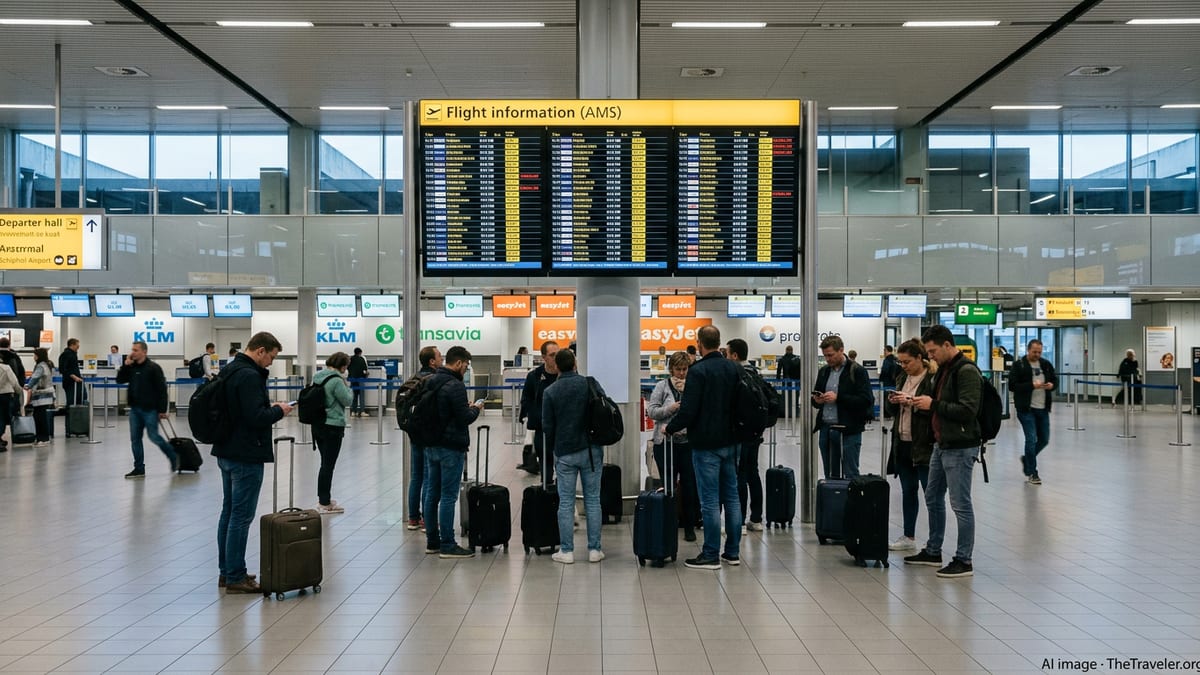
Security Transition Triggers Fresh Wave of Queue Disruptions
Recent coverage from Dutch media highlights that a transition to a new security provider at Amsterdam Airport Schiphol in mid May has led to extensive queues at departure checkpoints and knock on delays. Reports indicate that on one day alone in that period, well over a third of all departing flights left late as screening lanes struggled to keep up with passenger volumes.
Accounts from the same coverage describe passengers waiting well over an hour at security, with some ultimately missing their flights. Publicly available information points to a combination of staff shortages and technical issues with new systems on the first days of the changeover, which had a cascading effect throughout the day’s schedule.
Airport communications since then have stressed efforts to stabilize operations, but live flight tracking and passenger reports still show pockets of disruption at peak times. Early morning and late afternoon banks of departures appear to be most affected, particularly on popular European leisure routes operated by major carriers and low cost airlines.
Travel analysts note that security bottlenecks have been a recurring vulnerability for Schiphol since the post pandemic rebound in demand. The latest issues suggest that even well planned contractor transitions can quickly translate into operational strain when margins are tight and passenger numbers are high.
Ongoing Ripple Effects from Winter Weather and Technical Hiccups
The current delays come on the heels of a difficult winter for Amsterdam Schiphol, when severe storms and snow led to mass cancellations and heavy backlogs. Public summaries of the January weather pattern describe hundreds of flights cancelled or delayed over several days as airlines scaled back schedules and airfield operations slowed.
Operational reports from European air traffic bodies also show that Schiphol faced additional stress in February, when a ground radar issue generated thousands of minutes of air traffic flow management delay. While these specific incidents have long since been resolved, they contributed to congestion in crew rotations and aircraft positioning that can resurface as tight connections later in the year.
Industry observers point out that large hub airports often feel the effects of such shocks for months. Irregular operations in winter can leave airlines with thinner buffers in aircraft availability and crews reaching duty time limits more quickly when further disruptions occur. As a result, relatively small new problems, such as the recent security transition, can trigger outsized knock on delays.
Amsterdam Schiphol’s position as one of Europe’s busiest transfer hubs magnifies this effect. A delay on a short haul feeder flight into the airport can cause late departures on long haul services, prompting missed onward connections and last minute rebookings across the network.
Runway Works and Capacity Management During the Summer Season
In addition to security and weather related challenges, Schiphol is operating through a structured capacity management regime for the summer 2026 season. A published capacity declaration for the IATA summer period sets specific hourly limits for arrivals and departures, with additional constraints in place for certain weeks in May and early June while infrastructure work and air traffic flow measures are underway.
Separate information from Dutch media notes that one of the airport’s key runways, the Polderbaan, has been undergoing periods of maintenance this spring. When that runway is unavailable, traffic must be redistributed to other runways, which can reduce flexibility in managing peak waves of flights and increase the likelihood of airborne holding or ground delays during busy periods.
These capacity parameters do not always translate directly into cancellations, but they do limit the ability of air traffic control and airlines to recover quickly from even minor disruptions. If a morning bank of departures is held at the gate due to low clouds or a brief technical issue, the constrained runway availability can make it harder to clear the backlog before the next wave of flights.
For travelers, this structured but tight operating environment means that even on days without a headline making incident, moderate delays of 30 to 60 minutes are possible, particularly on short haul routes scheduled during peak hours.
Ground Transport and Connection Times Add to Passenger Stress
Delays at Amsterdam Schiphol are not limited to aircraft movements. Rail and road access form a key part of the airport’s connectivity, and any disruption here can increase overall journey times and the risk of missed flights. Dutch timetable archives for early June show dense train traffic to and from Schiphol, but past events such as infrastructure works and busy travel weekends have occasionally reduced frequencies or increased crowding on key links to Amsterdam and other cities.
Passengers connecting between air and rail at Schiphol therefore face multiple points where minor holdups can accumulate. A slightly late arriving intercity service followed by a longer than expected security queue can erase what previously looked like a safe connection window. This is particularly relevant for travelers relying on tight self made connections between low cost flights and long distance train services.
Travel information providers that monitor real time delays advise allowing more buffer time at major hubs, and recent patterns at Schiphol suggest this guidance is especially relevant at present. Arriving earlier provides a margin not only for airport security and passport control, but also for potential crowding on station platforms and at check in areas during busy departure waves.
While the rail network around Schiphol is generally resilient, the combination of airport specific issues and national rail disruptions observed in past years illustrates how intertwined the two systems are. When both experience strain at the same time, the impact on the passenger experience can be considerable.
What Travelers Using Amsterdam Schiphol Should Expect Now
Publicly available flight data for early June indicates that Amsterdam Schiphol continues to handle a high volume of traffic, with the majority of flights operating, but with a noticeable share affected by minor to moderate delays. Recent days have also seen isolated cancellations on various carriers, particularly in the late evening, reflecting the cumulative impact of earlier schedule disruptions.
Air passenger rights organizations tracking Amsterdam departures in early June list several cancelled flights and a longer list of delayed services that may qualify for compensation in certain circumstances under European regulations. The pattern suggests that, while large scale meltdowns have been avoided in recent weeks, a steady drumbeat of smaller disruptions remains part of the travel landscape at the airport.
Travelers planning to pass through Schiphol in the coming days are therefore likely to encounter longer queues at busy times, potential gate changes and some departure delays, especially on peak holiday routes. Industry observers recommend monitoring airline notifications closely on the day of travel, building generous buffer times between connections and considering earlier departures from city centers to account for both rail and airport congestion.
With the summer travel season gathering pace, the focus at Amsterdam Schiphol will remain on stabilizing security operations, managing runway capacity and rebuilding resilience after a turbulent winter. For now, passengers can expect a functioning but finely balanced hub where extra time and flexibility continue to be essential.