


More news on this day
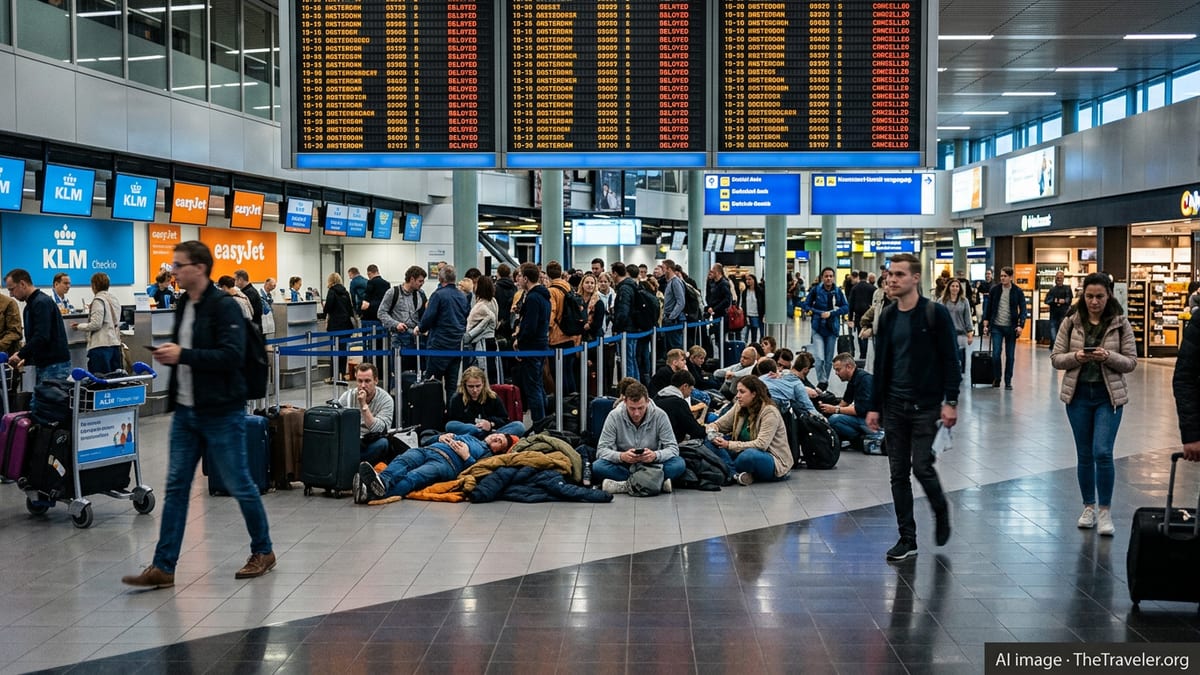
Travel through Amsterdam Schiphol faced significant disruption on Saturday as 13 flights were cancelled and at least 73 delayed, stranding passengers on busy routes to and from Geneva, Berlin and a number of long haul destinations served by major global carriers.
Get the latest news straight to your inbox!
Major Carriers Hit on Key European and Long Haul Routes
Publicly available flight information for Amsterdam Schiphol on 6 June shows a cluster of cancellations and extended delays affecting services operated by Air France, KLM, British Airways, Cathay Pacific, Qatar Airways, American Airlines, Emirates and partner carriers. The disruption is concentrated on intra-European links to Geneva and Berlin, as well as connecting long haul routes that rely on Schiphol as a transfer hub.
Schedules indicate that several departures and arrivals linking Amsterdam with Geneva and Berlin were either cancelled outright or subject to multi hour delays, with follow on effects for passengers connecting to North America, the Middle East and Asia. The affected airlines represent a mix of alliance partners and codeshare operators, intensifying the knock on impact across global networks.
Real time trackers and airport information boards list a total of 13 cancelled flights at Schiphol during the day, alongside more than 70 services showing delay notifications ranging from minor timetable slippage to extended wait times. The combination has left passengers facing long queues at transfer desks and customer service points as they seek rebooking options.
Amsterdam Schiphol functions as one of Europe’s most important transfer hubs for KLM and its partners, and also as a key station for carriers such as Emirates, Qatar Airways, Cathay Pacific, British Airways and American Airlines. Disruption at the Dutch hub therefore ripples quickly across onward connections to London, Paris, the Gulf region, North America and major Asian gateways.
Schiphol’s Role as a Critical European Hub
Data compiled from aviation reference sources highlights the central role of Amsterdam Schiphol in European and intercontinental travel. The airport consistently ranks among the continent’s busiest hubs, linking cities such as London, Paris, Berlin and Geneva with long haul destinations served by carriers including KLM, Air France, Emirates, Qatar Airways, American Airlines and Cathay Pacific.
Geneva and Berlin are particularly important short haul destinations for Schiphol based travelers, serving both as origin and destination markets and as feeders into extensive long haul networks. Regular services connect Amsterdam with Geneva’s international and diplomatic community, while Berlin Brandenburg links the Dutch hub to Germany’s capital and a growing tech and start up ecosystem.
Schiphol’s status as a key transit point means that even a limited number of cancellations and delays can have an outsized effect. When a cluster of flights on routes such as Amsterdam Geneva or Amsterdam Berlin is disrupted, passengers may miss onward services to North America, the Middle East or Asia. This can trigger a chain reaction of rebookings, last minute accommodation needs and baggage handling challenges.
The latest wave of disruption adds to a pattern of periodic operational strain seen at major European hubs, where tightly timed schedules leave little margin for error. As airlines rebuild networks and increase frequencies, congestion, staffing constraints and weather related issues can quickly translate into tables of red and orange on airport departure boards.
Passenger Impact: Missed Connections and Overnight Stays
Reports shared by travelers and reflected in flight status updates indicate that many passengers found themselves stranded in Amsterdam or at outstations such as Geneva and Berlin as a result of the cancellations and extensive delays. Missed connections have been a particular concern for those traveling on multi leg itineraries that rely on precise transfer windows at Schiphol.
For some passengers, a cancelled segment between Amsterdam and Geneva or Berlin meant losing their onward long haul flight to destinations in North America, the Gulf or Asia. Rebooking options on the same day were limited in certain cases, given high load factors on weekend services operated by airlines such as KLM, Air France, British Airways, Qatar Airways, Emirates, American Airlines and Cathay Pacific.
Travelers faced a familiar set of challenges: long queues at airline service counters, uncertain connection times, and difficulties obtaining clear information on revised itineraries. Those whose flights were cancelled or delayed beyond several hours often needed overnight accommodation and meal arrangements, adding to congestion at nearby hotels and airport facilities.
European Union passenger rights rules provide a framework for assistance and, in some circumstances, financial compensation when flights are heavily delayed or cancelled, depending on the cause of the disruption and the operating carrier. Publicly accessible guidance from airlines such as KLM, Air France, British Airways, Emirates, Qatar Airways and American Airlines advises affected travelers to retain boarding passes and receipts, and to submit claims once their journey is complete.
How Airlines Are Managing Rebookings and Care
Airlines involved in the disruption have standing policies for handling irregular operations, and published information suggests these procedures are being applied to the current situation. Carriers such as KLM, Air France, British Airways, Qatar Airways, Emirates, American Airlines and Cathay Pacific direct passengers to manage their bookings through airline apps, official websites and customer service centers.
Digital self service tools allow many travelers to select alternative flights, request date changes or opt for refunds where applicable. At the same time, staff at Schiphol and at affected outstations have been working to re accommodate customers whose itineraries include disrupted Amsterdam legs, particularly those with critical onward connections or time sensitive travel plans.
Frequent flyer and alliance arrangements can offer additional flexibility, enabling some passengers to be rerouted on partner airlines where seat availability exists. For example, travelers on disrupted Amsterdam services may be rebooked on alternative routings via other European hubs if this provides a faster way to reach their final destination.
However, limited spare capacity during peak travel periods means not every traveler can be accommodated on the same day. For those facing overnight stays or extended waits, airlines generally provide assistance in line with their published policies, including hotel vouchers and meal support where required by local regulations and internal guidelines.
What Affected Travelers Should Do Next
Publicly available guidance suggests that passengers whose flights to or from Amsterdam Schiphol have been cancelled or significantly delayed should first verify the latest status of their journey using official airline channels before heading to the airport. Flight status pages and mobile applications from carriers including KLM, Air France, British Airways, Qatar Airways, Emirates, American Airlines and Cathay Pacific are updated frequently as operational plans evolve.
Travelers already at Schiphol or at outbound airports such as Geneva and Berlin are encouraged by airline advisories to check in with customer service teams as soon as possible if their connection has been missed or their flight cancelled. Early contact increases the chances of securing available seats on alternative services or identifying new routings through other hubs.
Passengers may wish to keep detailed records of disruption related expenses such as meals, ground transport and accommodation, as these can be relevant when submitting claims under airline policies or European passenger rights regulations. Many carriers offer online claim forms, and some also provide dedicated channels for feedback related to service disruptions.
With Amsterdam Schiphol expected to remain busy throughout the current travel period, observers note that travelers may benefit from building additional buffer time into itineraries involving tight connections, especially when transferring between Schengen and non Schengen flights. Monitoring flight status closely in the hours before departure can also help passengers adjust their plans if further schedule changes occur.