


More news on this day
Hundreds of travelers across the Middle East have faced missed connections and overnight disruptions this week as a cluster of 66 flight cancellations and 611 delays rippled through Dubai International and other key regional airports, according to live tracking data and regional media reports.
Get the latest news straight to your inbox!
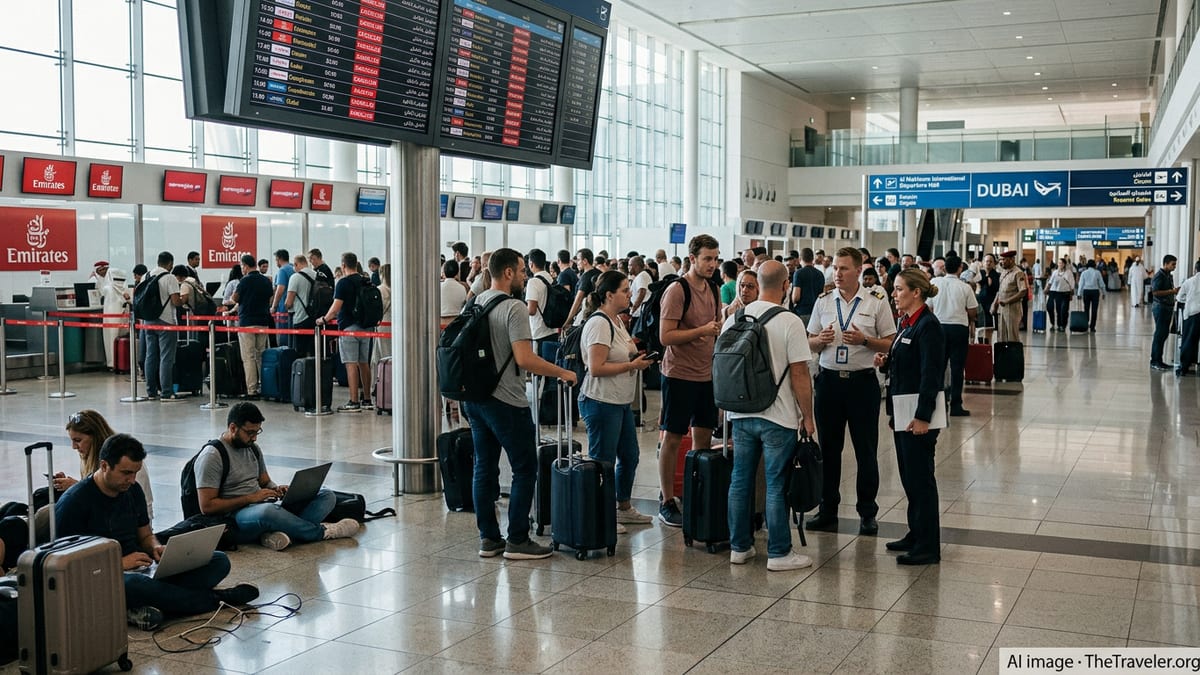
Dubai Disruptions Ripple Across the Region
Flight-status dashboards and third-party aviation trackers show an elevated level of disruption at Dubai International (DXB) over recent days, with a spike in late-running departures and cancellations compared with typical summer operations. Aggregated performance data for August 2026 indicate that DXB has seen several days with double-digit cancellations and average departure delays pushing beyond 30 minutes, far higher than its usual on-time metrics.
One independent analysis of DXB performance across August shows a run of particularly difficult days between August 18 and August 22, when cancellations repeatedly climbed into the high single and low double digits while average delays stayed firmly in the “late” category. On some of those days, more than 20 flights were removed from the schedule while departure delays stretched beyond 40 minutes on average, underscoring how quickly operational pressure can build at one of the world’s busiest hubs.
Overlaying those airport-level trends with broader regional reporting suggests that the current pattern of 66 cancellations and 611 delays is not confined to Dubai alone. Airlines using Abu Dhabi, Sharjah and other Gulf airports have also reported irregular operations on selected routes, meaning passengers are feeling the impact well beyond a single hub.
For travelers, the effect has been tangible: longer check-in lines, rebooking queues and missed onward connections, especially for those relying on tight transfer windows at DXB and nearby airports.
Regional Tensions and Airspace Constraints Add Pressure
Published coverage from UAE-based outlets in recent days has highlighted a mix of operational and geopolitical headwinds weighing on Middle East aviation. Airlines including Emirates, Etihad, Air Arabia and flydubai have reported a combination of cancellations, delays and rerouted flights on specific services as they respond to shifting advisories and a fluid security picture across parts of the region.
Publicly available information points to several routes being particularly vulnerable, including services touching Israel, Bahrain and Kuwait, where last-minute schedule changes and at least one airport-related industrial action have forced adjustments. While many flights continue to operate, even isolated route suspensions can cause aircraft and crew to be out of position, contributing to knock-on delays elsewhere in the network.
These stresses come as carriers are operating near peak summer capacity. With fleets heavily utilized and spare aircraft limited, any extended ground hold, airspace restriction or diversion has the potential to reverberate through schedules and add to the growing tally of delayed services.
Aviation analysts note that when airspace corridors are constrained or rerouted for security reasons, flights must sometimes take longer paths around affected areas. That can lengthen flight times, disturb carefully timed bank structures at major hubs and add further complexity for airlines and air traffic managers already dealing with dense traffic flows over the Gulf.
How 66 Cancellations and 611 Delays Translate for Passengers
In practical terms, a combined disruption count of 66 cancellations and 611 delays across Dubai and other Middle Eastern airports in a short window can affect many hundreds, if not thousands, of passengers. Even a single cancelled widebody service from DXB can displace several hundred travelers, while late-running regional flights can cause cascading missed connections onto long-haul departures.
Airport analytics for August 2026 show DXB handling well over 500 departures per day on average, with dozens of airlines feeding into its global network. On days when cancellation numbers jump into the twenties or thirties and delays climb into triple digits, the proportion of disrupted services becomes significant enough to strain customer-service desks, baggage systems and lounge capacity.
For those transiting through Dubai, Abu Dhabi or Sharjah, the greatest vulnerability lies in short minimum connection times. When departure banks are pushed back by 30 minutes or more, passengers connecting onward to Europe, North America or Asia may arrive too late to board their next flight, forcing airlines to rebook them onto later services or, in some cases, arrange hotel accommodation.
Travelers originating in the Gulf are also being advised through public channels to arrive earlier than usual at the airport, complete online check-in when possible and monitor flight-status pages closely on the day of departure. Such guidance reflects an awareness that schedules can still change at relatively short notice while the regional situation remains unsettled.
Operational Recovery at Dubai as Peak Season Continues
The current disruption comes at a time when Dubai International is otherwise reporting a strong operational rebound for 2026. Recent traffic updates from airport operators highlight that DXB welcomed more than 31 million passengers in the first half of the year as airline capacity continued to return and demand strengthened following a period described as one of the most challenging operating environments in its history.
Investment in terminal infrastructure, technology and airfield capacity has been positioned as a way to make the hub more resilient to irregular operations. This includes expanded use of self-service options, more efficient security and border-control processes, and closer coordination with airlines on schedule planning during peak bank periods. Those measures can help the airport absorb a certain level of disruption, but the latest sequence of cancellations and delays shows that even a well-prepared hub can be pushed when external shocks coincide with busy travel periods.
For now, daily delay statistics suggest a mixed picture. Some August days at DXB have recorded relatively modest average delays and low cancellation counts, while others have seen more severe spikes. That variability underlines how quickly conditions can change and why live data sources remain essential for travelers trying to gauge the risk of disruption on specific dates.
As the summer peak eases into the shoulder season, airlines and airport operators around the Gulf are likely to prioritize schedule stability and on-time performance to restore passenger confidence after the latest wave of irregular operations.
What Travelers Should Watch in the Coming Days
While airlines and airports are working to normalize schedules, travelers planning to pass through Dubai and neighboring hubs in the coming days may still face pockets of disruption. Regional media reports emphasize that tensions affecting certain airspace corridors remain fluid, and air-traffic control advisories can change with limited notice, potentially impacting flight routings and departure slots.
Passengers with itineraries involving tight connections, overnight transfers or routes touching politically sensitive destinations are advised, through publicly available guidance, to pay particular attention to airline notifications. Many carriers in the region are encouraging customers to update contact details, enable app alerts and check flight status repeatedly in the 24 hours before departure.
For those already caught up in the recent wave of 66 cancellations and 611 delays, standard passenger rights frameworks and airline policies determine what support is available. Depending on the carrier, cause of disruption and applicable jurisdiction, this can range from meal vouchers and hotel stays to rebooking on alternative services. Travelers are being urged by consumer advocates and travel advisors to retain boarding passes and booking confirmations to simplify any later claims or insurance filings.
With demand for Middle East travel still strong and hubs like Dubai reporting robust growth for 2026, industry observers expect airlines to remain focused on restoring punctuality as quickly as conditions allow. Until then, flexible planning and close attention to real-time information remain key tools for anyone flying through the region.
Sources: AeroCorner Dubai International airport performance data; WhichTerminal August 2026 Dubai cancellations overview; Gulf News coverage of UAE flight delays and cancellations; Dubai Media Office traffic update for DXB