


More news on this day
A blast at Riyadh’s King Khalid International Airport on October 10 injured several people, forced partial evacuations and led to widespread flight disruption as governments updated travel warnings for Saudi Arabia’s capital.
Get the latest news straight to your inbox!
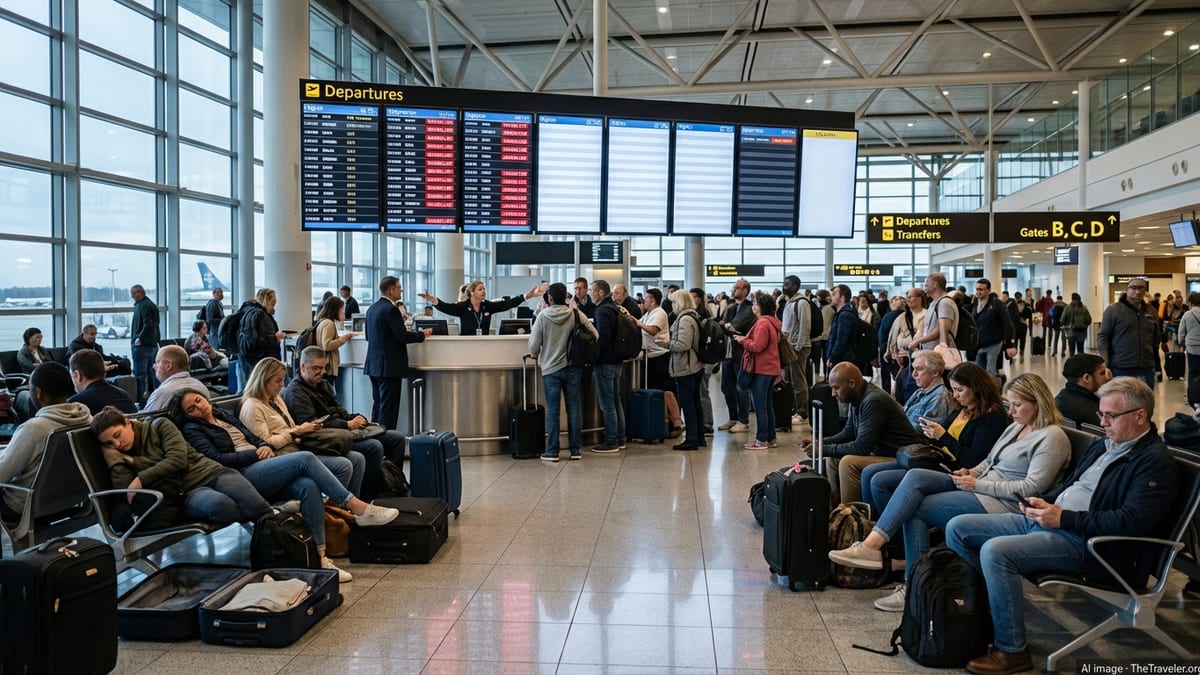
Blast at King Khalid International Airport
Reports from Riyadh describe a loud explosion at King Khalid International Airport on Saturday, October 10, followed by scenes of confusion as emergency vehicles converged on the site. Witness accounts compiled in international coverage indicate that more than a dozen ambulances were sent to the airport and that several people were seen lying injured inside the terminal after the blast.
The incident occurred during an already tense week for air travel in Saudi Arabia, with the airport targeted multiple times in recent days. Earlier attacks this week reportedly killed several people and damaged aircraft on the ground, contributing to heightened security measures around the capital’s main gateway.
Initial reports from regional and international media outlets describe injuries consistent with blast damage, though the full extent of casualties has not yet been clarified in publicly available information. Coverage from outlets following the incident notes that officials in the kingdom had not immediately provided detailed figures, leaving airlines and travelers dependent on eyewitness testimony, airport alerts and foreign travel advisories.
The explosion forms part of a wider pattern of missile and drone strikes linked to the conflict involving Yemen’s Houthi movement and regional powers. Publicly available reports over recent days have documented repeated attacks on infrastructure in Saudi Arabia, including multiple incidents at or near Riyadh’s airport.
Evacuation inside the terminal and on the airfield
Shortly after the blast, passengers in parts of King Khalid International Airport were instructed to leave the affected areas, according to accounts carried by regional news outlets. Some travelers described being moved away from gates and waiting areas, while others reported being held temporarily in secure sections of the terminal as security checks were carried out.
Images and descriptions in published coverage show ambulances positioned outside terminal buildings and on access roads, suggesting that emergency responders were preparing for both on-site treatment and possible transfers to hospitals in the city. Reports also indicate that sections of the airfield were cleared while security teams assessed whether there was ongoing risk from unexploded ordnance or secondary devices.
Flight operations were quickly curtailed. Flight-tracking data cited in international reports showed incoming aircraft diverting away from Riyadh and numerous departures listed as canceled or delayed. In some accounts, only a single helicopter was recorded operating in the immediate airspace for a period after the blast, underscoring the scale of the shutdown.
Passengers already in the terminal faced long waits and limited information. Publicly accessible airport alerts advised travelers to monitor their flight status with airlines before coming to the airport and to expect disruption across domestic and international routes serving the Saudi capital.
Airline cancellations and route adjustments
The blast and the broader security situation prompted several airlines to suspend services to Riyadh, compounding delays for passengers transiting through one of the Gulf’s key aviation hubs. Coverage of the incident notes that carriers including Etihad Airways and Qatar Airways canceled multiple flights between their hubs and Riyadh, with some disruptions extending into the start of the new week.
These steps followed an earlier wave of suspensions and rerouting decisions after missile attacks on the airport earlier in the week. According to publicly available scheduling information, some airlines had already reduced frequencies or temporarily halted operations into the Saudi capital in response to rising security concerns and previous damage to aircraft on the ground.
Additional regional carriers, including Kuwait Airways, publicly confirmed changes to their operations, describing the airport as effectively closed during the immediate aftermath of the latest blast due to what was termed the prevailing security situation. This created knock-on effects for connecting passengers using Riyadh as a transit point to Asia, Europe and other parts of the Middle East.
Industry analysts quoted across several outlets note that repeated disruptions at a major hub can quickly affect wider network reliability, with aircraft and crew displaced from their scheduled rotations. For travelers, this has translated into longer journeys, unexpected layovers and, in some cases, the need to rebook entirely different routings to avoid Saudi airspace.
Escalating regional conflict and airport targeting
The incident at King Khalid International Airport is the latest in a series of attacks linked in public reporting to Yemen’s Iran-aligned Houthi movement. Over recent days, the group has claimed responsibility for strikes aimed at the Saudi capital, including ballistic missile or drone attacks that have repeatedly targeted the airport complex.
International and regional media coverage points to a pattern of attacks on airports and civilian infrastructure across southern and central Saudi Arabia, including previous incidents at Abha airport and Riyadh that left several people dead and injured. Analysts note that strikes on aviation facilities are intended both to disrupt logistics and to send a political signal at a time of heightened tensions across the region.
Statements attributed to the Houthis in publicly available reports have warned airlines to avoid Saudi airspace, describing it as an area of military operations. Such declarations, combined with the practical risk from missiles and drones, have prompted some carriers to reconsider routing and overflight decisions, even on services that do not land in Saudi Arabia but pass nearby.
The escalation has occurred alongside other regional flashpoints and diplomatic efforts, raising concerns among travel and security experts about the potential for further disruptions. Observers following the conflict note that the combination of high-profile attacks and upcoming international conferences in Riyadh creates additional pressure on authorities to demonstrate that security can be maintained.
Travel warnings and guidance for passengers
Following the series of attacks on Riyadh’s airport, foreign ministries and consular services have begun updating advice for travelers to Saudi Arabia. Some governments now formally highlight the risk of missile and drone attacks on airports and other infrastructure, urging citizens to pay close attention to local security alerts and commercial flight information.
The United Kingdom’s latest travel advice for Saudi Arabia, updated in October, warns against all but essential travel to parts of Riyadh province and other regions due to the security situation and notes the potential for further attacks. The United States maintains a standing advisory that emphasizes the risk of terrorism and missile or drone strikes, encouraging travelers to remain alert in public spaces and transportation hubs and to ensure that their travel insurance includes medical evacuation coverage.
For travelers already in Riyadh or planning to transit through King Khalid International Airport, publicly available guidance from embassies and airlines stresses the importance of checking flight status frequently, staying in close contact with tour operators or corporate travel departments, and allowing additional time to reach the airport in case of road closures or heightened security checks.
Travel risk consultancies also recommend that passengers identify alternative routing options, such as connecting through other Gulf hubs, and maintain copies of key documents and emergency contact numbers in case of sudden evacuations or changes to airport access. Those with non-refundable tickets or complex itineraries may wish to review the disruption and force majeure clauses in their airline and insurance policies before departure.
With investigations into the latest blast still under way and the broader conflict unresolved, publicly available information suggests that further disruptions to air travel in and out of Riyadh remain possible. Travelers are being advised to treat official alerts, airline notices and government advisories as essential tools when planning or modifying journeys involving the Saudi capital.