


More news on this day
Thousands of passengers planning to travel from Mumbai to Delhi on October 10 found themselves stranded after multiple long-distance trains were cancelled or rescheduled in anticipation of severe traffic congestion and protests in the national capital.
Get the latest news straight to your inbox!
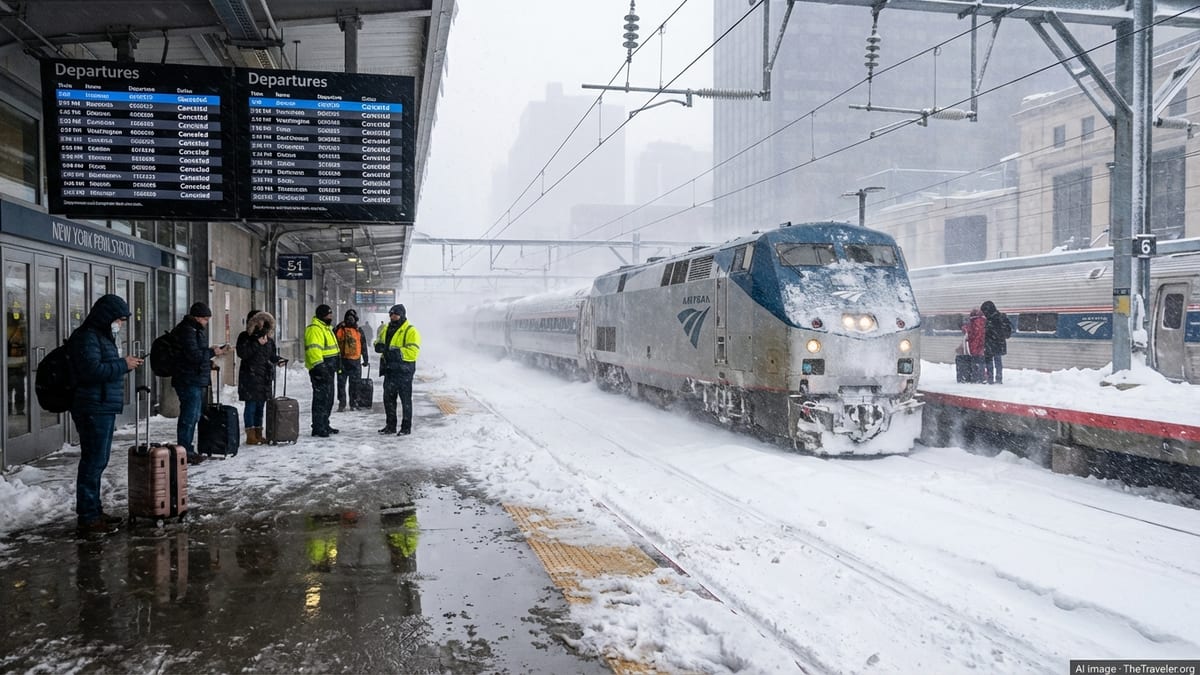
Widespread Disruptions on Key Mumbai–Delhi Routes
According to published coverage from Indian media on October 9 and 10, at least five Mumbai–Delhi express services were cancelled and two high-profile Rajdhani services were rescheduled by Western Railway and Central Railway. The affected services include key links between Mumbai Central, Bandra Terminus and Chhatrapati Shivaji Maharaj Terminus and New Delhi and Hazrat Nizamuddin stations.
Reports indicate that cancellations covered trains such as the Bandra Terminus–Hazrat Nizamuddin Express and several express services from Indore, Dr Ambedkar Nagar and Sabarmati that run via Mumbai, while the Mumbai Central–New Delhi Rajdhani Express and Mumbai Central–Hazrat Nizamuddin August Kranti Rajdhani Express were delayed by around five hours. Separate coverage from Mumbai has also highlighted the cancellation of the CSMT–Hazrat Nizamuddin Rajdhani Express, the sole Central Railway Rajdhani service from the city.
Indian Railways has also implemented a broader nationwide directive, cancelling all mail and express trains scheduled to arrive at New Delhi and Hazrat Nizamuddin between 4 a.m. and 2 p.m. on October 10. This has amplified the disruption for passengers starting their journeys not only in Mumbai but also in parts of Maharashtra, Madhya Pradesh and Uttar Pradesh whose trains connect to the capital within this time window.
Media summaries of railway data and advisories suggest that each affected long-distance train typically carries about 1,500 to 2,000 passengers, leading to estimates that over 5,000 ticketed travellers linked to Mumbai-originating or Mumbai-routed services have been caught up in the disruption.
Link to October 10 Protest and Traffic Concerns in Delhi
The cancellations and rescheduling come ahead of a large demonstration by the Cockroach Janata Party, or CJP, planned at Jantar Mantar in central Delhi on October 10. Publicly available traffic advisories for the capital warn of severe congestion and road closures around New Delhi Railway Station and Hazrat Nizamuddin, as well as restrictions on key approach roads during the morning and early afternoon.
Railway circulars cited in national media state that the mail and express trains arriving between 4 a.m. and 2 p.m. have been cancelled or adjusted due to the expectation of heavy road traffic near the two central stations. The concern highlighted in these reports is that passengers disembarking during this period might struggle to find taxis, app-based cabs, buses or other onward connections from the stations.
Additional restrictions in Delhi for October 10, including the closure of entry and exit gates at dozens of Delhi Metro stations and a visible increase in security deployment around central districts, are also referenced in press coverage. Together with the mainline train cancellations, these steps are expected to limit movement into the core of the capital throughout much of the day.
While the measures are framed in official notifications as a response to anticipated congestion and safety considerations, the scale of cancellations on intercity routes such as Mumbai–Delhi is being described in some transport commentary as highly unusual for a single day of political protest.
Stranded Travellers at Mumbai Terminals
On the ground in Mumbai, local coverage describes crowds of confused and frustrated passengers at major railheads including Mumbai Central, Bandra Terminus and CSMT. Many travellers arrived at the stations early on October 9 and 10 only to discover that their trains to Delhi had either been cancelled or significantly delayed.
Mumbai-based newspapers and broadcasters report that some passengers had booked their tickets months in advance to align with college start dates, medical appointments, job-related travel or family events in Delhi and the northern states. Others had planned leisure trips to combine sightseeing in the capital with an opportunity to witness the high-profile protest, only to have their plans unravel at the last minute.
Several accounts highlight that not all affected passengers received timely alerts through text messages or booking platforms before they left home. As a result, families and solo travellers from outlying districts around Mumbai, including Palghar and other suburban areas, made long local commutes to the city’s mainline stations before learning that their trains would not depart.
Videos and images shared on social media and referenced by Indian news outlets show long queues at ticket counters and enquiry windows, with passengers seeking clarity on revised schedules, refunds and alternative options to reach Delhi or nearby cities.
Refunds, Alternatives and What Passengers Can Expect
Public information shared by Western Railway and Central Railway through media reports indicates that passengers booked on cancelled trains are entitled to a full refund of their fares. For those who purchased tickets online, refunds are being processed automatically back to the original payment method through the IRCTC system, typically without the need for additional applications.
Travellers who bought tickets at Passenger Reservation System counters, however, are being advised in press briefings to visit these counters with their original tickets to claim their refunds or explore rebooking options. Given the high demand on the Mumbai–Delhi corridor and beyond during the festive and travel season, availability on alternative trains in the next few days may be limited.
For passengers whose trains have been rescheduled instead of cancelled, Mumbai media reports stress the importance of checking revised departure times carefully. The two Rajdhani services delayed by around five hours, for example, will still operate but require passengers to adjust connecting travel, hotel check-in times and appointments in Delhi.
As road and metro restrictions in Delhi remain in place around the protest, Indian news outlets are also recommending that travellers arriving in the capital later on October 10 and in the following days allow extra time for transfers from New Delhi and Hazrat Nizamuddin stations. Those with flexibility are being encouraged to monitor updates and, where possible, shift non-essential trips to alternative dates.
Travel Advice for Those Still Planning the Mumbai–Delhi Journey
With the disruption centred on a specific 10-hour arrival window in Delhi on October 10, publicly available railway notices suggest that services outside this band are expected to operate closer to schedule, although knock-on delays are still possible. Passengers from Mumbai who are planning to travel to Delhi over the coming days are therefore urged by published advisories to verify the real-time status of their trains before heading to the station.
Indian Railways maintains online status tools and helplines that reflect cancellations, partial cancellations, diversions and revised timings. While some travellers over the past two days have complained in public forums that updates did not appear immediately on all apps and third-party platforms, checking multiple official channels can reduce the risk of last-minute surprises.
Travel experts quoted in coverage of the disruption note that air fares between Mumbai and Delhi can rise quickly when rail capacity is constrained, making it important for stranded passengers considering a switch to air travel to compare prices across different times and carriers. For those for whom flying is not an option, alternatives include travelling part of the way on unaffected routes and completing the remainder of the journey by road, although this can add considerable time and cost.
As the situation in Delhi and on key North Indian routes evolves following the CJP protest, prospective travellers are being advised to pay close attention to fresh advisories from Indian Railways and local traffic authorities, particularly for journeys involving New Delhi and Hazrat Nizamuddin stations and connecting metro services.