


More news on this day
More than 600 flights within, into or out of the United States were delayed on Wednesday as a fresh wave of operational and weather-related problems rippled through already strained summer air travel, according to data compiled from flight-tracking services and recent industry reports.
Get the latest news straight to your inbox!
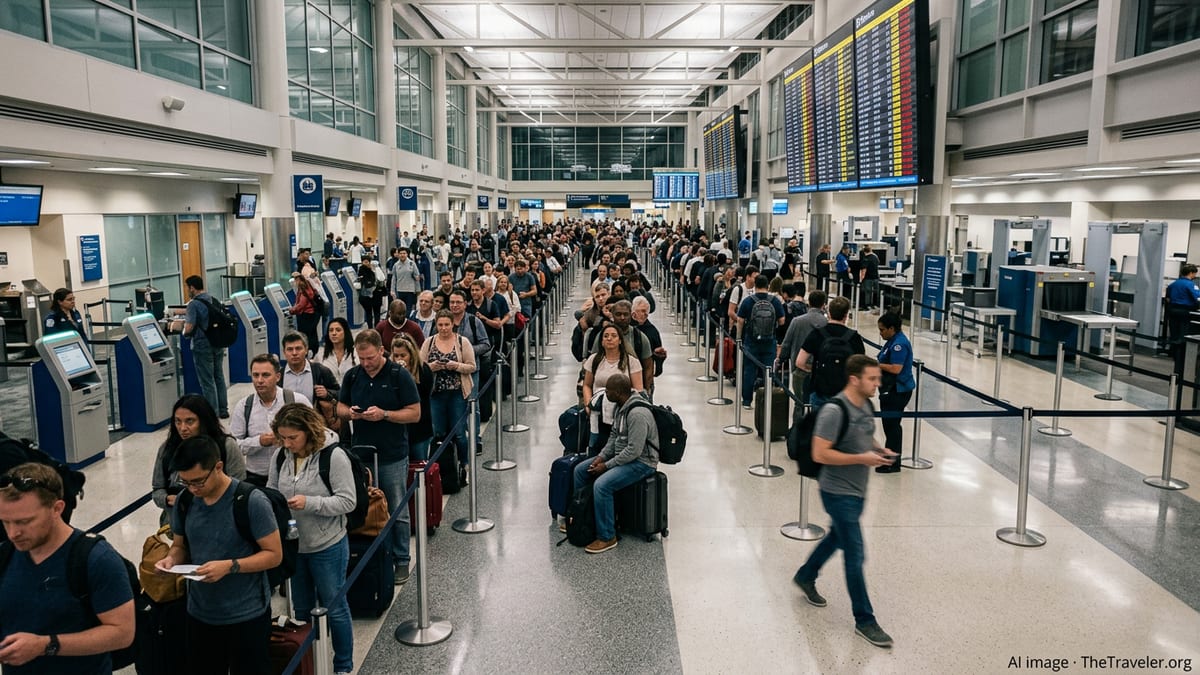
Fresh Disruptions Hit Major U.S. Hubs
Publicly available data from flight-tracking platforms shows that hundreds of departures and arrivals were running behind schedule today at large coastal and Midwest hubs, with nationwide delays surpassing 600 flights by midday and continuing to climb. One recent tally cited in U.S. media coverage put the figure at more than 775 delayed flights and over 50 cancellations as the day progressed, underscoring the volatility of late-summer operations.
The brunt of the latest disruptions appears concentrated at some of the country’s busiest connecting airports, echoing patterns seen during previous severe-weather episodes this year. Earlier coverage from March, for example, documented more than 8,000 delayed flights in a single day as storms swept through Atlanta, Chicago and New York, illustrating how quickly problems at a handful of hubs can cascade across the system.
Flight delay maps maintained by federal aviation authorities show periodic ground stops and flow-control programs at several East Coast and Southeast airports this month, often tied to thunderstorms or reduced runway capacity. Local airport advisories similarly warn that passengers should confirm departure times directly with their carriers, as day-of conditions can shift quickly.
Weather, Staff Shortages and Tight Schedules Converge
Recent analyses of this summer’s air travel performance point to a familiar but potent mix of factors behind the mounting delays: convective storms that repeatedly target major hubs, air traffic controller staffing challenges, and airlines running near peak capacity on popular routes. A recent business briefing on global aviation disruption noted that the frequency of U.S. delays has increased compared with pre-pandemic norms, with weather and staffing gaps interacting in more complex ways.
When storms move through tightly scheduled hubs, airlines often have little slack to absorb missed connections or reposition aircraft. Congressional and regulatory reports on air travel disruptions have highlighted how higher traffic volumes and more crowded skies leave less margin for recovery once delays begin. Even short-lived weather events can trigger hours of knock-on effects as crews reach duty limits and aircraft fall out of position.
Industry data from earlier this year illustrates the scale of the issue. On one mid-March day, more than 1,100 U.S. flights were canceled and over 8,000 delayed, largely because of severe weather and associated staffing and routing constraints. Those figures provide context for today’s totals, suggesting that while this week’s disruptions are significant, they fit within a broader pattern of elevated volatility.
Travelers Face Longer Rebooking Times and Tighter Options
For passengers, the practical impact of more than 600 delayed flights is felt in longer than expected connection times, missed cruises or tours, and crowded customer-service lines as travelers compete for limited seats on alternative departures. Reporting on this summer’s travel season indicates that when widespread disruptions occur, it can take several days for airlines to fully re-accommodate everyone, especially on sold-out leisure routes.
Accounts compiled in recent weeks from major U.S. airports describe vacationers losing full days of trips when a long delay stretches into a cancellation, forcing overnight stays or last-minute changes to itineraries. In some cases, travelers are turning to low-cost carriers or one-stop routings to salvage plans, sometimes paying more than original ticket prices just to reach their destinations.
Airline and airport guidance generally encourages passengers to monitor mobile apps and email alerts closely on days with elevated disruption risk. During earlier severe-weather periods this year, carriers frequently issued flexible travel policies, allowing customers to move trips by a day or two without change fees, a step that can sometimes ease pressure on the most congested departure banks.
Data Shows a Broader Trend of Rising Disruptions
While today’s figure of more than 600 delayed flights captures immediate attention, recent research and federal statistics suggest it is part of a longer arc. A study published this summer in an aviation journal concluded that the frequency of significant U.S. flight disruptions has risen since 2010, with a pronounced jump in the years following the pandemic as airlines rebuilt networks and demand recovered.
Separate policy analyses prepared for Congress describe how seasonal peaks, particularly in June, July and August, consistently generate higher shares of delayed operations. Projections from federal aviation planners anticipate continued growth in passenger volumes over the coming decade, raising concerns that without further investments in infrastructure, technology and staffing, congestion and delays could intensify.
Consumer-focused reports have also noted the financial consequences of recurring disruptions, both for airlines and travelers. Estimates combining airline operating costs with the value of passengers’ lost time run into the billions of dollars annually, reinforcing the economic stakes behind headline numbers like today’s 600-plus delayed flights.
How Travelers Can Navigate a Uncertain Late-Summer Sky
Travel guidance compiled from airline advisories and recent news coverage emphasizes preparation as the best hedge against fast-changing conditions. Passengers are urged to check flight status frequently in the 24 hours before departure and to sign up for push alerts through airline apps, which often provide the earliest notice of schedule changes or gate shifts.
On days when disruption risk is high, some experts recommend booking earlier flights where possible, as morning departures are less exposed to cumulative delays. Keeping carry-on bags light and essential items at hand can also make it easier to accept last-minute rebookings or reroutes. For complex itineraries or critical travel, such as weddings or international connections, many advisers suggest padding schedules with an extra day.
Consumer advocates further encourage travelers to review airline policies on accommodation, meal vouchers and refunds before flying, as eligibility can depend on whether a disruption is attributed to weather, air traffic control or carrier-controlled issues. With another busy holiday travel period only a few months away, today’s wave of more than 600 delayed U.S. flights is likely to keep attention focused on how resilient the system remains under growing strain.
https://currently.att.yahoo.com/att/over-775-flights-delayed-52-144830498.html
https://www.cbsnews.com/news/flights-canceled-delayed-weather-tsa-staffing/
https://www.axios.com/2026/08/18/air-travel-summer-disruption