


More news on this day
Air travel across the Middle East is facing a fresh wave of disruption as airports in Saudi Arabia, Egypt, Türkiye, Kuwait and neighboring states log more than a thousand delays and nearly two hundred cancellations, snarling schedules for Qatar Airways, Saudia, flydubai and other major carriers at the height of the summer travel season.
Get the latest news straight to your inbox!
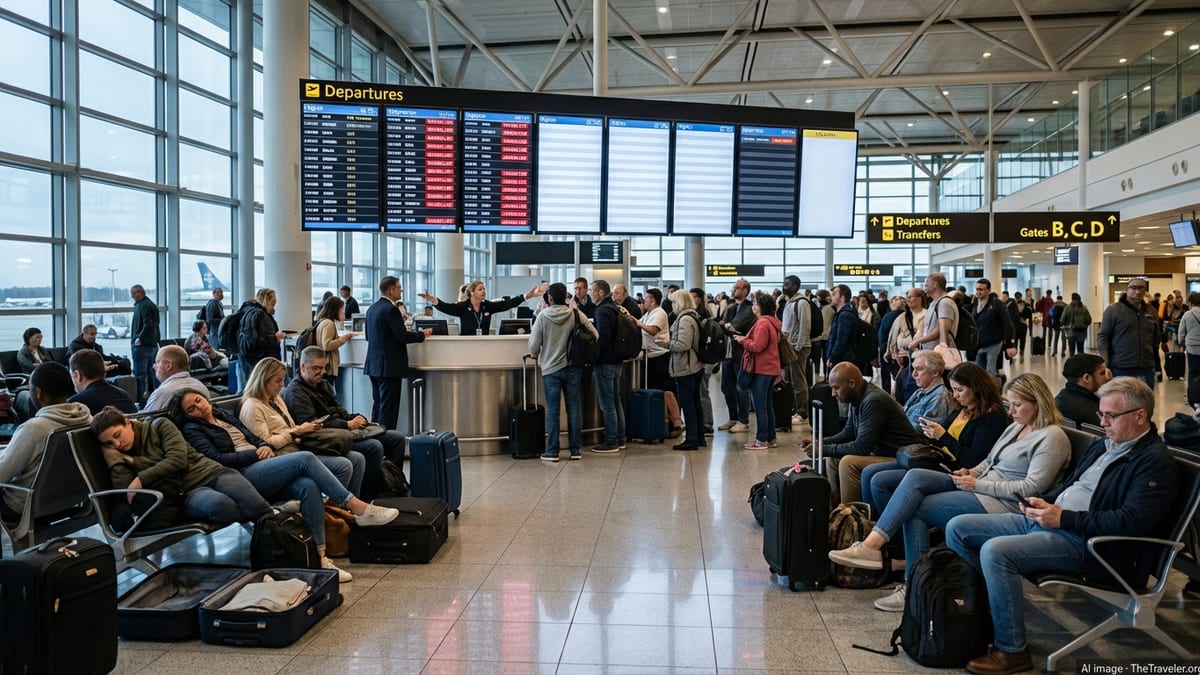
Regional Tensions Translate Into Widespread Flight Disruption
Publicly available operational data and local media reporting indicate that, over several days in mid July, at least 1,077 flights were delayed and 185 cancelled across key Middle Eastern hubs, including in Saudi Arabia, Egypt, Qatar, Kuwait and the United Arab Emirates. The uneven pattern of disruption reflects a mix of precautionary airspace measures, intermittent airport closures and last minute schedule changes as airlines adjust to evolving security risks.
Renewed hostilities involving Iran and cross border attacks since early July have triggered a patchwork of airspace advisories and route restrictions, particularly around the Gulf. Aviation risk bulletins and regional coverage note that Kuwait has imposed strict controls on overflights, while operators have been advised to exercise heightened caution when planning routes over Bahrain, Qatar, Oman, the UAE and Saudi Arabia, in some cases rerouting long haul services to avoid sensitive corridors.
These constraints have produced knock on effects far beyond the immediate conflict zones. Longer routings, compressed air traffic corridors and temporary airport shutdowns have pushed aircraft and crew out of position, a dynamic that industry observers say is now visible in the elevated rate of late running flights and rolling cancellations across the region.
While most airports remain formally open, the cumulative impact of delays and selective cancellations is substantial for passengers, particularly those relying on Gulf hubs such as Dubai, Doha, Abu Dhabi, Riyadh and Jeddah to connect between Europe, Asia, Africa and Australasia.
Kuwait And Saudi Arabia Emerge As Epicenters Of Disruption
Kuwait International Airport has been one of the hardest hit facilities, with successive waves of cancellations and delays as airlines respond to both local airspace restrictions and wider regional conflict dynamics. Flight status pages monitored by regional outlets show multiple services between the UAE and Kuwait either suspended or operating with significant delays, affecting Emirates, Etihad Airways, Air Arabia and other carriers.
Kuwait bound routes are particularly exposed because they often serve as short haul spokes from larger hubs. When outbound flights from Dubai or Abu Dhabi are cancelled or substantially delayed, returning legs and onward connections tend to suffer in tandem, amplifying the disruption. Travellers who had planned simple two or three hour hops are instead experiencing lengthy waits, diversions to alternate airports, or rebookings via different Gulf cities.
In Saudi Arabia, operational problems have concentrated around Abha in the country’s southwest, where recent attacks and tightened security protocols have complicated air traffic flows. Publicly available flight trackers and regional news reports show that flydubai, Air Arabia and Saudia have all contended with schedule changes on routes touching Abha, including outright cancellations in recent days. Though the kingdom’s major hubs in Riyadh and Jeddah continue to function, any disruption at secondary airports can quickly ripple through domestic networks and into international connections.
Egypt, too, is feeling the strain. Reports focused on Cairo International Airport describe a marked jump in delays and a handful of cancellations linked to the wider Gulf disruptions and the temporary closure or restriction of certain regional corridors. EgyptAir and Gulf based carriers that connect Cairo to hubs in Saudi Arabia, Qatar and the UAE have had to juggle departure slots, adjust routings and, in some cases, ground individual rotations when crews or aircraft failed to arrive on time.
Major Gulf Carriers Forced To Trim And Reroute Schedules
The current wave of disruption is hitting some of the Middle East’s largest airlines at the height of the summer peak. Qatar Airways, Saudia and flydubai, alongside Emirates, Etihad and Air Arabia, are among the carriers most exposed to rapidly shifting conditions, given their reliance on dense connecting banks at regional hubs and frequent services to cities now affected by restrictions.
Schedule updates published on airline websites and summarized in regional business coverage show repeated cancellations on specific routes, particularly those serving Kuwait and certain Saudi destinations. Etihad has extended the cancellation of its Abu Dhabi–Kuwait flights on selected days, while Emirates has temporarily suspended several rotations between Dubai and Kuwait. Flydubai has reported cancellations and lengthy delays on its Dubai–Abha services, with some flights departing more than five hours behind schedule when operations do proceed.
Qatar Airways, which relies heavily on transfer traffic through Doha, has so far maintained the bulk of its long haul operation, but travel forums and anecdotal accounts point to crowded departure halls, occasional missed connections and scattered cancellations as the carrier adjusts flight paths and departure times to navigate constrained airspace. The airline has previously warned that schedules remain subject to change at short notice when operational or regulatory conditions shift.
Saudia and EgyptAir, both key players on Gulf to North Africa routes, are contending with the twin challenges of regional airspace complexity and heavy demand from migrant workers and summer holidaymakers. Public timetable changes suggest that while most core services continue to run, select frequencies have been trimmed or retimed, contributing to the rising tally of delayed departures across Saudi and Egyptian airports.
Passengers Face Missed Connections, Longer Journeys And Uncertain Planning
For travellers, the most immediate impact of the disruptions is uncertainty. Even when flights are not outright cancelled, extended delays can cause passengers to miss onward connections in Doha, Dubai, Abu Dhabi or Jeddah, forcing rebookings that may add many hours or even an extra overnight stay to a journey. Families travelling for the summer holidays and workers returning from leave to the Gulf are among those most affected.
Publicly available travel advisories and airline statements consistently urge passengers to check the status of their flights shortly before leaving for the airport, allow extra time for security and check in, and ensure that contact details in bookings are up to date for receiving last minute notifications. Some governments have also refreshed guidance for travel to parts of the Gulf and Levant, highlighting the possibility of rapid operational changes and advising flexible arrangements where possible.
Travel agents and online booking platforms are reporting increased interest in routings that bypass the most affected airspace, for example by connecting via European hubs or flying transatlantic and transpacific instead of transiting the Gulf on long haul itineraries. However, these alternatives often come at higher prices and may themselves be vulnerable to knock on delays as aircraft and crews circulate through a global system under stress.
Flexible tickets, comprehensive travel insurance and careful attention to minimum connection times are emerging as key tools for passengers trying to navigate the current environment. With no clear timeline for a full normalization of Middle East airspace, many industry analysts expect an elevated risk of disruption to persist through the remainder of the summer season.
Airlines And Regulators Weigh Safety, Capacity And Economic Pressures
The latest disruptions underscore the delicate balance airlines and aviation regulators must strike between safety, operational resilience and commercial imperatives. Regional coverage shows that carriers have been swift to modify routes and cancel flights where risk assessments justify such steps, reflecting a conservative approach to crew and passenger safety amid reports of missile strikes and cross border attacks.
At the same time, every cancellation or significant delay carries real economic costs. Gulf hubs such as Dubai, Doha, Riyadh and Jeddah are central to global connectivity, and extended constraints on their operations can reverberate through supply chains and tourism flows in Europe, Asia and Africa. Logistics bulletins in recent weeks have warned of reduced air freight capacity on some Middle East lanes, longer transit times and higher shipping costs as flights are rerouted or pulled from schedules.
Regulators in Europe and other regions have issued advisories encouraging airlines to avoid specific airspace blocks or maintain robust contingency plans when transiting the broader Middle East. These notices, combined with local restrictions imposed by states such as Kuwait, have the practical effect of narrowing the number of viable corridors for commercial aviation, pushing more traffic into remaining routes and heightening congestion related delays.
Industry observers say that the coming weeks will be a critical test of the region’s ability to manage sustained operational stress. If tensions ease and airspace advisories are gradually relaxed, airlines may be able to rebuild schedules and reduce the current volume of delays and cancellations. If not, the pattern of disrupted flights documented across Saudi Arabia, Egypt, Türkiye, Kuwait and neighboring states in mid July could become a recurring feature of Middle Eastern aviation for the foreseeable future.